AI-Powered Medical Diagnostic Systems
Geography: Americas · South America · Latin America
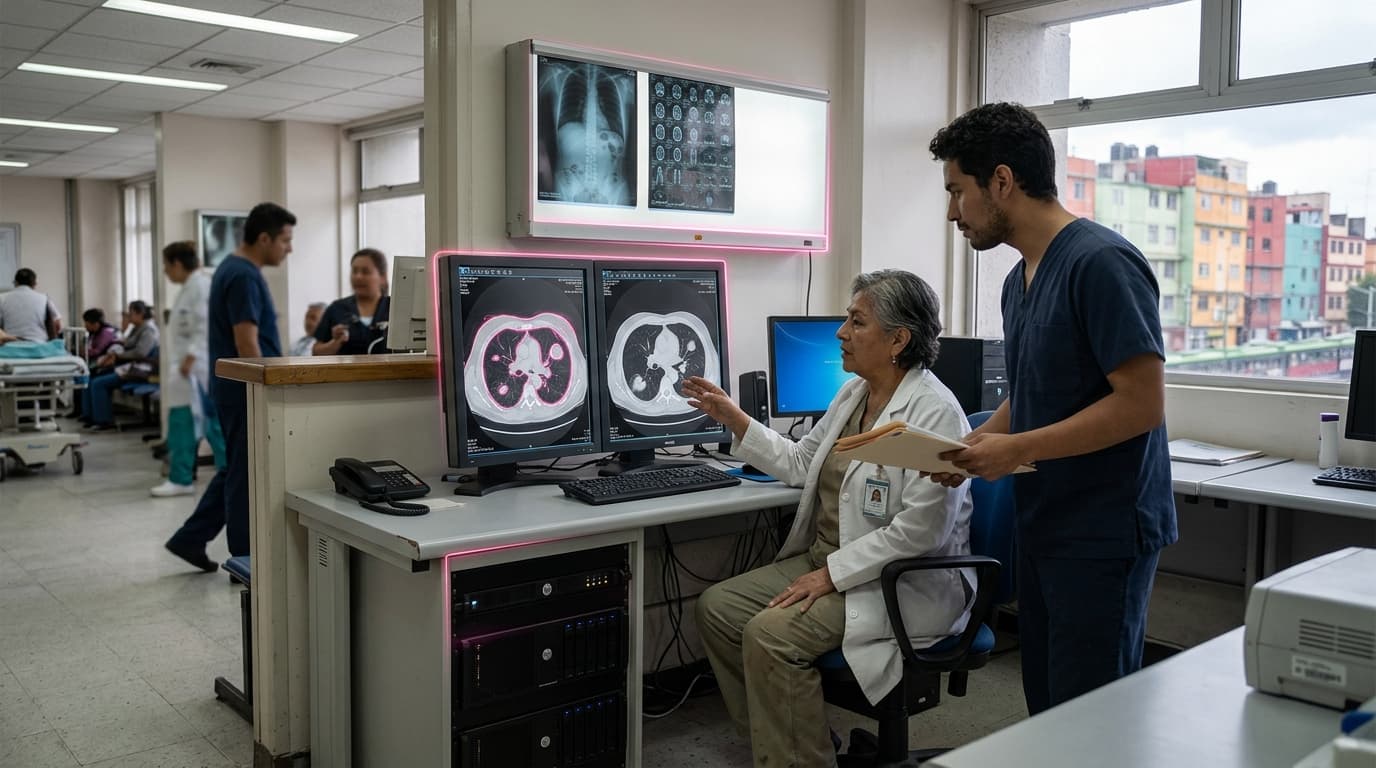
Mexico's healthtech sector is leveraging machine learning to address the country's chronic healthcare access gap — 60+ million Mexicans lack adequate healthcare coverage. AI diagnostic companies are deploying computer vision models for chest X-ray analysis, retinal scanning for diabetic retinopathy (Mexico has one of the world's highest diabetes rates), and pathology slide analysis for cancer screening. These systems enable non-specialist clinics in rural areas to perform screening that would otherwise require urban specialists.
The technology combines transfer learning (adapting models trained on large international datasets to Mexican patient populations), federated learning (training across hospital networks without centralizing sensitive patient data), and edge computing (running inference on modest hardware deployable in low-resource settings). Mexican startups benefit from a large, diverse patient population that generates training data reflecting conditions underrepresented in US and European datasets.
The strategic angle is health equity through technology leapfrogging. Rather than building the specialist infrastructure of developed nations, Mexico can deploy AI screening at primary care clinics, routing only confirmed cases to specialists. This hub-and-spoke model, if proven at scale, becomes exportable to other middle-income countries with similar healthcare gaps. The limitation is regulatory: Mexico's COFEPRIS is still developing frameworks for AI-as-medical-device classification.
Research this in Signals
Signals turns a topic into a sourced research record you can inspect and rerun. Your first scan is free, and this one starts with AI-Powered Medical Diagnostic Systems already loaded, so edit it or scan as is.