Telemedicine Platforms for Rural Healthcare
Geography: Americas · South America · Latin America
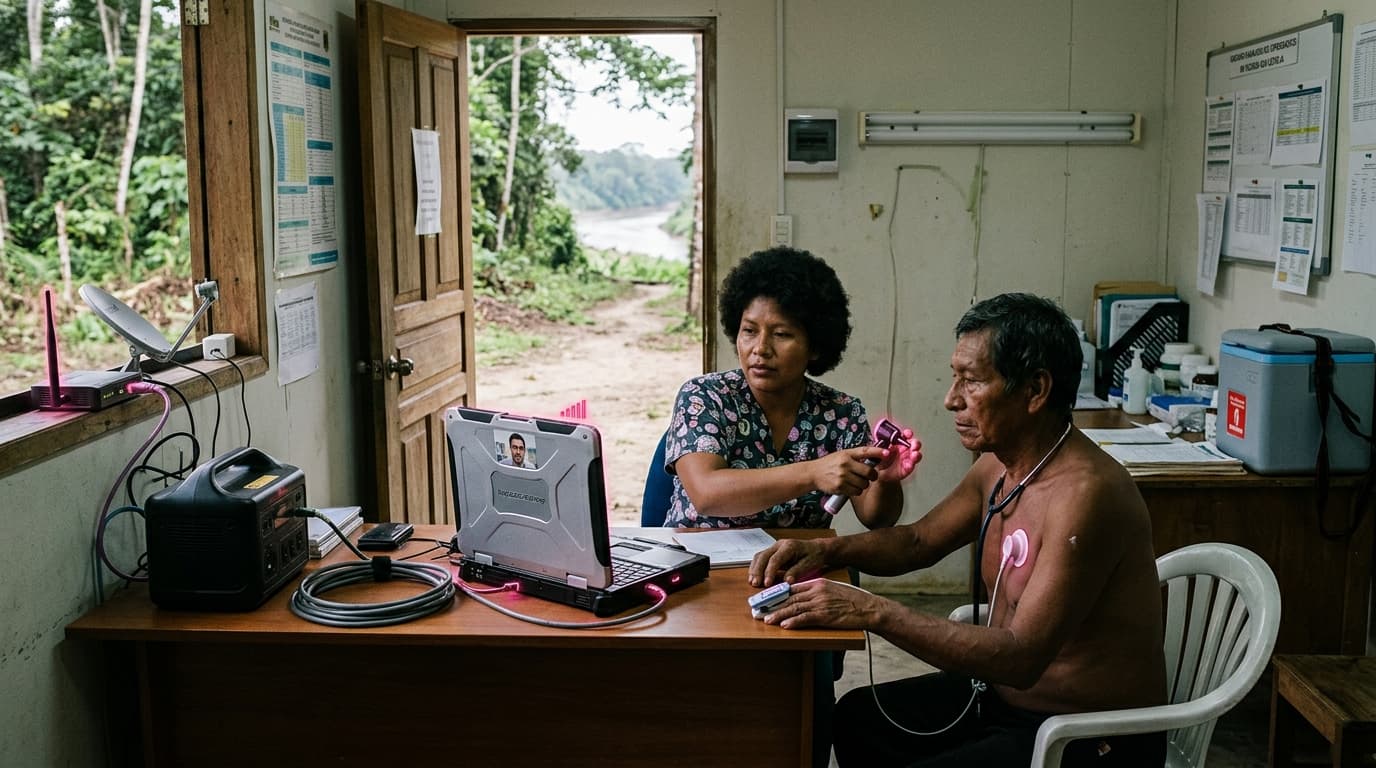
Colombia's geography — dense Amazon rainforest, Andean mountain ranges, and isolated Pacific coast communities — makes physical healthcare access impossible for millions of citizens. Telemedicine platforms bridge this gap by connecting patients in remote health posts to specialists in Bogotá, Medellín, and Cali via satellite-enabled video consultations. AI-powered triage systems assess symptom urgency, route patients to appropriate specialists, and manage follow-up care through asynchronous messaging.
The technology adapts to extreme connectivity constraints: store-and-forward systems capture patient images and vital signs during brief satellite windows, compressed video protocols maintain diagnostic-quality consultations over low-bandwidth connections, and offline-capable mobile apps allow community health workers to collect patient data without real-time connectivity. Integration with Colombia's national health system (EPS) enables billing and medical record management.
Colombia's telemedicine adoption accelerated during COVID-19 and has been sustained by regulatory changes making remote consultations reimbursable by the national health system. The technology model — designed for extreme geography and limited infrastructure — is directly applicable to Southeast Asia, sub-Saharan Africa, and other regions with similar access challenges. Colombia's role as a testbed for equitable healthcare technology reflects its unique combination of universal health coverage policy ambition and geographic healthcare delivery challenges.
Research this in Signals
Signals turns a topic into a sourced research record you can inspect and rerun. Your first scan is free, and this one starts with Telemedicine Platforms for Rural Healthcare already loaded, so edit it or scan as is.