Smart Toilet and Sanitation Technology
Geography: Asia Pacific · East Asia · Japan
TOTO Ltd. invented the Washlet in 1980 and has since sold over 60 million units worldwide, creating an entirely new product category in sanitation technology. The Washlet's integrated bidet, heated seat, deodorizer, and self-cleaning features are now standard in over 80% of Japanese households. TOTO and rival LIXIL (INAX) collectively dominate the global smart toilet market, with Japanese companies holding over 75% combined share. TOTO's 2025 Americas sales surged 19.7% as Western adoption accelerates.
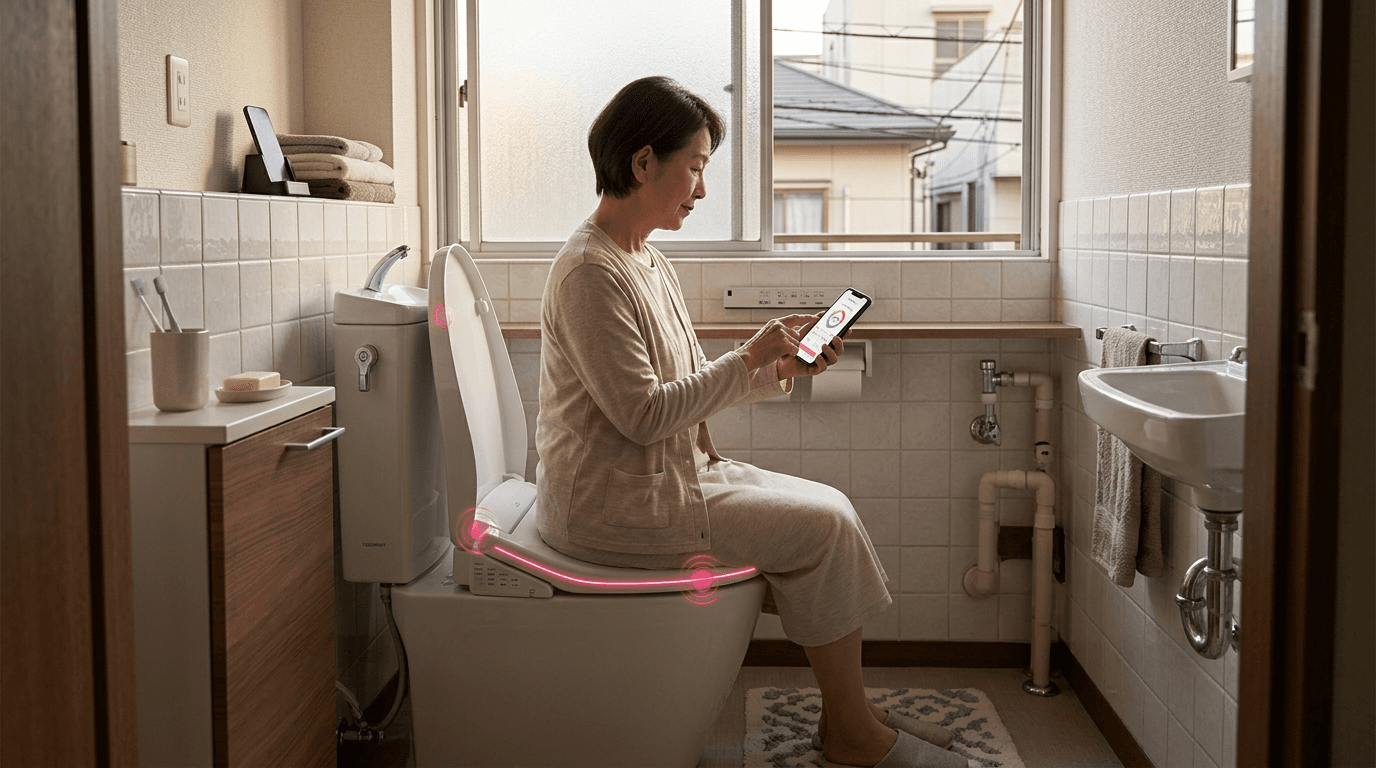
The technology is crossing from hygiene into healthcare. In August 2025, TOTO launched 'Stool Scan' on its Neorest line — a sensor system that automatically measures stool shape, color, and volume during use, sending data to a smartphone app for health tracking. This transforms the toilet from a passive fixture into an ambient health monitoring station that captures biomarkers daily without requiring any user behavior change. Japanese startups are developing urine analysis sensors that detect glucose, protein, and hormones, turning the toilet into a diagnostic device.
The strategic significance is underappreciated: Japan has created a multi-billion-dollar industry around a product that didn't exist before 1980, exported it globally, and is now positioning it as IoT health infrastructure. As populations age worldwide, the toilet becomes the most natural point of daily, passive health data collection — no wearable required, no conscious effort needed. Japan's 45-year head start in smart sanitation gives it an enormous lead in this emerging intersection of bathroom fixtures, sensor technology, and preventive healthcare.
Research this in Signals
Signals turns a topic into a sourced research record you can inspect and rerun. Your first scan is free, and this one starts with Smart Toilet and Sanitation Technology already loaded, so edit it or scan as is.