Powered Exoskeletons for Rehabilitation and Mobility
Geography: Emea · Middle East · Israel
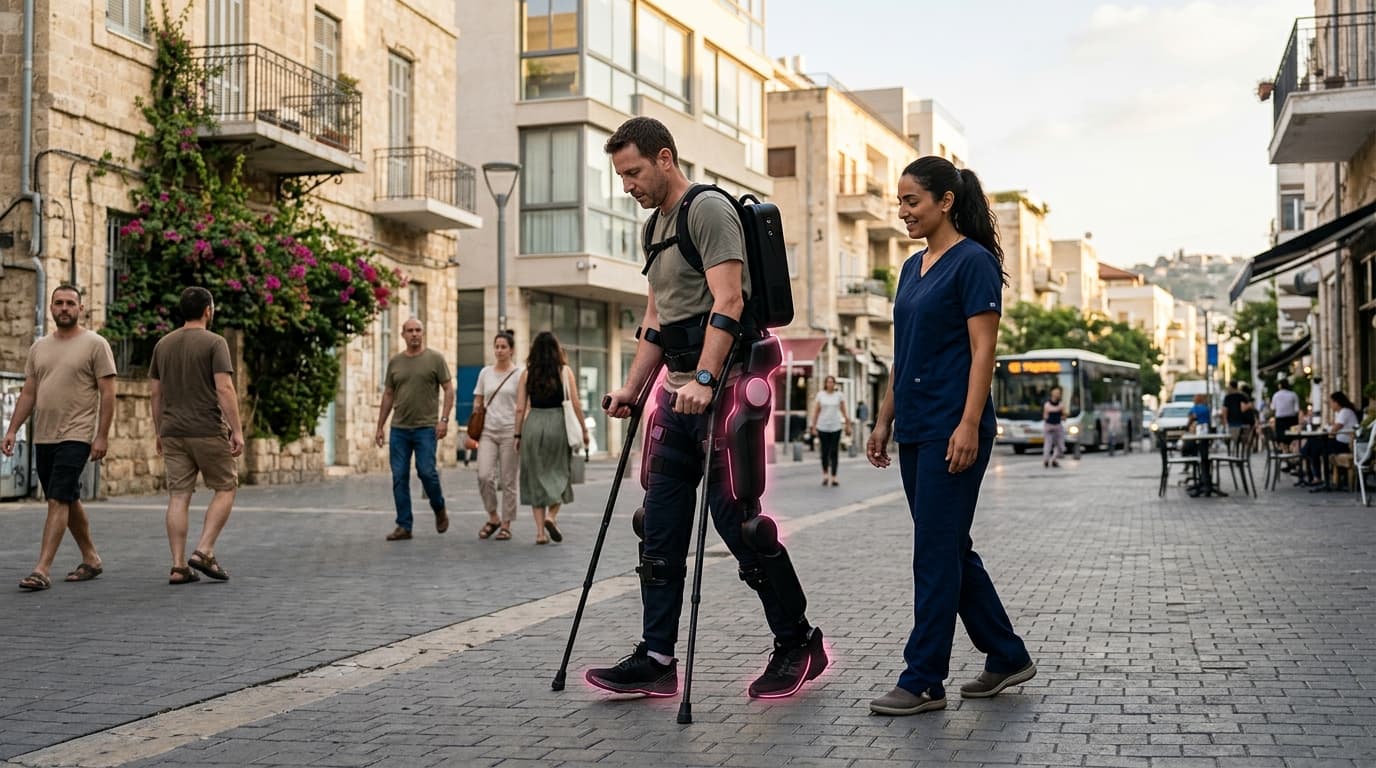
ReWalk Robotics (now Lifeward) developed the first FDA-cleared powered exoskeleton for personal home use by individuals with spinal cord injuries. The ReWalk system uses motorized legs with motion sensors, rechargeable batteries, and a computerized system that controls movement to enable paraplegic users to stand, walk, turn, and climb stairs. The company has raised over $218 million and its devices are approved in the U.S., EU, and Israel.
The technology represents a fundamental shift in rehabilitation from passive support (wheelchairs) to active mobility restoration. Clinical studies show that regular exoskeleton use improves cardiovascular health, bone density, bowel function, and psychological well-being in spinal cord injury patients. The devices are also used in rehabilitation settings to accelerate recovery from stroke and other neurological conditions.
Israel's broader robotics-for-health ecosystem includes surgical robotics (Mazor Robotics, acquired by Medtronic for $1.7B), rehabilitation robots, and assistive devices. The country's expertise in miniaturized sensors, actuators, and control systems — often developed initially for defense applications — transfers naturally to medical robotics. As populations age globally, demand for robotic assistance and rehabilitation is growing rapidly.
Research this in Signals
Signals turns a topic into a sourced research record you can inspect and rerun. Your first scan is free, and this one starts with Powered Exoskeletons for Rehabilitation and Mobility already loaded, so edit it or scan as is.