Brain-Computer Interface Systems for Defense and Medicine
Geography: Emea · Middle East · Israel
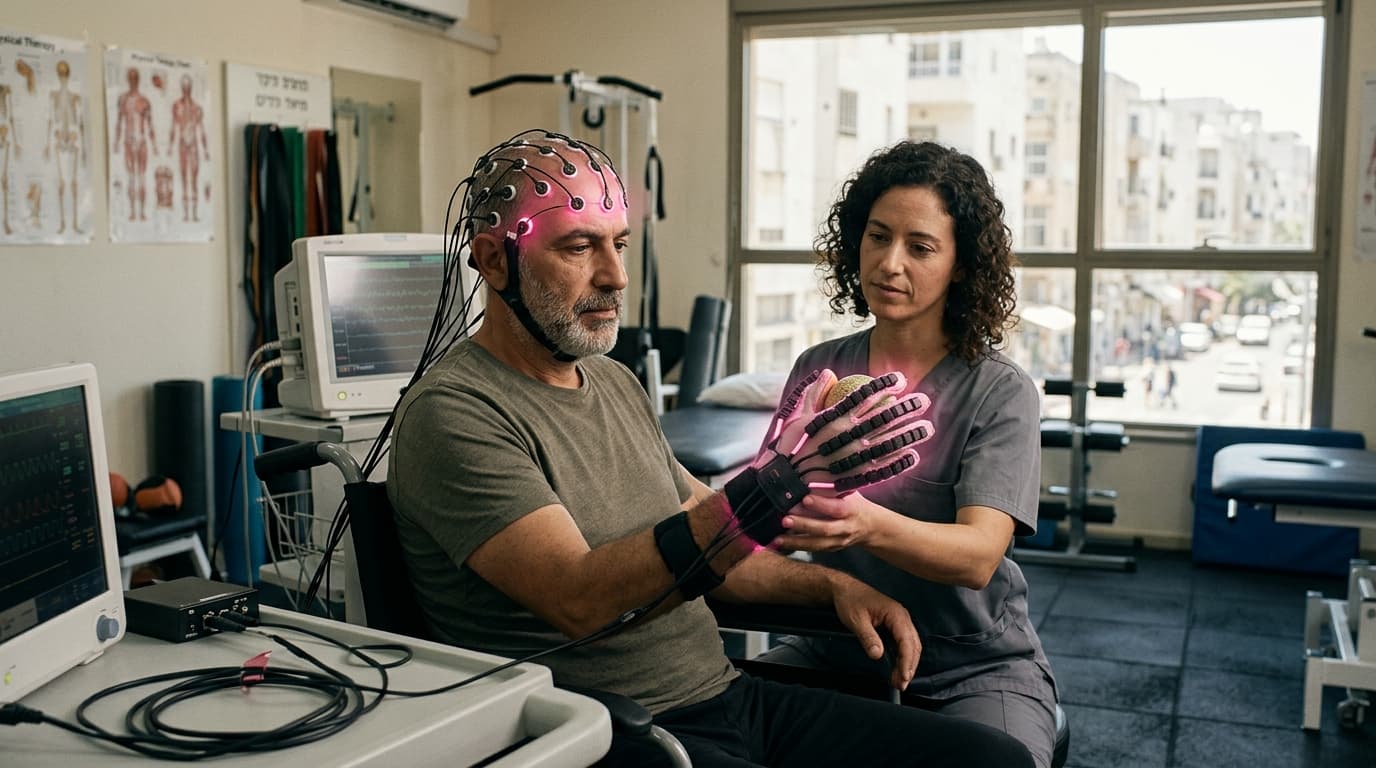
Israeli companies and defense research labs are developing brain-computer interface (BCI) technologies for both military and civilian applications. The National Defense Magazine reported in 2025 on Israeli startups investigating mind-machine interfaces for defense applications including pilot cognitive augmentation and disabled soldier rehabilitation. The medical BCI ecosystem intersects with Israel's strong neuroscience research base at institutions like the Weizmann Institute and Hebrew University.
Israel's BCI efforts occupy a distinct niche from U.S.-centric companies like Neuralink and Synchron: they tend to focus on non-invasive approaches (EEG, fNIRS) for near-term military and clinical applications rather than invasive implants for consumer use. The defense angle — enabling faster human-machine teaming in high-stress operational environments — provides unique testing scenarios and funding sources that commercial BCI companies cannot access.
Strategically, BCIs represent a potential paradigm shift in human-computer interaction, and Israel's combination of defense funding, neuroscience expertise, and medical device commercialization experience positions it to be a meaningful contributor. The dual military-medical research pathway — where technologies developed for combat pilot augmentation can be adapted for stroke rehabilitation, and vice versa — mirrors Israel's broader defense-to-civilian innovation pattern.
Research this in Signals
Signals turns a topic into a sourced research record you can inspect and rerun. Your first scan is free, and this one starts with Brain-Computer Interface Systems for Defense and Medicine already loaded, so edit it or scan as is.