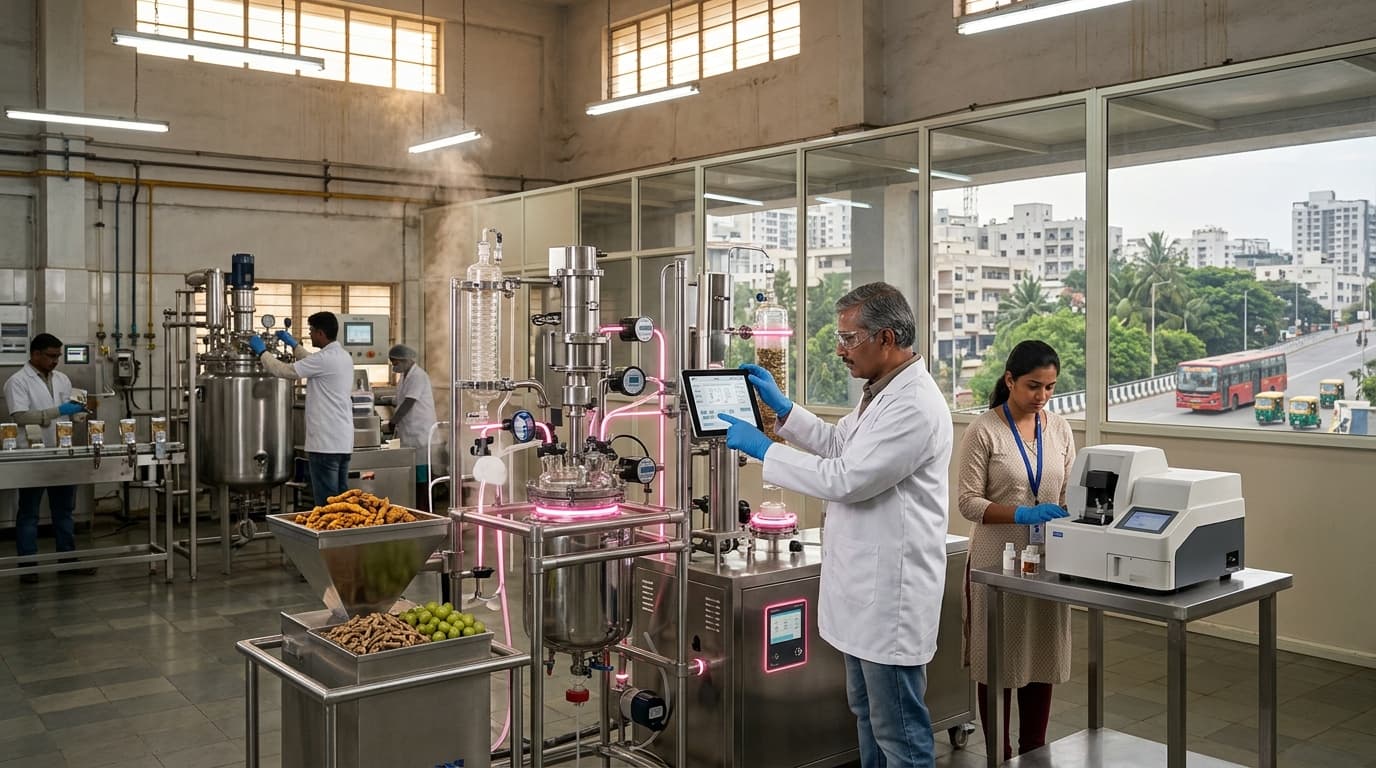
Phytopharmaceutical Drug Development Platform
Geography: Asia Pacific · South Asia · India
India is the only country to have created a distinct regulatory category for 'phytopharmaceuticals' — purified, standardized fractions of medicinal plant extracts containing a minimum of four bioactive compounds, regulated under the Drugs and Cosmetics Act through CDSCO (not AYUSH). Introduced in 2015 and refined through 2019 amendments, this framework requires phytopharmaceuticals to undergo the same quality, safety, and efficacy evaluation as synthetic chemical drugs, including Phase I-III clinical trials. The WHO Global Centre for Traditional Medicine, established in 2022 at Jamnagar, India, is encouraging innovative approaches including reverse pharmacology and Ayugenomics.
Reverse pharmacology — starting from documented traditional use in thousands of patients over centuries, then working backward to identify active compounds and validate mechanisms — inverts the Western drug discovery model. India has 8,000+ medicinal plants documented in Ayurvedic, Siddha, and Unani texts, representing a vast pre-screened library of bioactive compounds. The National Medicinal Plants Board has prioritized specific plants for cultivation under the National AYUSH Mission, creating supply chains for standardized raw materials. Research institutions are using modern analytical chemistry, genomics, and metabolomics to characterize these traditional formulations.
The phytopharmaceutical approach could position India uniquely in global drug discovery. While Western pharma spends $1-2 billion developing each new drug with a 90% failure rate, India's reverse pharmacology approach starts with compounds that already have thousands of years of human safety data. If India can validate even a small fraction of Ayurvedic formulations through rigorous modern trials, it would create a pipeline of affordable, plant-based therapeutics with established supply chains — relevant not just for India but for the 80% of the world's population that relies partly on traditional medicine.
Research this in Signals
Signals turns a topic into a sourced research record you can inspect and rerun. Your first scan is free, and this one starts with Phytopharmaceutical Drug Development Platform already loaded, so edit it or scan as is.