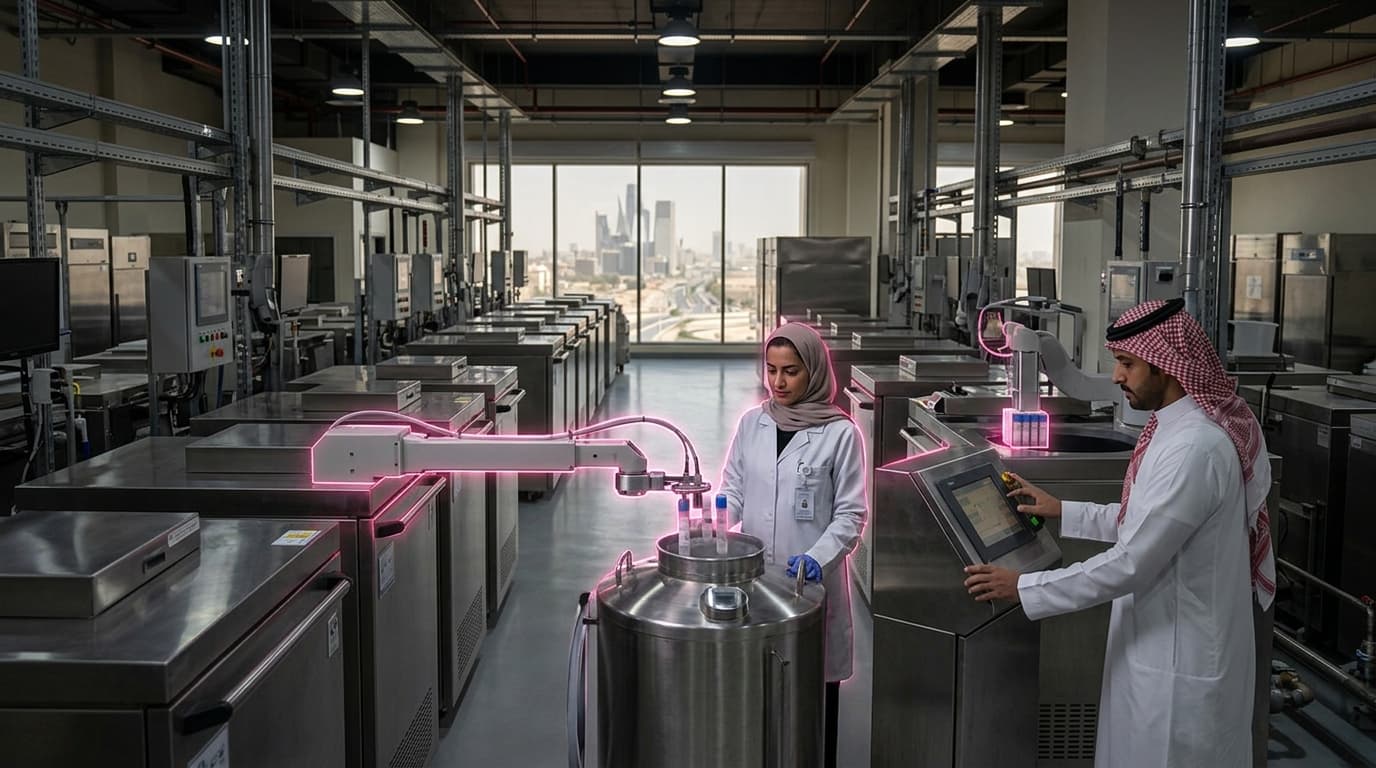
GCC National Biobank Network
Geography: Emea · Middle East · Gulf States
Across the GCC, national biobanks are being built not as standalone tissue repositories but as integrated data platforms linking biological samples with genomic sequences, electronic health records, and environmental data. Abu Dhabi Biobank partnered with AstraZeneca in January 2026 to advance translational research, specifically targeting rare and difficult-to-diagnose diseases in Gulf populations. Saudi Arabia's National Biobank connects to Vision 2030 healthcare goals, while Qatar Biobank integrates with the Qatar Genome Programme to create matched genomic-clinical datasets.
Biobanks are the physical infrastructure that makes precision medicine scalable. While genome programs generate digital data, biobanks preserve actual biological material — blood, tissue, DNA — that can be re-analyzed as new diagnostic technologies emerge. The Gulf's biobanks are particularly valuable because Arab and Middle Eastern populations are severely underrepresented in global biomedical databases. Pharma companies developing drugs for these populations (billions of people across MENA and South Asia) need access to representative biological samples.
The convergence of Gulf biobanks with AI analytical capabilities (G42, HUMAIN) creates a unique competitive advantage: the biological samples, the clinical data, the genomic sequences, and the compute power to analyze them all exist within the same national ecosystems. This positions Gulf states as essential partners for any pharmaceutical or biotech company pursuing precision medicine for non-European populations — a growing market as the global industry moves beyond its historical focus on Caucasian genetics.
Research this in Signals
Signals turns a topic into a sourced research record you can inspect and rerun. Your first scan is free, and this one starts with GCC National Biobank Network already loaded, so edit it or scan as is.