Implantable Artificial Kidney
Geography: Asia Pacific · Oceania · Australia New Zealand
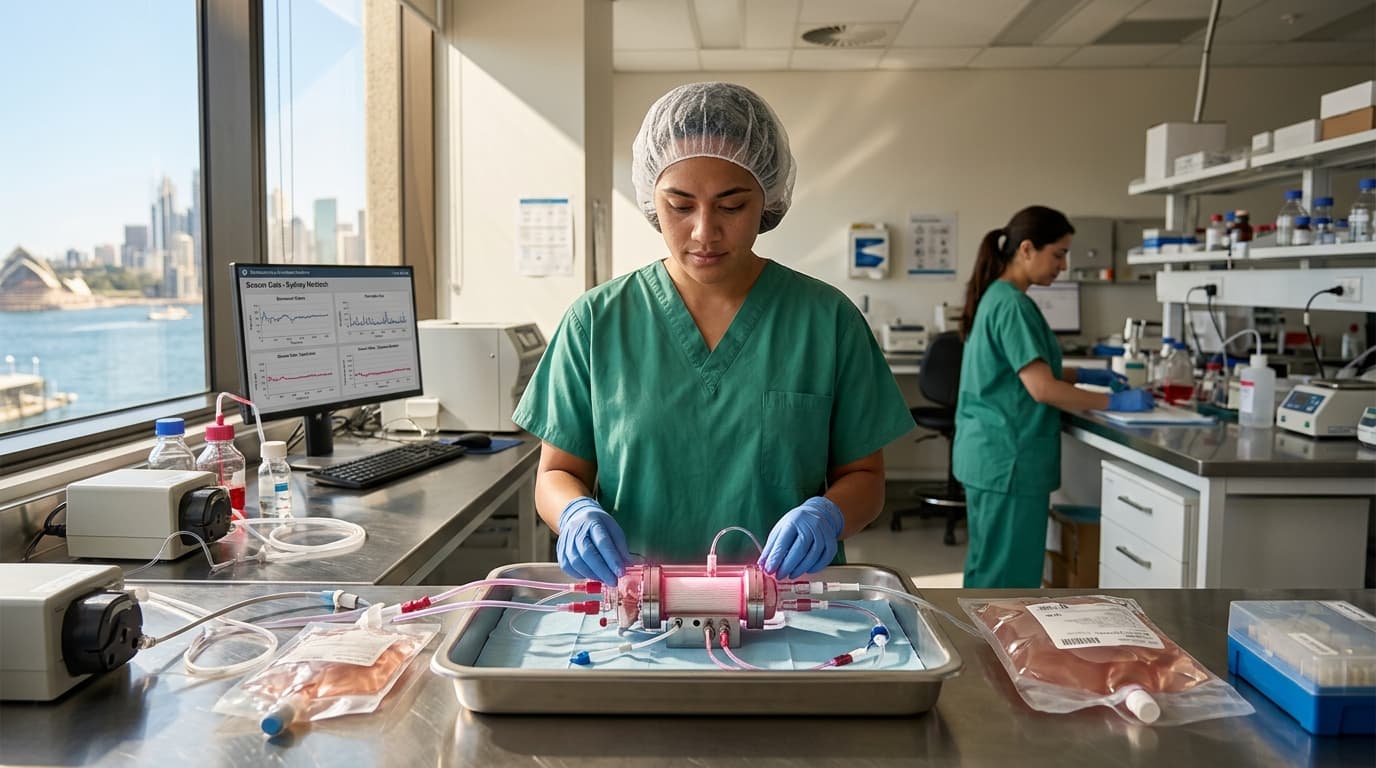
Australian deep tech companies, featured in Cicada Innovations' Tech23 2025 'Care Economy' category, are developing implantable artificial kidney devices that would free chronic kidney disease patients from dialysis dependence. These devices miniaturize filtration and reabsorption functions into biocompatible implants, potentially using silicon nanomembranes and powered by the body's blood pressure rather than external pumps.
Chronic kidney disease affects approximately 850 million people globally, with 3.4 million receiving dialysis. Dialysis requires patients to visit clinics three times weekly for 4-hour sessions (hemodialysis) or perform daily exchanges at home (peritoneal dialysis), severely restricting quality of life. An implantable device that continuously filters blood would transform patient outcomes while dramatically reducing healthcare system costs — Australian dialysis alone costs approximately A$1.2B annually.
Australia has a strong track record in medical device innovation (cochlear implants were invented at the University of Melbourne) and benefits from a healthcare system that rapidly adopts effective new technologies through the Pharmaceutical Benefits Scheme and Medicare. The technical challenges remain significant — biocompatibility, miniaturization, power supply, and anticoagulation — placing this firmly in the early-research category, but the potential impact justifies continued investment.
Research this in Signals
Signals turns a topic into a sourced research record you can inspect and rerun. Your first scan is free, and this one starts with Implantable Artificial Kidney already loaded, so edit it or scan as is.