Assisted Gene Flow for Heat-Tolerant Coral
Geography: Asia Pacific · Oceania · Australia New Zealand
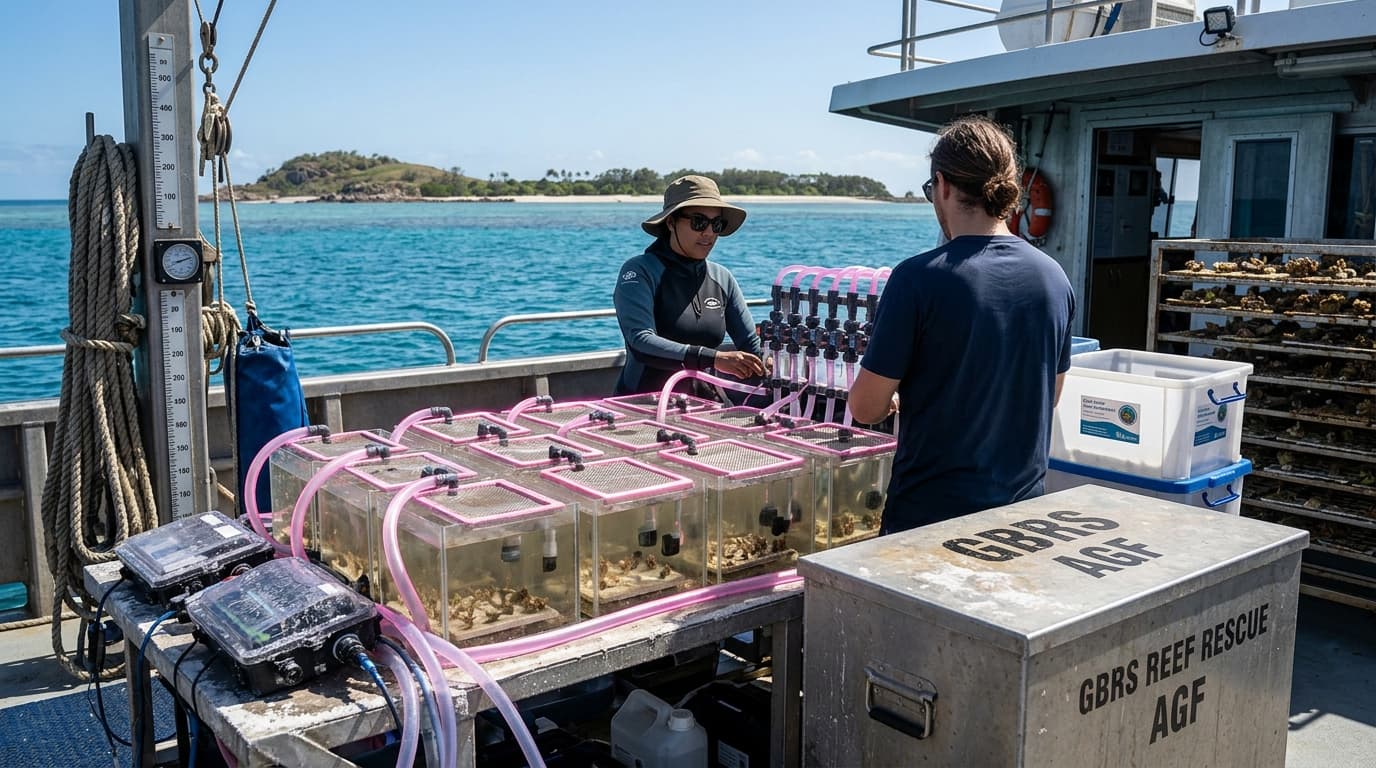
The Great Barrier Reef Foundation's Audacious Project, funded through a major philanthropic commitment, targets restoring 50 vital reefs across Australia and the Pacific by 2031, planting 1.2 million heat-tolerant corals each year — 30 times the current deployment rate. The program uses assisted gene flow: identifying naturally heat-tolerant coral genotypes that survived recent bleaching events, crossbreeding them with local populations to introduce thermal resilience, and deploying offspring on degraded reefs. Coral genetic material is being cryopreserved in biobanks as insurance against catastrophic loss.
This represents the world's largest attempt at assisted evolution for a wild ecosystem. Unlike genetic modification, assisted gene flow works within the natural genetic variation of coral species — accelerating natural selection by identifying and propagating winning genotypes rather than introducing foreign DNA. The approach is analogous to selective breeding in agriculture, but applied to a wild marine ecosystem under existential threat from ocean warming.
The ethical and governance dimensions are globally significant. Deliberately altering the genetic composition of a World Heritage-listed ecosystem raises questions about intervention thresholds, acceptable risk, and the definition of 'natural' in a rapidly changing climate. The frameworks Australia develops for managing assisted evolution — including community consultation, scientific review, and regulatory approval — will become templates for similar conservation interventions worldwide as coral reefs, forests, and other ecosystems face climate-driven collapse.
Research this in Signals
Signals turns a topic into a sourced research record you can inspect and rerun. Your first scan is free, and this one starts with Assisted Gene Flow for Heat-Tolerant Coral already loaded, so edit it or scan as is.