Next-Generation Neural Interface Hearing Devices
Geography: Asia Pacific · Oceania · Australia New Zealand
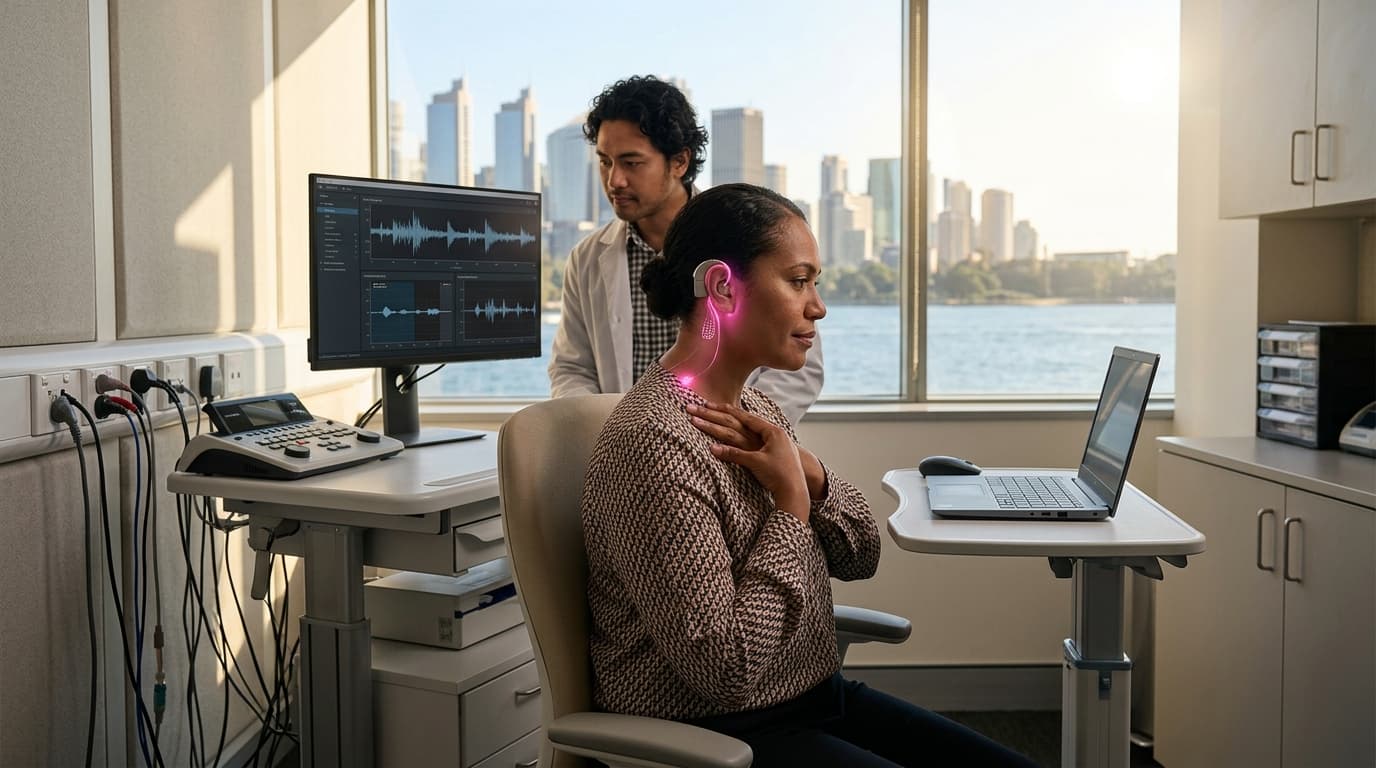
Cochlear Limited, headquartered in Sydney, invented the multi-channel cochlear implant in the 1970s-80s and remains the global market leader in implantable hearing solutions with approximately 60% market share. Current research directions include fully implantable cochlear implants (eliminating the external processor), AI-enhanced speech processing that adapts to acoustic environments in real-time, and optogenetic approaches that use light-sensitive proteins to stimulate auditory neurons with greater precision than electrical stimulation.
Cochlear implants are arguably Australia's most successful medical technology export, with over 700,000 devices implanted worldwide. The technology has restored hearing to profoundly deaf individuals across all ages, and continues to improve with each generation — modern implants enable many users to participate in phone conversations and appreciate music. The company's ongoing R&D investment (approximately AU$250M annually) ensures continued technological leadership.
The broader significance lies in Cochlear's pioneering of neural interface technology — the implant is one of the few commercially successful direct neural interfaces in the world. The engineering lessons learned in biocompatibility, chronic neural stimulation, miniaturization, and power management are directly transferable to other neural interface applications including retinal implants, brain-computer interfaces, and spinal cord stimulators. Cochlear's success provides a template for Australian biomedical device companies and validates the country's capacity to develop, manufacture, and export complex medical technology.
Research this in Signals
Signals turns a topic into a sourced research record you can inspect and rerun. Your first scan is free, and this one starts with Next-Generation Neural Interface Hearing Devices already loaded, so edit it or scan as is.