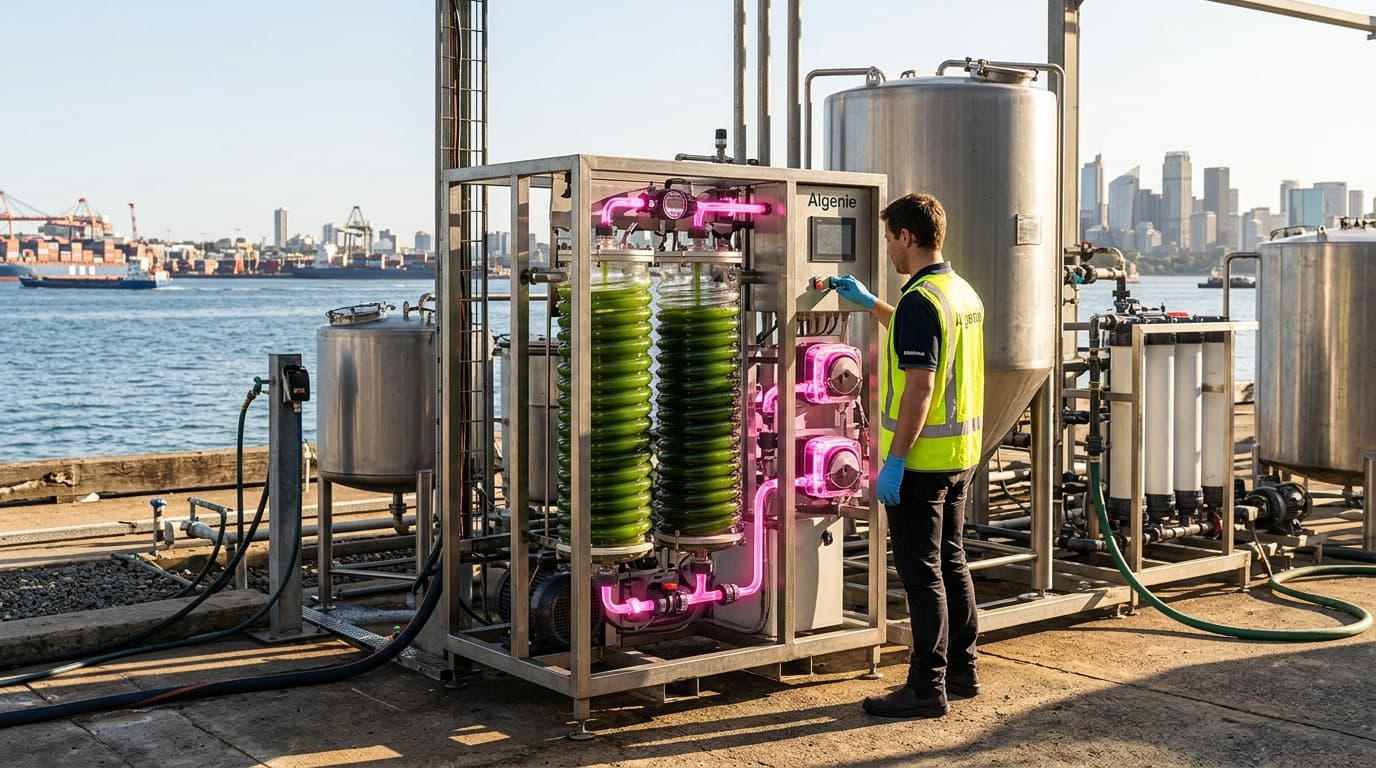
Algae-Based Industrial Biomanufacturing
Geography: Asia Pacific · Oceania · Australia New Zealand
Algenie, part of Cicada's Tech23 2025 'Built with Biology' cohort, is developing engineered algae strains as biomanufacturing platforms for high-value compounds. Algae combine the programmability of microbial fermentation with the photosynthetic efficiency of plants, using sunlight and CO2 as primary inputs rather than expensive sugar feedstocks. Applications range from pharmaceutical intermediates to sustainable bioplastics, food ingredients, and specialty chemicals.
Traditional biomanufacturing using bacterial or yeast fermentation requires sterile conditions, controlled temperatures, and expensive sugar-based growth media. Algal biomanufacturing can operate in open or semi-open systems using natural sunlight, dramatically reducing energy costs in Australia's sun-rich environment. Modern synthetic biology tools (CRISPR, metabolic engineering) are enabling algae to produce complex molecules previously accessible only through chemical synthesis or animal/plant extraction.
For Australia, algae biomanufacturing represents a convergence of natural advantages (sunlight, land, clean water) with synthetic biology capabilities developed at research institutions like CSIRO and ANU. The technology could create entirely new export industries — producing pharmaceutical ingredients, sustainable materials, and food proteins from Australian sunlight. While still at relatively early commercial stage, the sector aligns with growing global demand for bio-based alternatives to petrochemical products.
Research this in Signals
Signals turns a topic into a sourced research record you can inspect and rerun. Your first scan is free, and this one starts with Algae-Based Industrial Biomanufacturing already loaded, so edit it or scan as is.