Low-Bandwidth Telemedicine Platforms
Geography: Emea · Africa · Africa
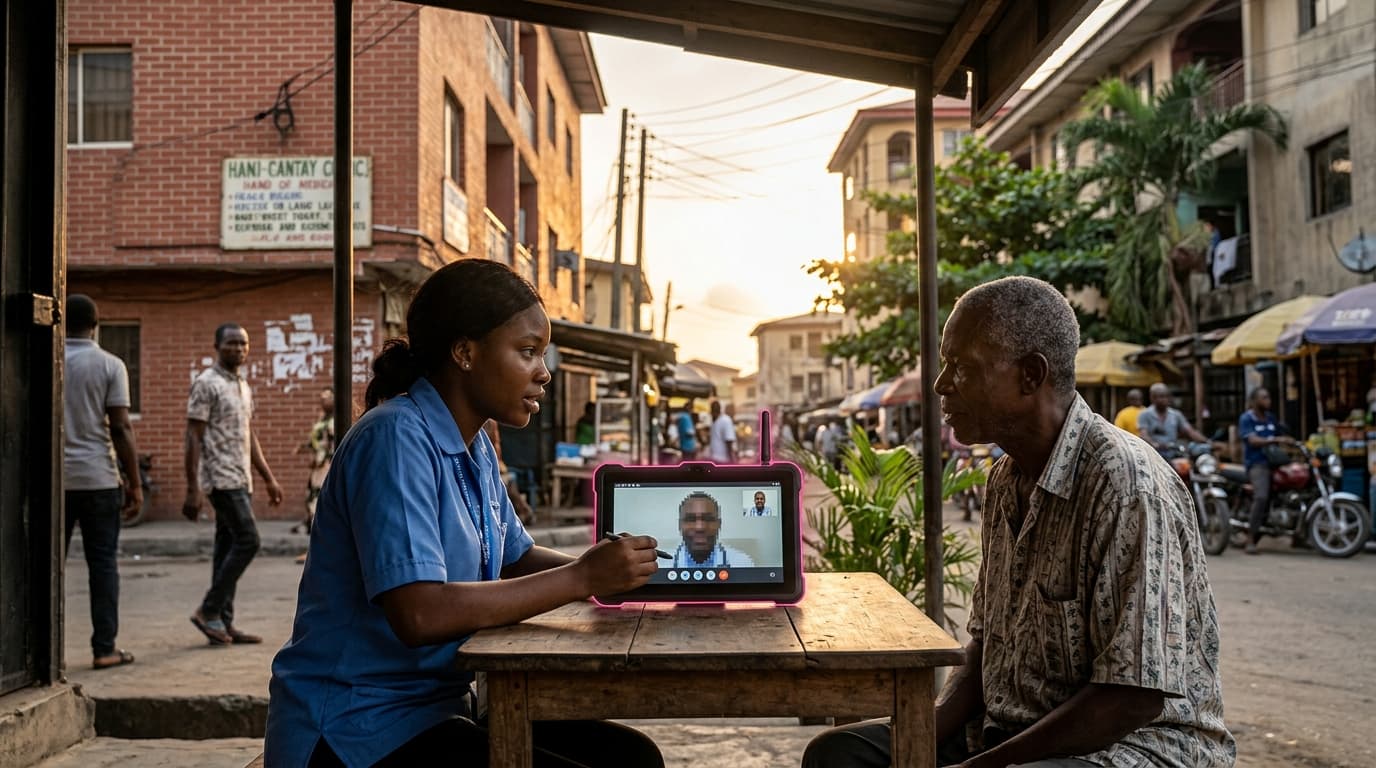
African telemedicine platforms have been built ground-up for the continent's connectivity constraints. Services like mDoc (Nigeria), Babyl/Babylon Health Rwanda, and MyDawa (Kenya) provide remote doctor consultations via multiple channels: USSD for feature phones, WhatsApp for basic smartphones, and low-bandwidth video for better connections. Patients can describe symptoms via text, receive triage guidance, get prescriptions, and be referred to facilities — all without leaving their village.
The design philosophy is channel-agnostic: the same clinical protocol is delivered whether the patient uses a $10 feature phone or a $200 smartphone. This is critical in Africa, where doctor density can be as low as 1 per 50,000 people in rural areas. Telemedicine multiplies each doctor's reach from dozens to hundreds of daily patient interactions. Rwanda's partnership with Babyl Health has enrolled 2+ million citizens in remote consultation services.
The platforms are evolving beyond basic consultations into chronic disease management (diabetes, hypertension), mental health services, and specialist referral networks. AI-assisted triage is being integrated to handle initial symptom assessment, routing only complex cases to doctors. The African telemedicine model — built for low bandwidth, feature phones, and extreme doctor scarcity — is now being studied by South Asian and Pacific Island health systems facing similar constraints.
Research this in Signals
Signals turns a topic into a sourced research record you can inspect and rerun. Your first scan is free, and this one starts with Low-Bandwidth Telemedicine Platforms already loaded, so edit it or scan as is.