Enhanced Rapid Diagnostic Test Technology for Malaria
Geography: Emea · Africa · Africa
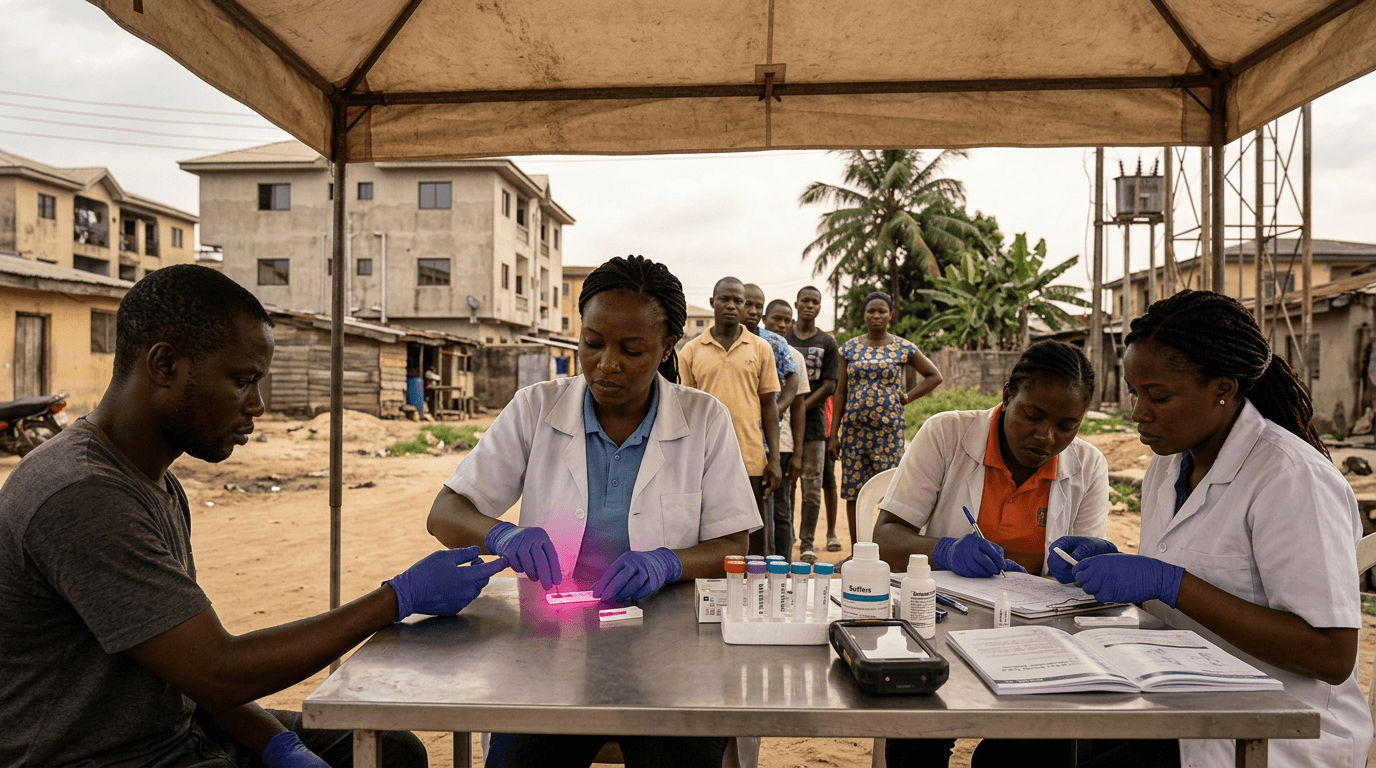
Rapid diagnostic tests (RDTs) for malaria are a critical technology in Africa, where the disease kills over 600,000 people annually — 95% of global malaria deaths. First-generation RDTs detect the presence of malaria parasites from a finger-prick blood sample in 15 minutes, no laboratory required. African researchers and manufacturers are now developing enhanced versions that can distinguish between Plasmodium species, detect drug-resistant mutations, and identify asymptomatic carriers who perpetuate transmission.
Kenya's KEMRI (Kenya Medical Research Institute), South Africa's CSIR, and Nigerian research institutions are at the forefront of adapting diagnostic technology for field conditions — tests must work at ambient temperatures up to 40°C, require no refrigeration, and be interpretable by community health workers with basic training. New multiplexed RDTs can simultaneously screen for malaria, dengue, and other febrile illnesses that present with identical symptoms.
The innovation challenge is producing diagnostics at scale for populations that can't afford $10 per test. African manufacturers are developing RDTs at $0.50-2.00 per unit, pushing the boundaries of low-cost biological assay production. This drives the broader agenda of making Africa a manufacturing hub for the diagnostics it consumes — reducing dependence on imports from China, South Korea, and India.
Research this in Signals
Signals turns a topic into a sourced research record you can inspect and rerun. Your first scan is free, and this one starts with Enhanced Rapid Diagnostic Test Technology for Malaria already loaded, so edit it or scan as is.