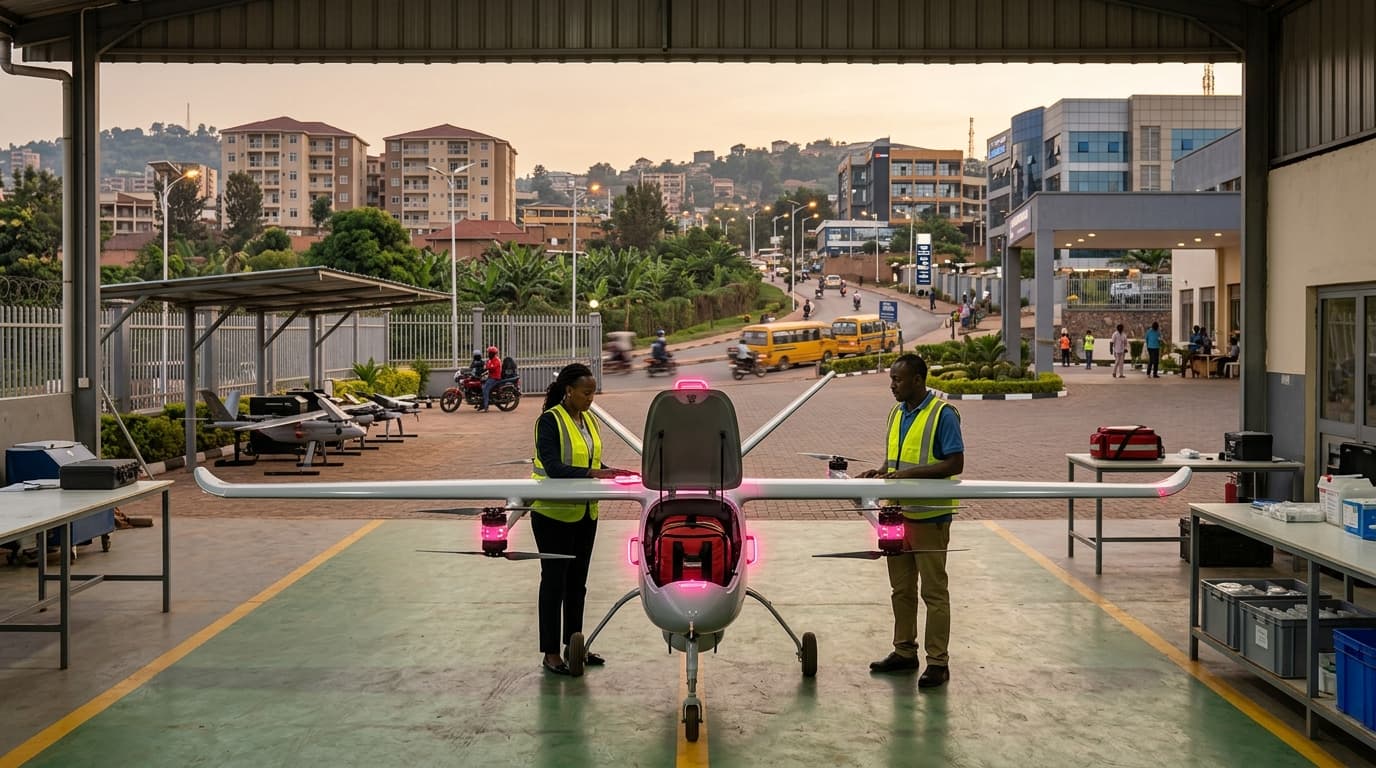
Autonomous Drone Medical Delivery Networks
Geography: Emea · Africa · Africa
In 2016, Rwanda contracted Zipline to build the world's first national-scale autonomous drone delivery system for medical supplies. Operating from distribution hubs, fixed-wing drones fly blood products, vaccines, and medications to over 600 health facilities across the country. Deliveries arrive within 30 minutes on average, compared to hours by road. The drones navigate autonomously, parachuting packages to designated drop zones before returning to base. Rwanda now handles more than 75% of its blood deliveries outside Kigali by drone.
The system was born from necessity. Rwanda's terrain — hilly, with roads that become impassable during rainy season — meant that rural hospitals frequently ran out of blood and essential medications. Patients died from conditions that were treatable simply because supplies couldn't arrive in time. The drone network eliminated stockout-related deaths for the facilities it serves. A 2022 Lancet study confirmed significant reductions in blood product wastage and improvement in emergency response times.
Rwanda's decision to pioneer drone delivery created a regulatory framework that the rest of the world is now studying. Ghana launched a similar program in 2019. Kenya followed. The technology has since expanded beyond Rwanda to serve multiple countries. Rwanda demonstrated that developing nations could leapfrog traditional logistics infrastructure, and its regulatory sandbox approach to drone aviation is now a model for drone integration globally.
Research this in Signals
Signals turns a topic into a sourced research record you can inspect and rerun. Your first scan is free, and this one starts with Autonomous Drone Medical Delivery Networks already loaded, so edit it or scan as is.