AI Diagnostic Imaging for Low-Resource Settings
Geography: Emea · Africa · Africa
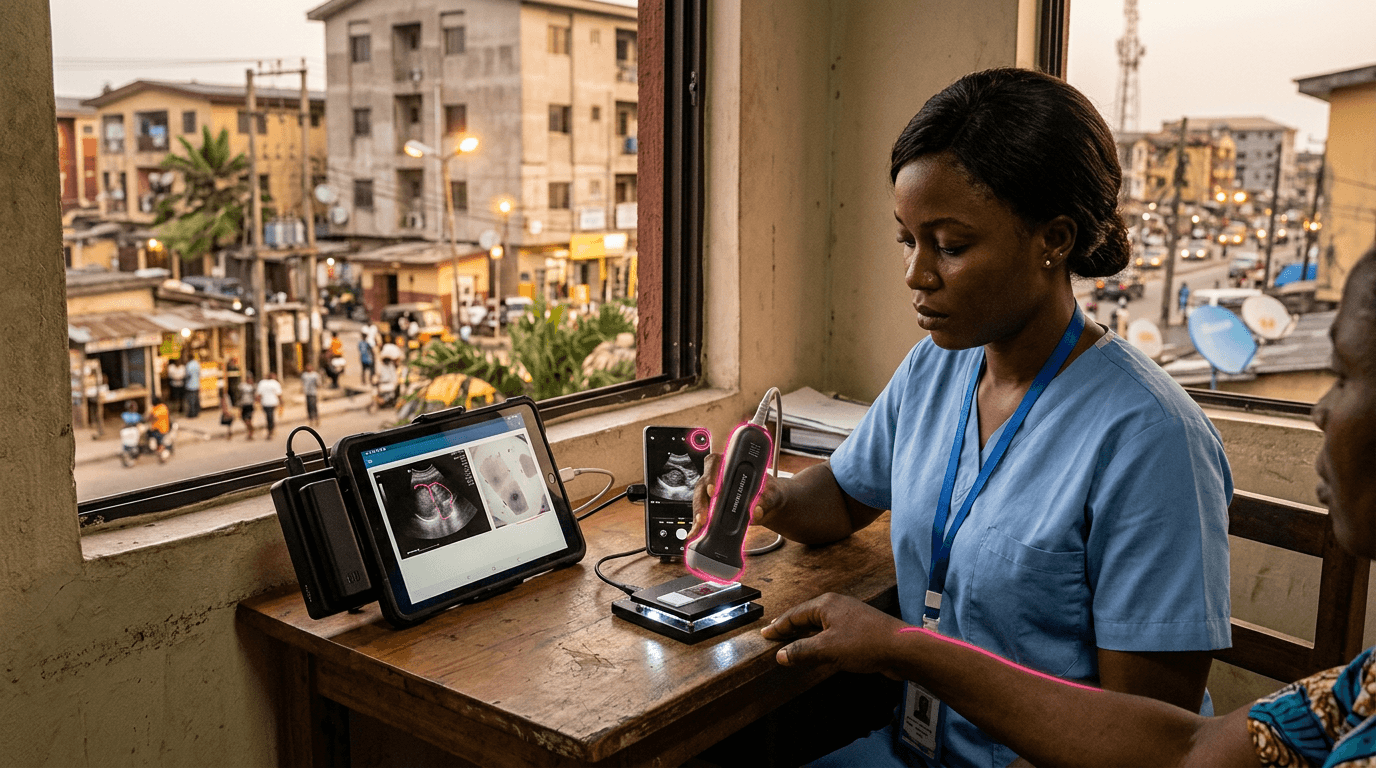
African AI startups and research labs are building diagnostic imaging models specifically trained on African patient populations — whose skin tones, disease presentation patterns, and comorbidities differ significantly from the Western datasets that train most medical AI. Companies like Ubenwa (Nigeria — neonatal asphyxia detection from infant crying), 54gene (Nigeria — genomics-informed diagnostics), and mPharma (Ghana — pharmacy AI) are developing solutions that work with the equipment available in African clinics: phone cameras, portable ultrasound, and basic X-ray machines.
The need is acute. Sub-Saharan Africa has the world's lowest ratio of radiologists to population — approximately 1 per million people in many countries. AI that can pre-screen chest X-rays for TB, analyze blood smears for malaria parasites via phone-attached microscopes, or detect cervical cancer from smartphone images addresses a capability gap that cannot be filled by training more specialists in any reasonable timeframe.
These models must work in conditions that Silicon Valley AI companies don't consider: intermittent power, low-bandwidth connectivity, devices with limited processing power, and patient populations underrepresented in global training datasets. The constraint forces innovation — edge-deployed models that run on $100 Android phones, producing results in seconds without cloud connectivity. This is AI meeting the world as it actually is for most people.
Research this in Signals
Signals turns a topic into a sourced research record you can inspect and rerun. Your first scan is free, and this one starts with AI Diagnostic Imaging for Low-Resource Settings already loaded, so edit it or scan as is.