Space Logistics Infrastructure
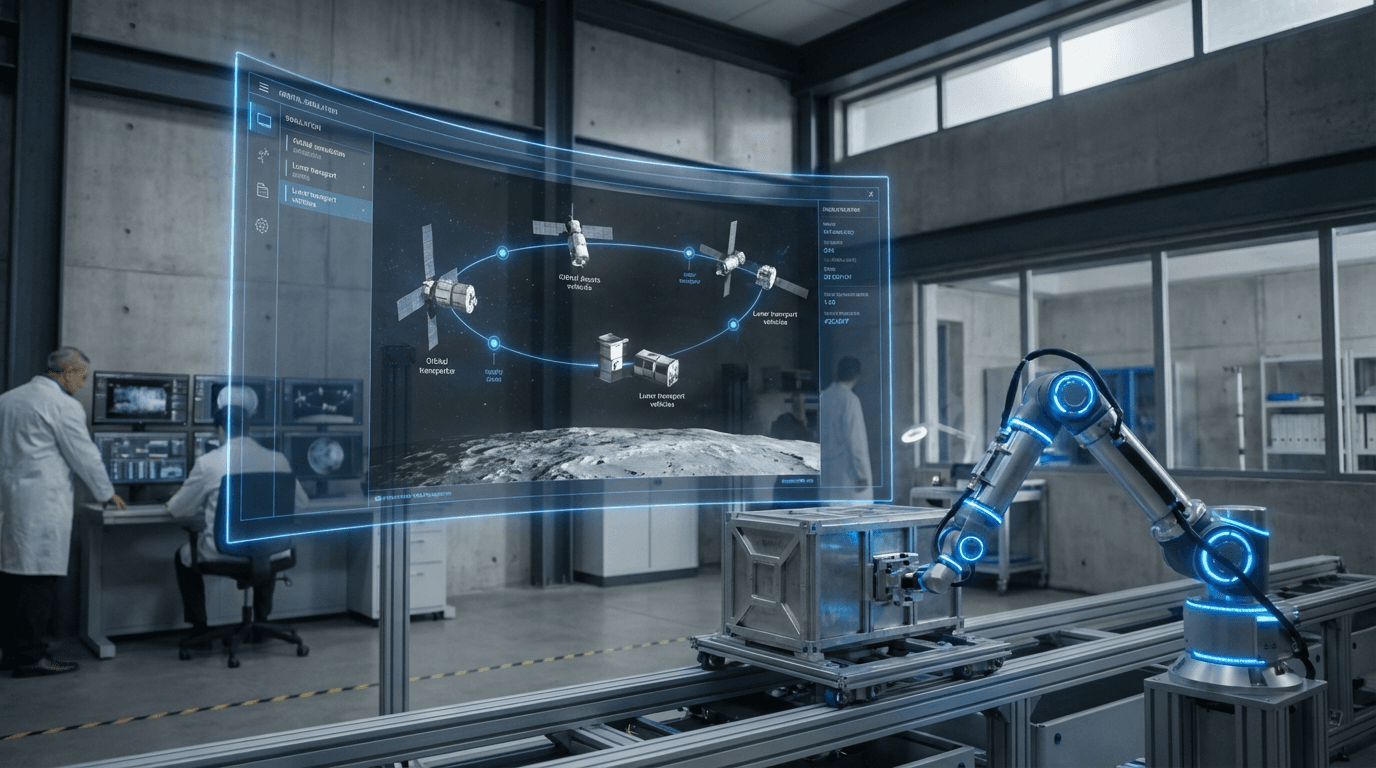
Space logistics infrastructure represents the emerging network of facilities, vehicles, and systems designed to support the storage, transfer, and transportation of materials beyond Earth's atmosphere. Unlike traditional terrestrial supply chains that rely on established ports, warehouses, and road networks, space-based logistics must contend with extreme environments, vast distances, and the fundamental challenge of operating in microgravity or reduced-gravity conditions. The technical foundation of this infrastructure includes orbital depots capable of storing cryogenic propellants in the vacuum of space, autonomous rendezvous and docking systems that enable spacecraft to meet and transfer cargo without human intervention, and specialized containers designed to protect sensitive materials from radiation and temperature extremes. These systems leverage advanced robotics, precision navigation technologies, and AI-driven control algorithms to coordinate operations across distances where communication delays can range from seconds to minutes, making real-time human oversight impractical for routine operations.
The development of space logistics infrastructure addresses critical bottlenecks that have historically constrained space exploration and commercial activities beyond low Earth orbit. Traditional mission architectures require spacecraft to carry all necessary propellant and supplies from Earth's surface, dramatically increasing launch costs and limiting payload capacity for scientific instruments or commercial cargo. By establishing refueling stations in strategic orbital locations and developing reusable transport vehicles that can shuttle between Earth orbit, lunar orbit, and surface installations, this infrastructure enables a fundamentally different operational model. Satellite servicing missions can extend the operational life of expensive communications and Earth observation assets, while lunar mining operations gain the ability to process and store extracted resources before transport. The infrastructure also supports the emerging commercial space economy by reducing the cost barrier for companies seeking to deploy manufacturing facilities or research stations in orbit, where unique conditions enable production of materials impossible to create under Earth's gravity.
Early implementations of space logistics systems are already operational, with satellite servicing demonstrations proving the viability of orbital rendezvous and robotic repair capabilities. Government space agencies and private aerospace companies are actively developing lunar lander systems designed for repeated cargo missions, while research into in-situ resource utilization explores methods for producing propellant and construction materials from lunar regolith and water ice. Proposed cislunar infrastructure includes staging points at gravitationally stable Lagrange points, where spacecraft can pause for refueling or cargo transfer with minimal energy expenditure. These developments align with broader industry trends toward sustainable space operations and the establishment of permanent human presence beyond Earth orbit. As launch costs continue to decline and the volume of space-based economic activity increases, the maturation of dedicated logistics infrastructure will prove essential for transforming space from a destination for occasional missions into an integrated extension of terrestrial supply chains, supporting everything from scientific research stations to commercial manufacturing facilities and eventual deep-space exploration initiatives.
Related Organizations

Developing the 'Gas Stations in Space' architecture, including the RAFTI fueling port standard and fuel depots.

Develops lunar landers and rovers (CubeRover, Polaris) designed for excavation and surface operations.

Space logistics company offering decommissioning services and developing technology to remove satellites at end-of-life.

Private lunar exploration company focusing on transportation and resource exploration to establish a lunar economy.

Provides commercial access to space, including the Bishop Airlock on the ISS used for deploying satellites and hosting experiments.

Developing the Dream Chaser spaceplane and LIFE habitats to support commercial space activities including manufacturing.

Developing Helios, a high-energy kick stage/tug for GEO and cislunar transfer.


Operates the BioFabrication Facility (BFF) on the ISS for printing human tissue.

Developing 'Nyx', a modular and reusable orbital vehicle designed to provide cargo logistics to commercial space stations.

Developing 'capture bag' technology originally for asteroid mining, now applied to capturing orbital debris.
Supporting Evidence
Research this in Signals
Signals turns a topic into a sourced research record you can inspect and rerun. Your first scan is free, and this one starts with Space Logistics Infrastructure already loaded, so edit it or scan as is.