







Circular Economy
This page is a narrower case of it.
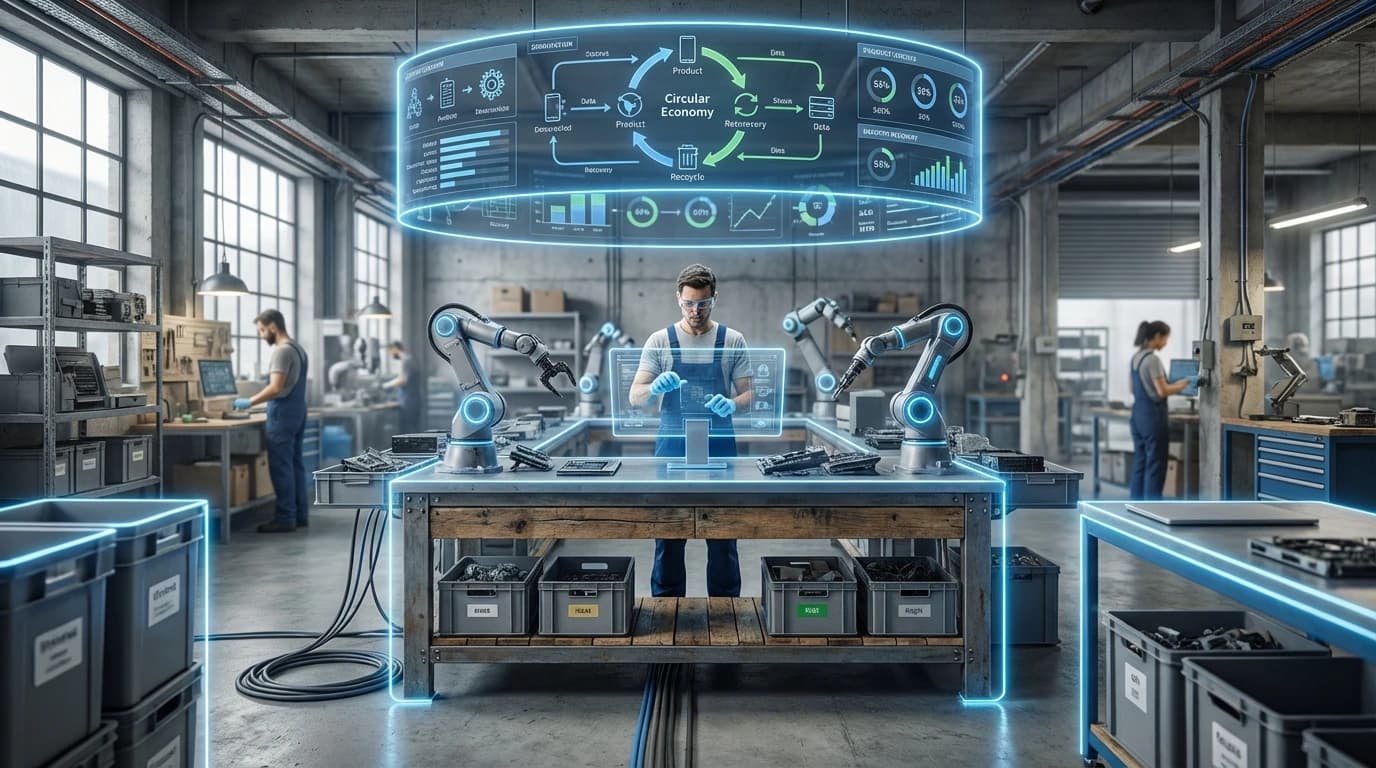
The global economy has long operated on a linear "take-make-dispose" model, where raw materials are extracted, transformed into products, and ultimately discarded as waste. This approach has created mounting environmental pressures, from resource depletion to landfill overflow, while leaving significant economic value trapped in discarded materials. Circular Economy Management Platforms address this fundamental inefficiency by providing the digital infrastructure needed to orchestrate complex reverse supply chains. These software systems integrate data from multiple sources—including product design specifications, material composition records, and real-time tracking sensors—to create comprehensive digital twins of physical products throughout their lifecycles. By maintaining detailed product passports that document materials, components, and refurbishment history, these platforms enable stakeholders across the supply chain to make informed decisions about recovery, reuse, and recycling opportunities.
The logistics challenges inherent in circular models are substantially more complex than traditional forward supply chains. While conventional logistics move products in one direction from manufacturer to consumer, circular systems must coordinate bidirectional flows, managing product returns, sorting operations, refurbishment facilities, and material recovery processes simultaneously. Circular Economy Management Platforms solve this coordination problem by providing visibility across fragmented reverse networks, matching returned products with appropriate recovery pathways based on condition, material value, and market demand. They optimize collection routes to minimize transportation costs, identify bottlenecks in sorting and processing operations, and connect secondary materials with manufacturers seeking alternatives to virgin inputs. This orchestration capability is particularly valuable in industries with high-value components or materials, where recovered products can retain substantial economic worth through refurbishment or remanufacturing.
Early deployments of these platforms have emerged across sectors including electronics, automotive, fashion, and packaging, driven by both regulatory pressures and recognition of circular business models' economic potential. Extended Producer Responsibility regulations in Europe and elsewhere are compelling manufacturers to take greater accountability for end-of-life product management, creating demand for systems that can efficiently coordinate take-back programs at scale. Beyond compliance, forward-thinking companies are discovering that circular platforms unlock new revenue streams through product-as-a-service models, certified refurbished offerings, and secondary material marketplaces. As supply chain disruptions have highlighted vulnerabilities in global material sourcing, the ability to recover and redeploy materials domestically has gained strategic importance. The trajectory points toward these platforms becoming essential infrastructure for supply chain resilience, enabling organizations to reduce dependence on volatile commodity markets while meeting sustainability commitments and regulatory requirements in an increasingly resource-constrained world.
A global thought leader promoting the circular economy, working with cities to implement strategies that design out waste and keep products in use.
Provides a returns optimization platform that helps retailers manage, resell, and recycle returned inventory.
Offers an end-to-end returns management system (RMS) for B2B, B2C, and hybrid environments.
Uses blockchain and Zero-Knowledge Proofs to share product data (like chemical content) without revealing sensitive supplier information.
Software company creating the Digital ID for physical products.
Provides the operating system for branded resale, enabling companies like Patagonia and Lululemon to run trade-in and resale programs.
A global reuse platform that partners with brands and retailers to offer products in reusable packaging.
Enables brands to launch integrated resale marketplaces directly on their e-commerce sites.
Provides a software platform for smart waste and recycling solutions, connecting waste generators with haulers to divert waste from landfills.
Published forecasts about this technology, graded against what happened in Hindsight.
Circular Economy
This page is a narrower case of it.
Signals turns a topic into a sourced research record you can inspect and rerun. Your first scan is free, and this one starts with Circular Economy Management Platforms already loaded, so edit it or scan as is.