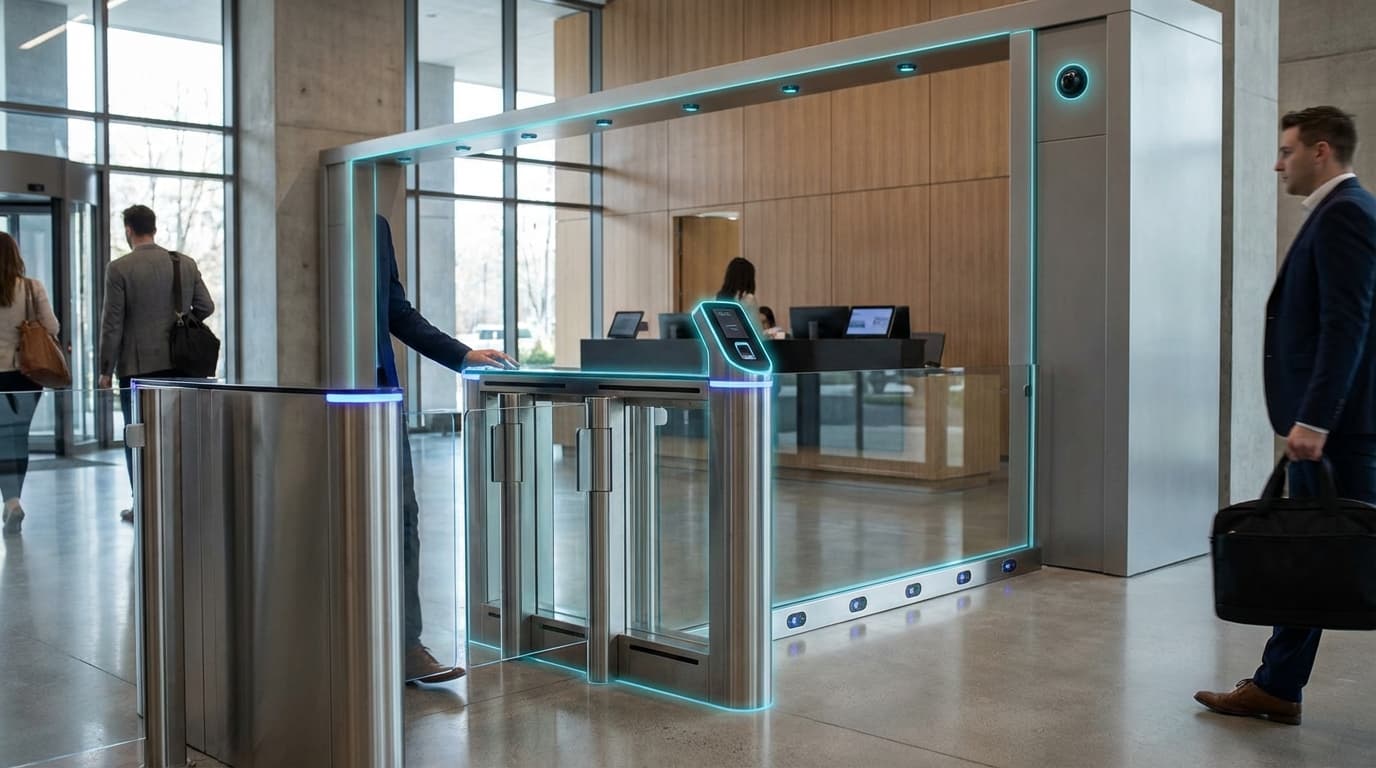
Smart Security & Access Control
Smart security and access control represents a fundamental shift from traditional lock-and-key infrastructure to intelligent, networked systems that treat physical access as a software-defined challenge. These platforms combine multiple authentication modalities—including RFID badges, facial recognition, fingerprint scanning, and mobile credentials—with real-time video analytics and occupancy sensors to create a comprehensive security fabric across buildings and campuses. At the technical core lies a cloud-native architecture that centralises identity management, policy enforcement, and audit logging while distributing sensor networks and edge processing throughout the physical environment. Machine learning algorithms continuously analyse patterns of movement, detect anomalies such as tailgating or unauthorised zone entry, and adapt access permissions based on time, location, and user context. The system's ability to integrate disparate data streams—from visitor pre-registration portals to emergency evacuation protocols—creates a single source of truth for security operations that can scale from individual buildings to global real estate portfolios.
The construction and facilities management industries have long struggled with the fragmentation of security systems, where badge readers, surveillance cameras, and alarm panels operate as isolated silos requiring separate management consoles and manual coordination during incidents. Smart security platforms address this challenge by unifying these components under a common API and policy framework, dramatically reducing the operational overhead of managing access across multi-tenant office towers, hospital complexes, or university campuses. This integration enables sophisticated capabilities such as dynamic zoning, where access rights automatically adjust based on real-time conditions—granting contractors temporary access to specific floors during renovation windows, or restricting movement during emergency lockdowns without manual intervention. The zero-trust approach borrowed from cybersecurity means that every access request is verified against current policy regardless of previous credentials, significantly reducing the risk of compromised badges or insider threats. For property managers and corporate security teams, these systems provide unprecedented visibility into building usage patterns, compliance with safety regulations, and the ability to respond to incidents with complete forensic data about who accessed which spaces and when.
Early deployments in commercial real estate and healthcare facilities demonstrate the technology's maturity, with major office landlords and hospital networks replacing legacy systems with cloud-managed platforms that support mobile credentialing and touchless entry—a capability that gained urgency during the COVID-19 pandemic. The integration of privacy-preserving analytics allows organisations to monitor crowd density and movement flows without storing identifiable video footage, addressing growing regulatory concerns around surveillance in the workplace. As buildings become increasingly instrumented with IoT sensors and occupancy data, smart security systems are evolving into broader building intelligence platforms that inform space utilisation, energy management, and tenant experience strategies. The trajectory points toward security infrastructure that not only protects assets but actively contributes to operational efficiency, with access control data feeding into predictive maintenance schedules, flexible workspace allocation, and seamless integration with smart building automation systems that adjust lighting, climate, and elevator dispatch based on authenticated occupant presence.
Related Organizations

Cloud-based physical security platform including AI-enabled cameras and access control.

Provides a full building operating system (LatchOS) centered around smart access devices for multifamily buildings.


Offers mobile-first access control solutions that allow users to unlock doors via smartphone without opening an app.

Creator of the smart video intercom system that enables smartphone-based building access and visitor management.


Cloud-based access control platform that allows businesses to manage keys and security remotely.

Global leader in electronic access control solutions, known for their data-on-card technology and smart locking systems.

Provides autonomous access control using 3D facial authentication and AI.

Unified security platform blending IP security, video surveillance, and access control.

Touchless access control company using face recognition and mobile unlock for modern offices and residential buildings.

Provides cloud-based software for access control and visitor management that integrates with non-proprietary hardware.
Supporting Evidence
Research this in Signals
Signals turns a topic into a sourced research record you can inspect and rerun. Your first scan is free, and this one starts with Smart Security & Access Control already loaded, so edit it or scan as is.