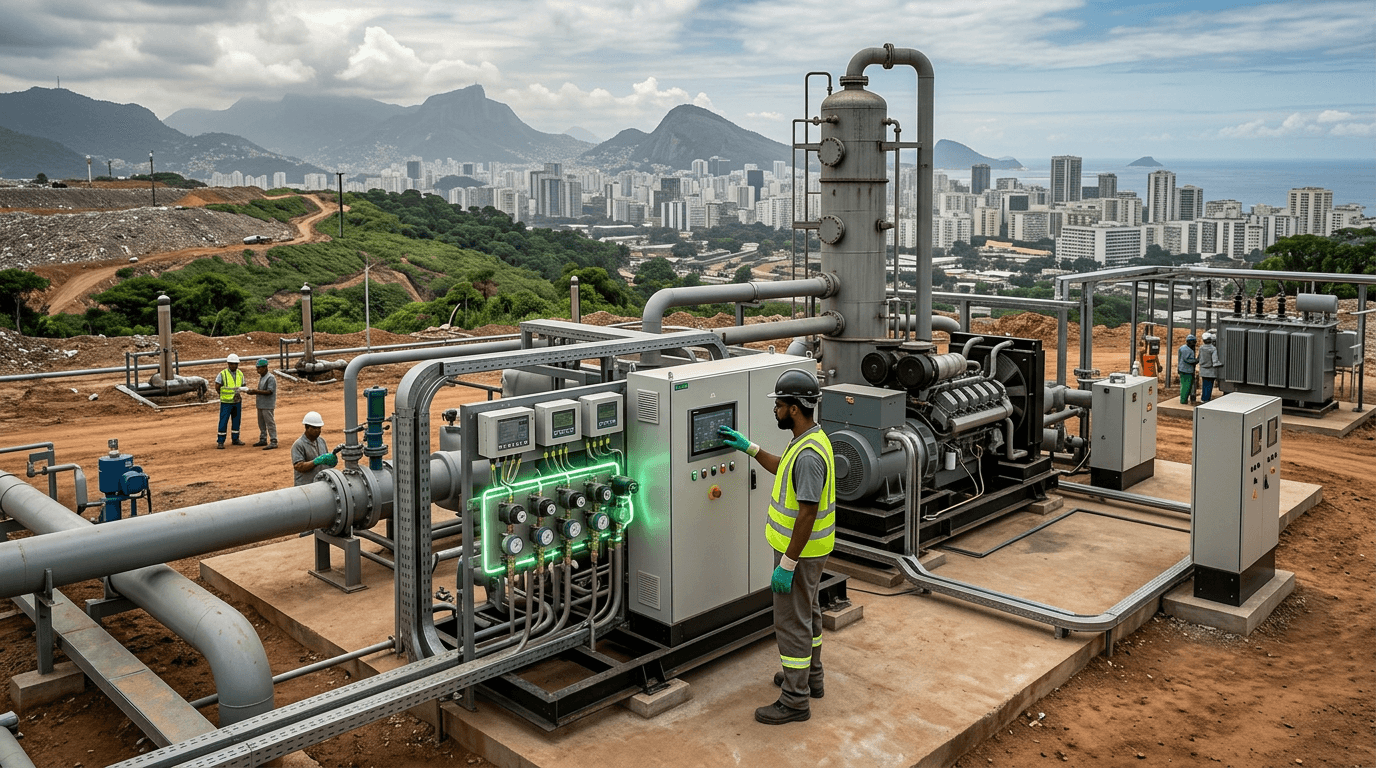
Landfill Biogas and Waste-to-Energy
Geography: Americas · South America · Brazil
Brazil's PLANARES 2024 waste management plan set federal targets: 994 MW of waste-to-energy through thermal recovery, 252 MW from landfill biogas, and 69 MW through anaerobic digestion by 2040, requiring R.67 billion in investment.
The opportunity is large because the problem is large: 40% of Brazil's 81 million annual tons of municipal waste still ends up in open dumps or inadequate landfills. Methane from decomposing organic waste is a potent greenhouse gas. Capturing it for electricity generation simultaneously addresses waste management, climate emissions, and energy production.
Several projects are operational or under construction: biogas-to-electricity plants at sanitary landfills in São Paulo, Minas Gerais, and Rio de Janeiro. The technology is proven globally but underdeployed in Brazil due to regulatory fragmentation between municipal waste management and federal energy policy. The new PLANARES targets aim to close this gap.
Research this in Signals
Signals turns a topic into a sourced research record you can inspect and rerun. Your first scan is free, and this one starts with Landfill Biogas and Waste-to-Energy already loaded, so edit it or scan as is.