General-Purpose Humanoid Robots
Geography: Americas · North America · United States
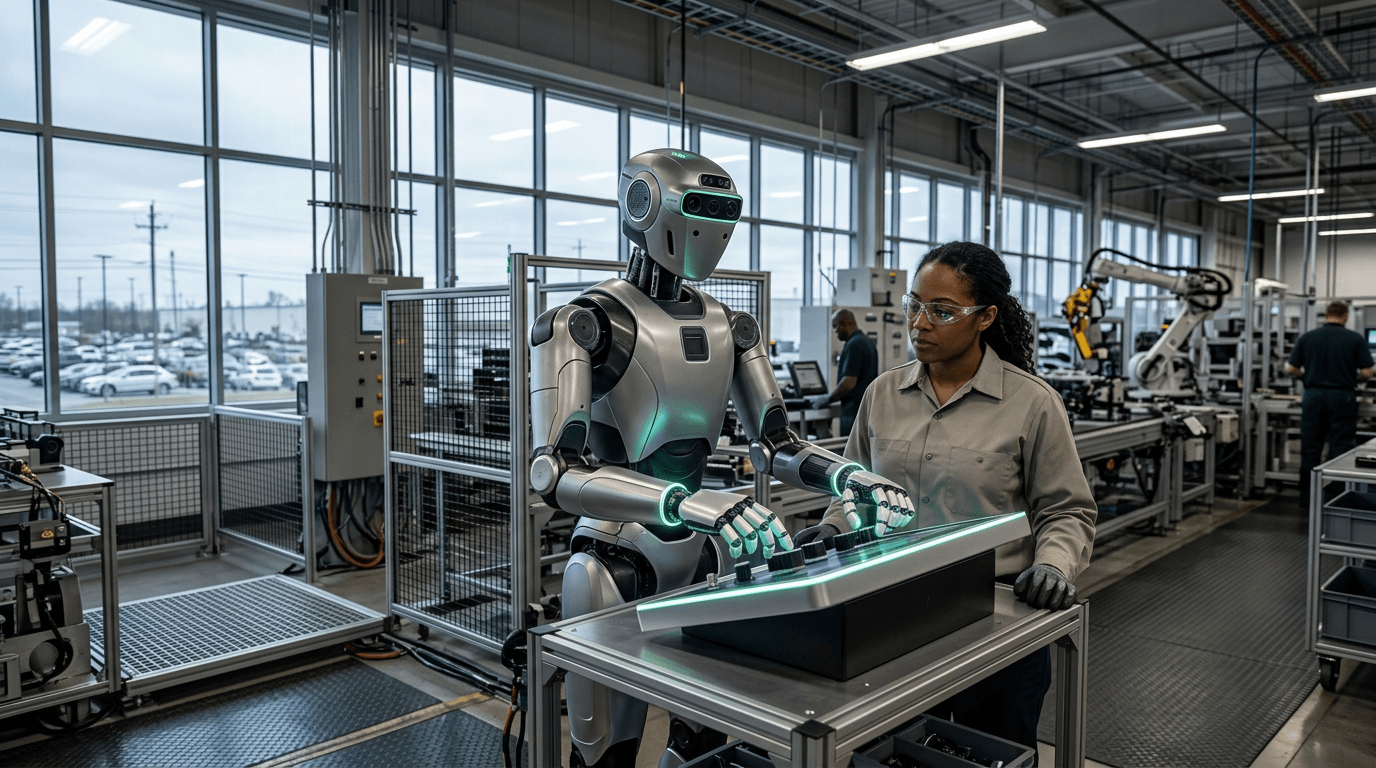
General-purpose humanoid robots are being designed to operate in human-built environments without modification. Figure AI's Figure 02 integrates custom-built AI for autonomous task execution. Apptronik's Apollo features swappable battery packs, modular limbs, and 4-hour operational windows. Agility Robotics' Digit is being pilot-tested in Amazon warehouses. Tesla's Optimus is progressing through internal testing.
The convergence of AI foundation models with robotic hardware is the key enabler. Foundation models trained on internet-scale data give robots commonsense understanding of objects, environments, and tasks. Combined with learned manipulation skills from simulation and real-world practice, humanoids can increasingly handle unstructured environments — picking up arbitrary objects, navigating cluttered spaces, and following natural language instructions.
The economic case for humanoid robots centers on labor shortages in manufacturing, warehousing, and elder care. BMW and Mercedes are testing humanoids from Figure AI and Apptronik respectively in their factories. If humanoids can reliably perform 60-70% of manual warehouse or factory tasks, the addressable market is measured in trillions of dollars. The US leads in humanoid AI while Chinese competitors (Unitree, UBTech) lead in lower-cost hardware.
Research this in Signals
Signals turns a topic into a sourced research record you can inspect and rerun. Your first scan is free, and this one starts with General-Purpose Humanoid Robots already loaded, so edit it or scan as is.