Generative AI for Materials Discovery
Geography: Americas · North America · United States
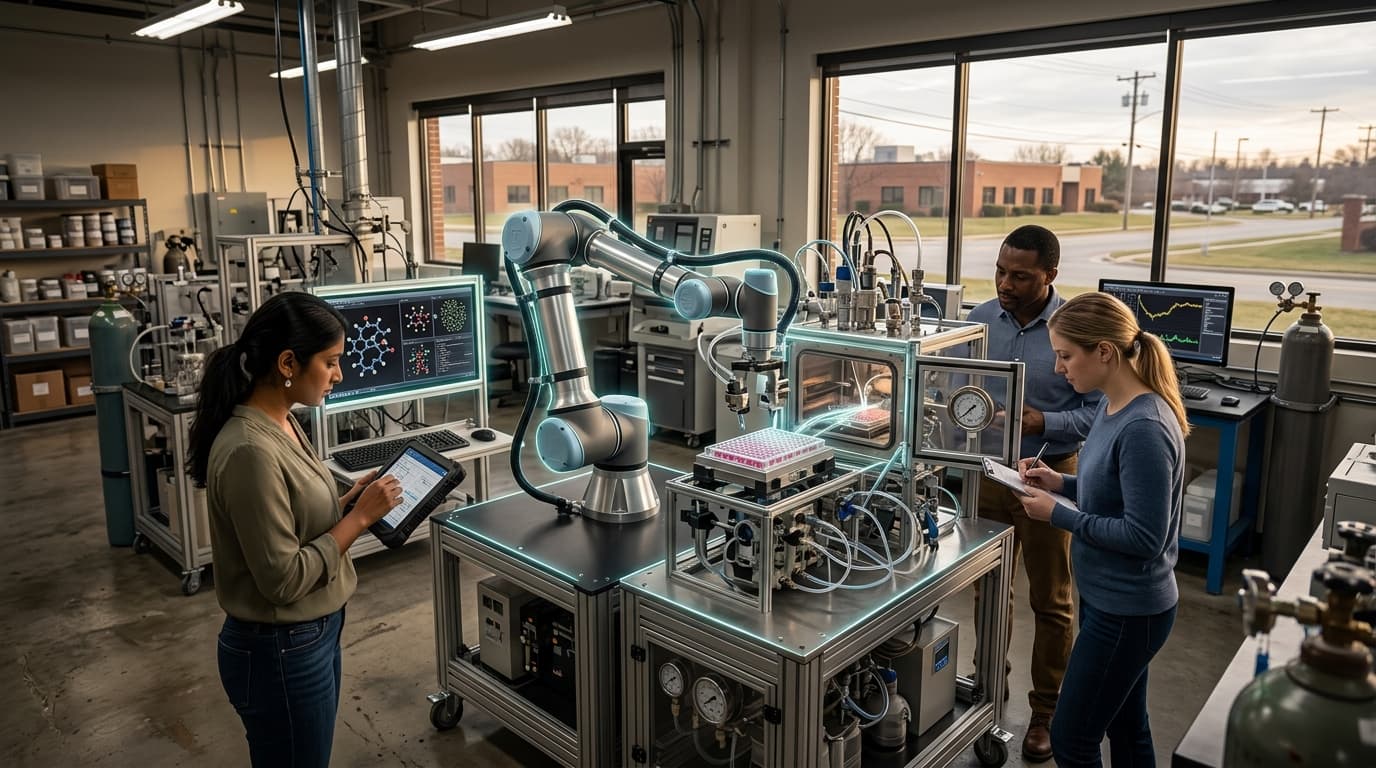
Generative AI for materials design uses machine learning to predict the properties of novel material compositions and crystal structures before they are synthesized. Google DeepMind's Graph Networks for Materials Exploration (GNoME) identified 2.2 million new stable crystal structures — equivalent to 800 years of conventional scientific discovery. US national laboratories (ORNL, Argonne, Sandia) are applying similar techniques to design specific materials for batteries, aerospace, and catalysis.
Materials discovery has historically been slow, serendipitous, and expensive. Testing a single new alloy composition can take months of synthesis, characterization, and performance evaluation. AI models can screen millions of candidates computationally, identifying the most promising for physical testing and reducing the discovery cycle from years to weeks.
The US benefits from its network of national laboratories and university materials science programs, which provide both the training data and experimental validation capabilities that AI-driven discovery requires. Accelerated materials innovation has implications across every technology sector — better batteries, lighter aircraft, more efficient solar cells, and stronger construction materials all depend on new materials.
Research this in Signals
Signals turns a topic into a sourced research record you can inspect and rerun. Your first scan is free, and this one starts with Generative AI for Materials Discovery already loaded, so edit it or scan as is.