Foundation Models for Robotics
Geography: Americas · North America · United States
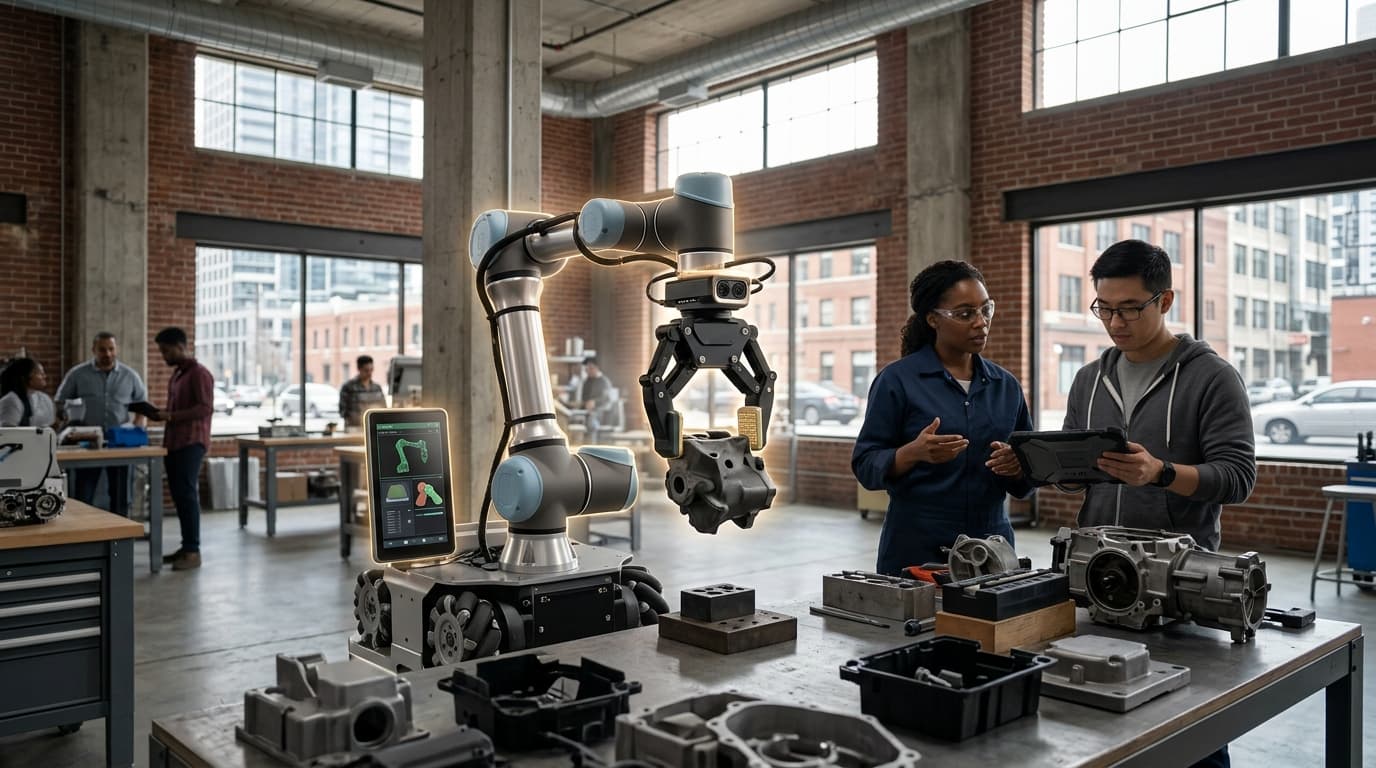
Foundation models for robotics bridge the gap between AI language understanding and physical manipulation. Google's RT-2 demonstrated that large language models fine-tuned on robot data can transfer commonsense reasoning to physical tasks. NVIDIA's Project GR00T provides a foundation model specifically for humanoid robots. Physical Intelligence (Pi) raised over $400 million to build a 'foundation model for robots' that can learn manipulation skills from demonstration.
The fundamental challenge in robotics has always been generalization: robots excel at repetitive tasks in controlled environments but fail when objects, lighting, or layouts change. Foundation models address this by providing broad world knowledge — a robot that understands language descriptions of objects and their properties can handle novel items it has never encountered before.
This represents a potential 'ChatGPT moment' for robotics: just as language models suddenly made AI useful for general text tasks, robotic foundation models could make robots useful for general physical tasks. The US leads in this research through its AI companies (Google, NVIDIA, OpenAI) and robotics startups, creating a potential advantage in deploying intelligent robots at scale.
Research this in Signals
Signals turns a topic into a sourced research record you can inspect and rerun. Your first scan is free, and this one starts with Foundation Models for Robotics already loaded, so edit it or scan as is.