Cell-Free Biomanufacturing
Geography: Americas · North America · United States
Cell-free biomanufacturing extracts the molecular machinery from cells — ribosomes, enzymes, cofactors — and uses it in controlled reactions outside any living organism. Companies like Tierra Biosciences, Synvitrobio, and academic groups at Northwestern and Stanford have demonstrated cell-free production of proteins, small molecules, and diagnostic reagents. DARPA has funded cell-free systems for on-demand biomanufacturing in austere environments, and the DOE's Agile BioFoundry explores cell-free approaches for industrial chemical production.
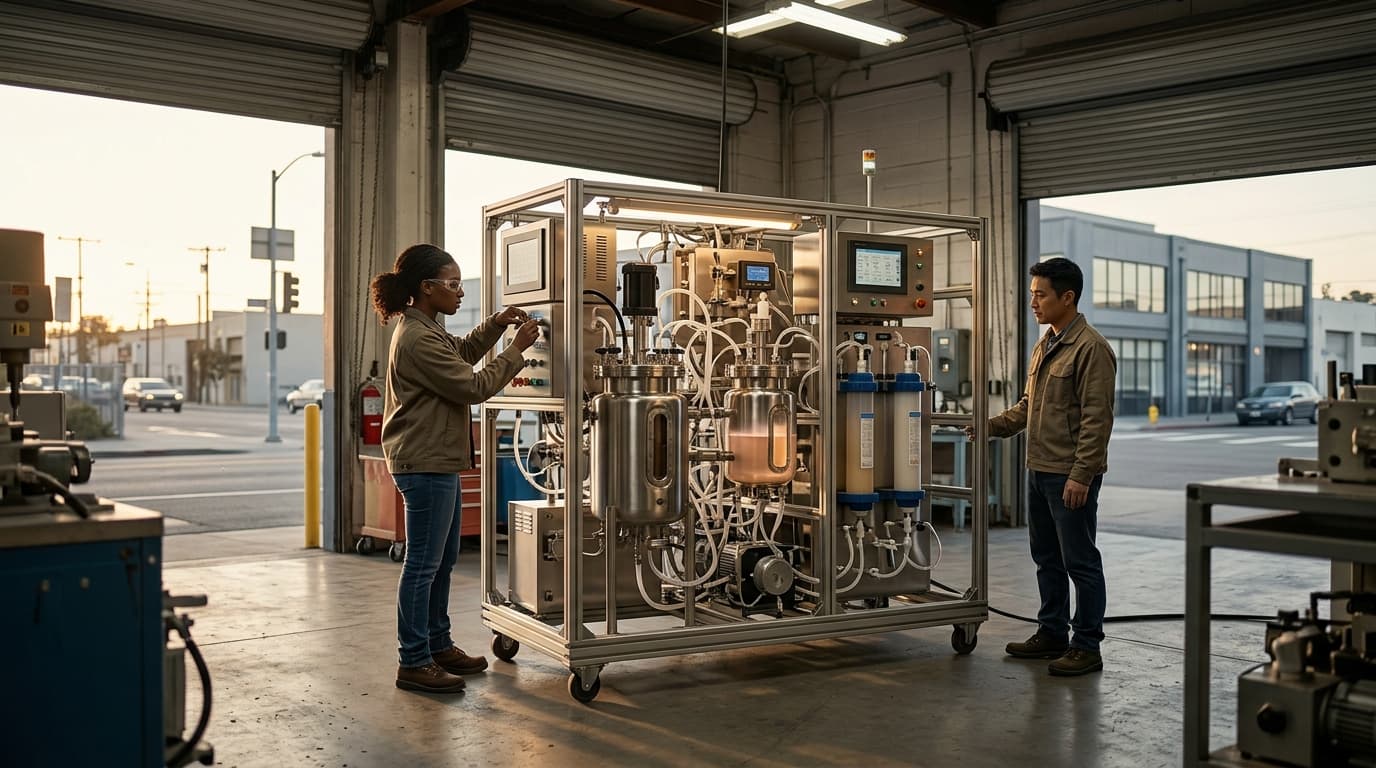
The advantage over traditional fermentation (using living cells) is speed, control, and portability. Living cells divert energy to growth and maintenance; cell-free systems direct all resources toward the desired product. Reaction conditions can be precisely controlled without worrying about cell viability. Production runs complete in hours rather than the days or weeks required for cell culture. Most compellingly, cell-free systems can be freeze-dried into shelf-stable pellets that are reconstituted with water — enabling point-of-need manufacturing in field hospitals, forward operating bases, or disaster zones.
Cell-free biomanufacturing is particularly relevant for defense and pandemic preparedness: the ability to produce vaccines, therapeutics, and diagnostic reagents anywhere, without cold chains or specialized facilities, addresses critical supply chain vulnerabilities exposed by COVID-19. The technology also accelerates prototyping in synthetic biology — testing thousands of genetic circuit designs in cell-free systems before committing to living-cell engineering. Current limitations include cost (enzymes are expensive) and scale (most demonstrations are at laboratory scale), but advances in enzyme recycling and continuous-flow reactors are addressing both.
Research this in Signals
Signals turns a topic into a sourced research record you can inspect and rerun. Your first scan is free, and this one starts with Cell-Free Biomanufacturing already loaded, so edit it or scan as is.