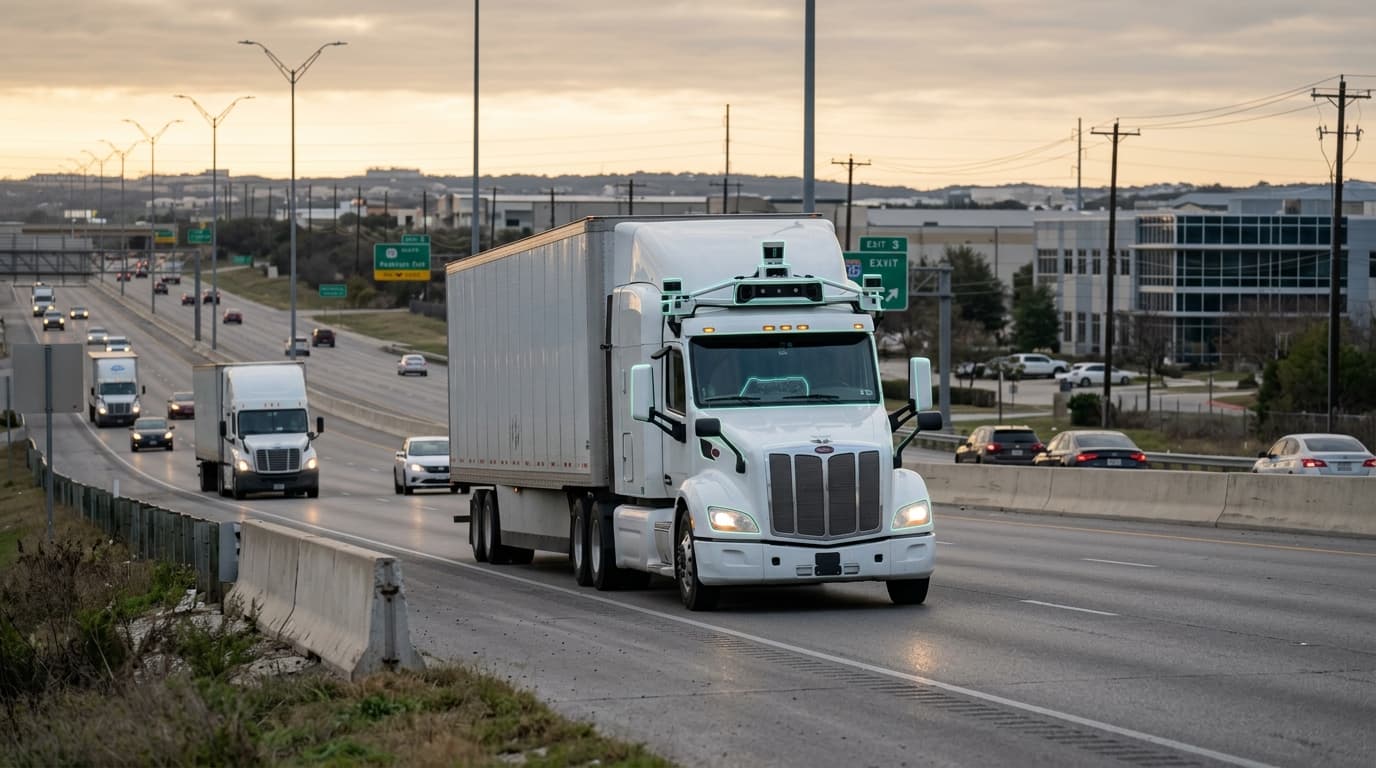
Autonomous Long-Haul Trucking
Geography: Americas · North America · United States
Autonomous long-haul trucking uses self-driving technology on highway routes between logistics hubs. Aurora Innovation's Aurora Driver launched commercial driverless operations on Texas highways, running freight for FedEx and other partners. Kodiak Robotics is deploying autonomous trucks for the US Army's logistics operations. Torc Robotics (Daimler Truck subsidiary) continues testing on US highways.
The US trucking industry faces a structural driver shortage — approximately 78,000 drivers short as of 2025, projected to grow as the workforce ages. Autonomous trucks can operate 24/7 without Hours of Service restrictions, improving asset utilization by 2-3x. Highway driving is also technically simpler than urban driving, making it a more tractable autonomy problem.
Autonomous trucking has significant strategic implications for supply chain resilience. A trucking system that doesn't depend on scarce human drivers is more robust against labor disruptions, pandemics, and demographic decline. The technology also reduces fuel consumption (AI drives more efficiently than humans) and accident rates (truck crashes kill approximately 5,000 Americans annually).
Research this in Signals
Signals turns a topic into a sourced research record you can inspect and rerun. Your first scan is free, and this one starts with Autonomous Long-Haul Trucking already loaded, so edit it or scan as is.