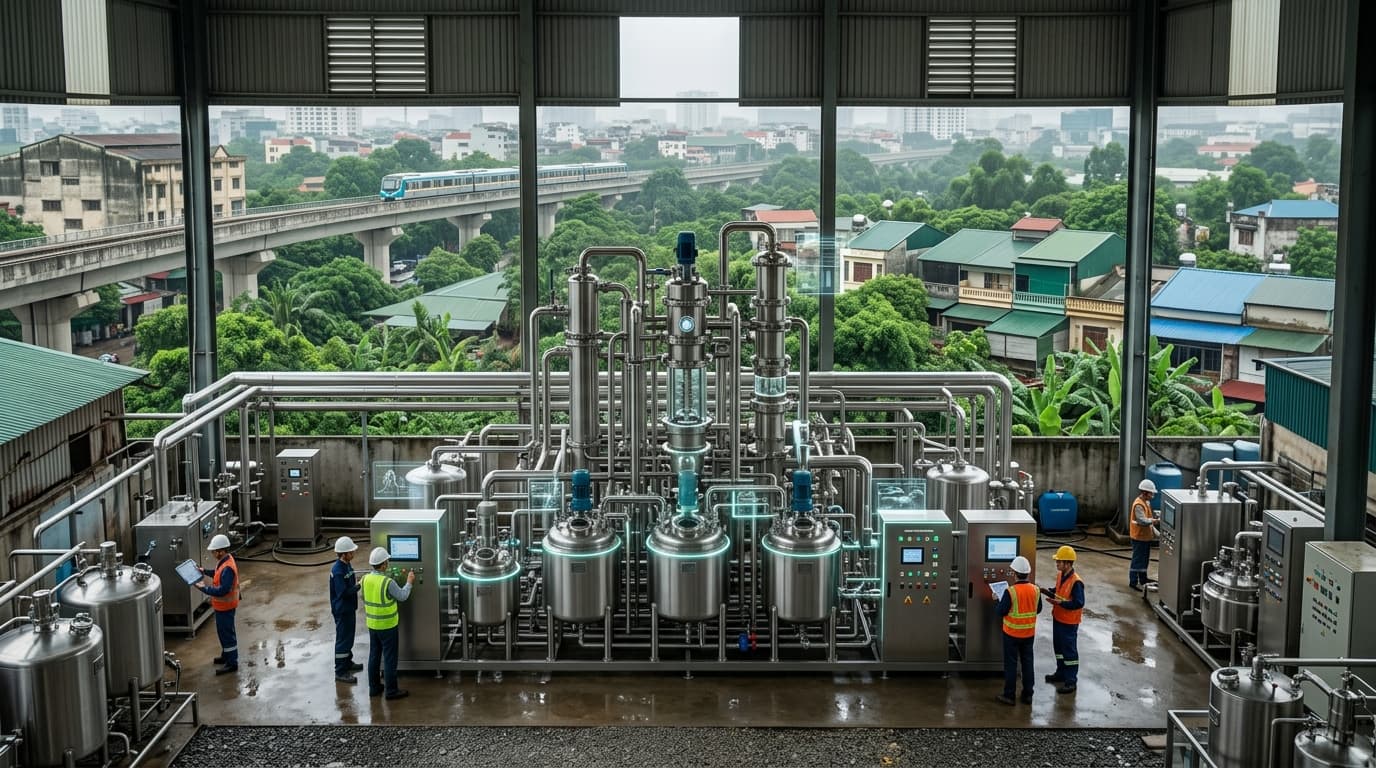
Rare Earth Element Processing
Geography: Asia Pacific · Southeast Asia · Southeast Asia
Vietnam — Vietnam's rare earth reserves, concentrated in Lai Chau and Lao Cai provinces, represent a strategic asset in the global critical minerals race. The government's legal framework requires technology transfer as a prerequisite for resource access, aiming to avoid the historical pattern where resource-rich nations remain locked into low-value extraction. Processing targets of 20,000-60,000 tonnes per year by 2030 are planned.
The USGS revised Vietnam's reserve estimates downward in 2025, creating uncertainty about the resource base. However, the strategic significance remains: as the US and EU seek to diversify rare earth supply chains away from China's 60%+ processing dominance, Vietnam's combination of reserves, proximity to manufacturing demand, and willingness to accept foreign investment makes it a priority partner.
Vietnam's approach is more sophisticated than simple extraction: the legal framework mandates advanced processing capabilities, environmental standards, and domestic value-addition. This 'conditional sovereignty' model — resources for technology — could become a template for how developing nations negotiate critical mineral access with advanced economies.
Research this in Signals
Signals turns a topic into a sourced research record you can inspect and rerun. Your first scan is free, and this one starts with Rare Earth Element Processing already loaded, so edit it or scan as is.