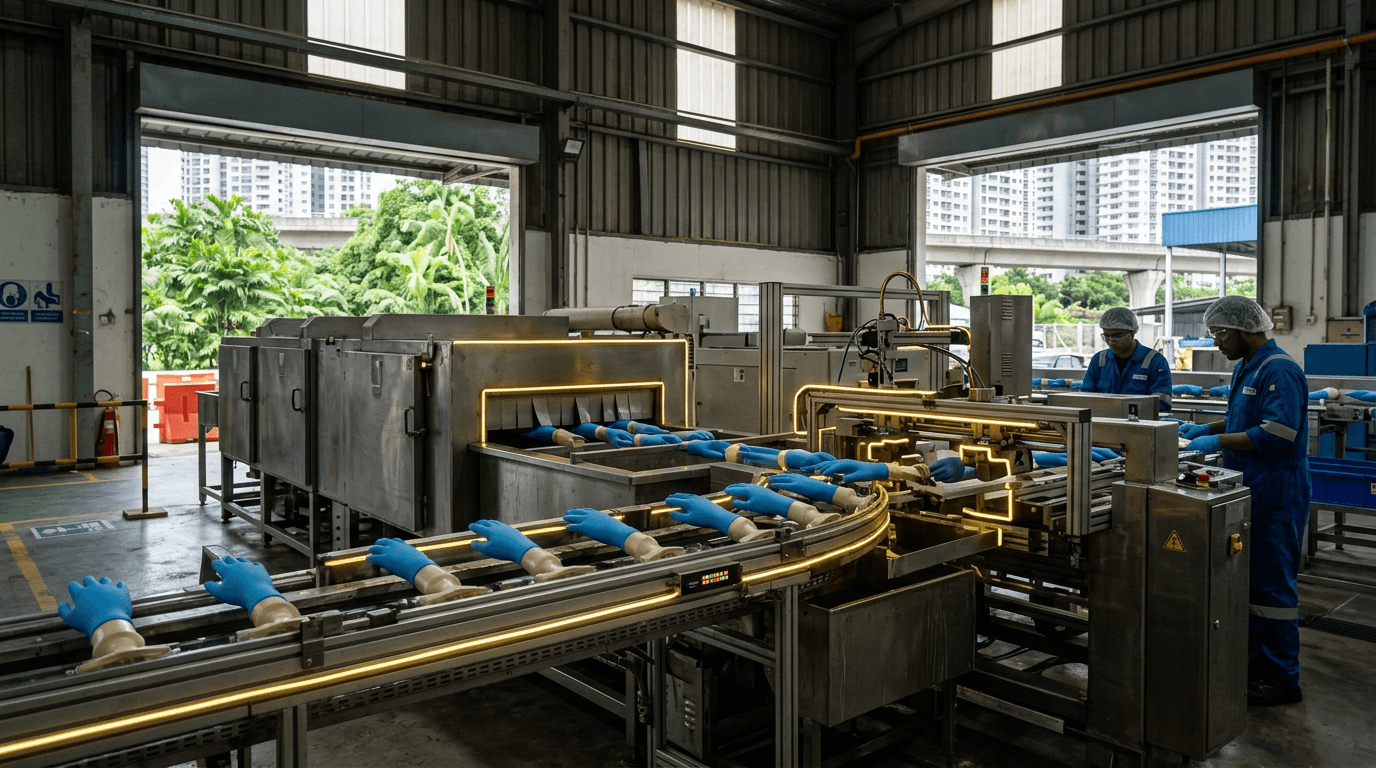
Automated Rubber Glove Manufacturing
Geography: Asia Pacific · Southeast Asia · Southeast Asia
Malaysia — Malaysia manufactures approximately 65% of the world's rubber gloves, an industry that became globally visible during COVID-19 when supply shortages drove prices to 10x normal levels. Post-pandemic, major producers (Top Glove, Hartalega, Supermax) invested heavily in automation, reducing labor dependence by ~30% through automated dipping lines, AI-powered quality inspection, and robotic packaging.
The automation push was driven by dual pressures: post-pandemic demand normalization that required cost reduction, and Malaysia's crackdown on migrant worker exploitation (which had sustained the industry's labor-intensive model). The technology shift toward lights-out manufacturing represents a broader ASEAN trend: industries built on cheap labor must automate or die as wages rise and labor protections strengthen.
Globally, Malaysia's rubber glove automation is a microcosm of Southeast Asian manufacturing evolution. The same factories that once relied on thousands of migrant workers are now developing AI-powered inspection systems that detect defects invisible to the human eye. This manufacturing intelligence could be applied to other latex and polymer products, extending Malaysia's dominance into medical devices and industrial protective equipment.
Research this in Signals
Signals turns a topic into a sourced research record you can inspect and rerun. Your first scan is free, and this one starts with Automated Rubber Glove Manufacturing already loaded, so edit it or scan as is.