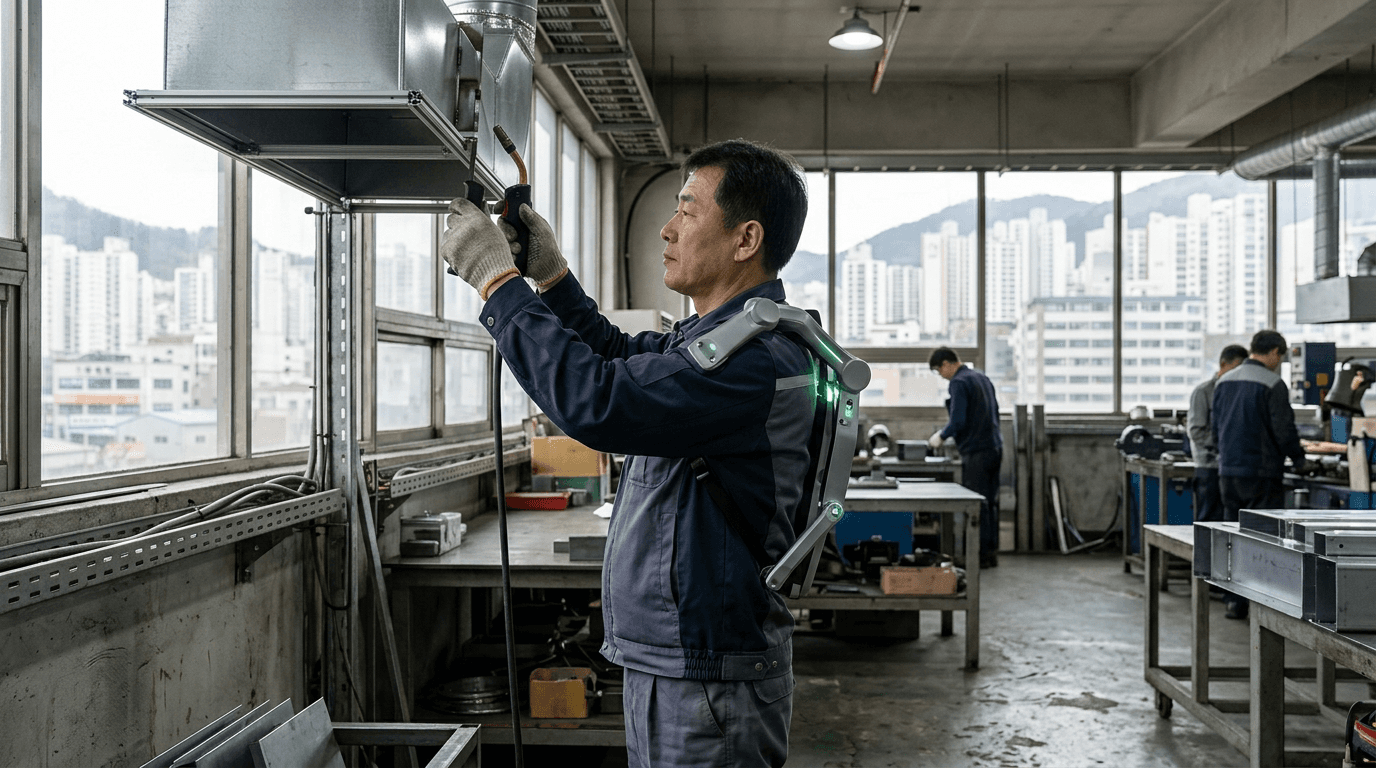
Wearable Exoskeleton Robots
Geography: Asia Pacific · East Asia · South Korea
Hyundai Robotics developed the X-ble Shoulder, a wearable exoskeleton that supports overhead arm tasks in manufacturing and agriculture, and the VEX (Vest Exoskeleton) for shipyard workers. These passive and semi-active devices reduce muscle fatigue by 50-60% for repetitive overhead tasks like welding, painting, and fruit picking.
Korea's exoskeleton development is unusual because it's driven by industrial conglomerates solving their own workforce problems. Hyundai doesn't just sell exoskeletons — it deploys them in its own shipyards (HD Hyundai) and factories, creating a captive testing ground. Samsung has parallel exoskeleton programs for its construction and semiconductor fab workers.
As Korea's population ages and manufacturing labor becomes scarcer, wearable robotics offer a bridge technology — augmenting existing workers rather than replacing them. The Korean Ministry of Trade, Industry, and Energy has set a target of 10,000 exoskeletons deployed across Korean industry by 2027.
Research this in Signals
Signals turns a topic into a sourced research record you can inspect and rerun. Your first scan is free, and this one starts with Wearable Exoskeleton Robots already loaded, so edit it or scan as is.