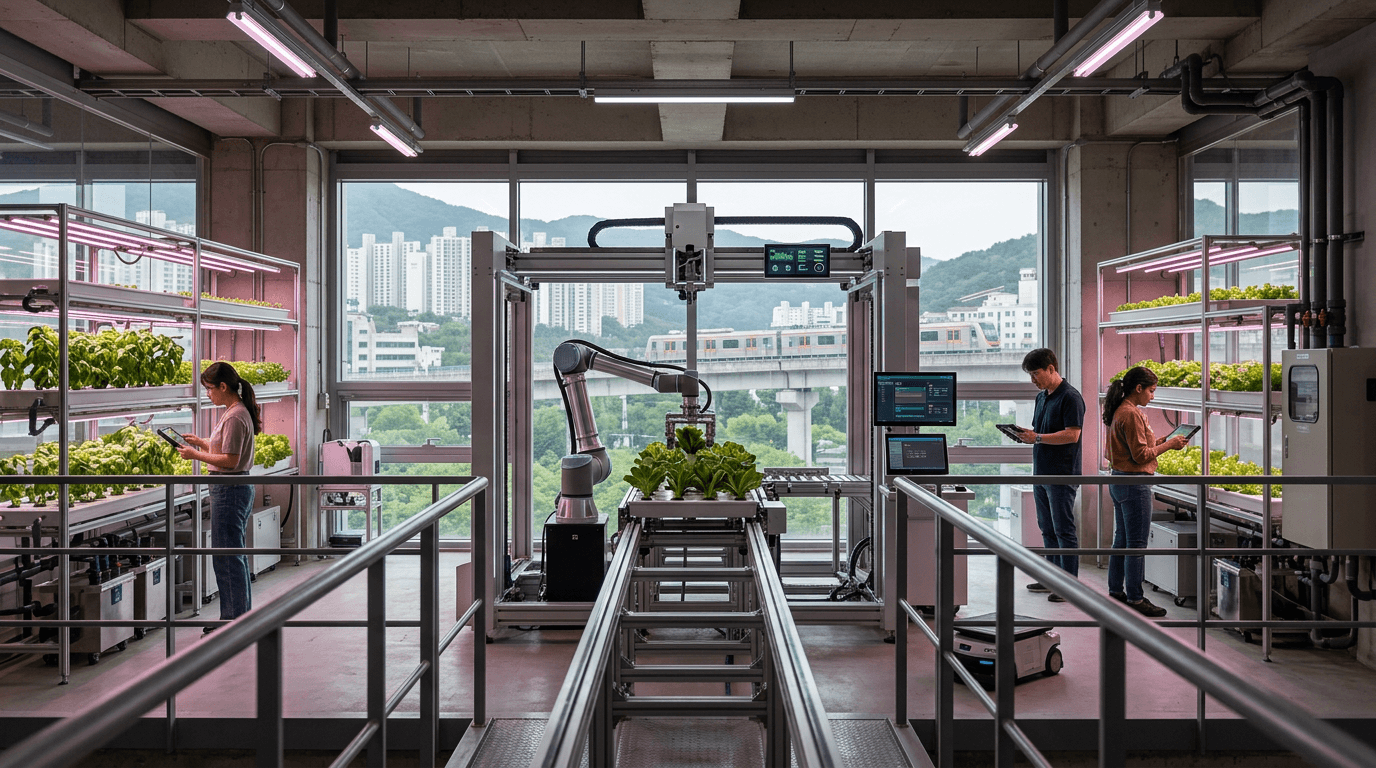
Smart Agriculture and Vertical Farming
Geography: Asia Pacific · East Asia · South Korea
Korea imports over 75% of its grain and is among the most food-import-dependent developed nations, making agricultural technology a national security priority. Companies like N.Thing operate large-scale vertical farms using AI-optimized LED lighting, climate control, and hydroponic systems to grow leafy greens and strawberries year-round in urban facilities. XAG Korea and DJI Korea deploy agricultural drones for precision spraying across Korean rice paddies.
The Korean government's Smart Farm Initiative targets 7,000 smart farms by 2027 (up from ~4,000 in 2024), with integrated IoT sensors, AI-driven crop management, and robotic systems. KAIST and Seoul National University are developing fruit-picking robots capable of harvesting strawberries and tomatoes — crops that currently require intensive manual labor from an increasingly scarce agricultural workforce.
Vertical farming in Korea benefits from unique conditions: limited arable land, expensive real estate that justifies intensive indoor cultivation, high consumer willingness to pay for premium produce, and year-round demand for fresh vegetables in a climate with harsh winters. N.Thing has expanded to the UAE and Saudi Arabia, exporting Korean smart farm technology to even more land-constrained markets.
Research this in Signals
Signals turns a topic into a sourced research record you can inspect and rerun. Your first scan is free, and this one starts with Smart Agriculture and Vertical Farming already loaded, so edit it or scan as is.