World-Highest Industrial Robot Density
Geography: Asia Pacific · East Asia · South Korea
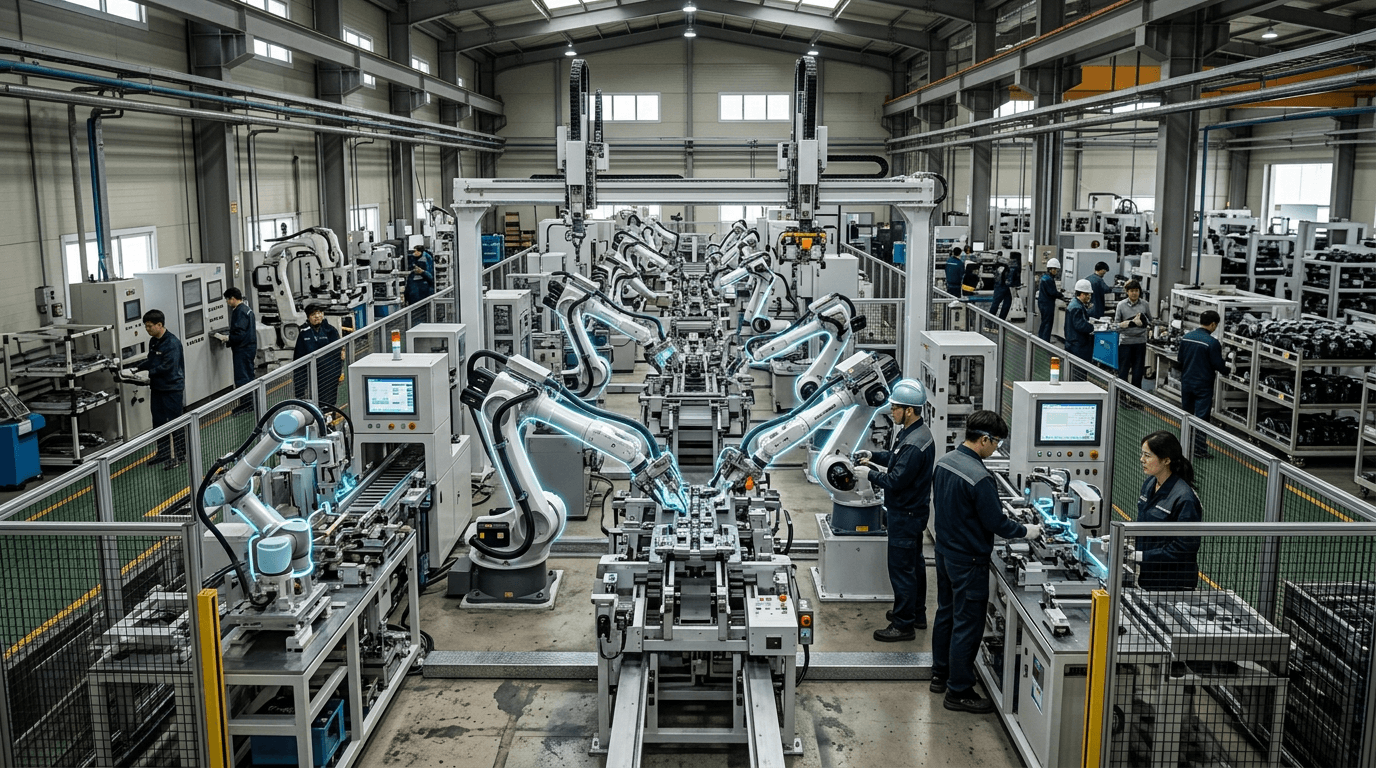
According to the International Federation of Robotics, South Korea maintains the highest robot density on Earth with 1,012 units per 10,000 manufacturing employees, far ahead of Singapore (730), Japan (399), and Germany (397). This density is concentrated in automotive and electronics manufacturing, where Samsung, Hyundai, LG, and SK operations are among the most automated factories in the world.
Korea's extreme robot density is driven by structural factors: a shrinking working-age population (projected to decline 30% by 2050), high labor costs, and chaebol manufacturing culture that favors capital investment over labor. The government's Robot Industry Development Plan targets expanding robot adoption from manufacturing into services, logistics, and agriculture.
The strategic implication is that Korea is further along the automation curve than any other economy, making it a real-world testbed for what highly automated manufacturing looks like. Problems that other countries will face in 2035 — workforce transition, human-robot collaboration, maintenance of aging robot fleets — Korea is already solving today.
Research this in Signals
Signals turns a topic into a sourced research record you can inspect and rerun. Your first scan is free, and this one starts with World-Highest Industrial Robot Density already loaded, so edit it or scan as is.