Soft Robotics Research
Geography: Asia Pacific · East Asia · Japan
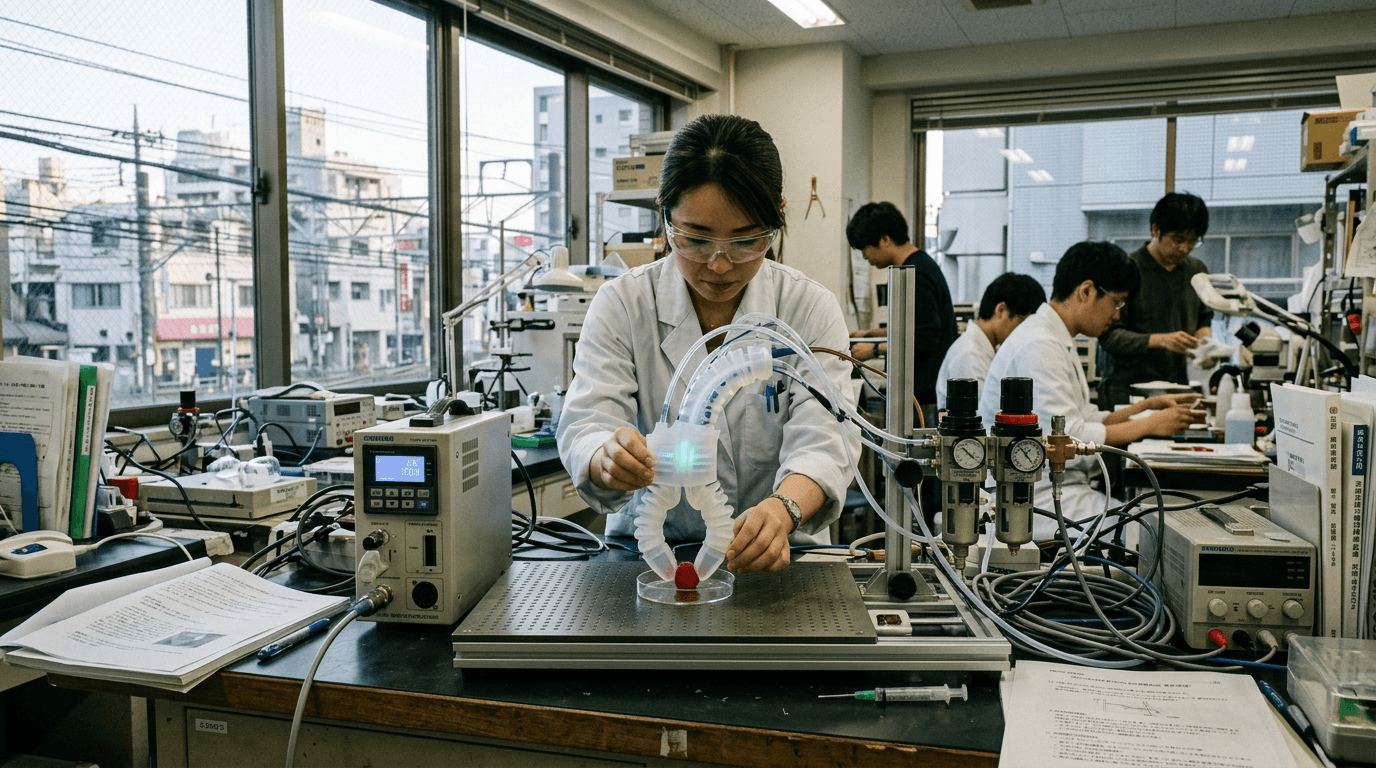
Japan's soft robotics research is concentrated at institutions like the University of Tokyo, Tohoku University, and RIKEN, focusing on pneumatic artificial muscles, electroactive polymer actuators, and bio-hybrid robots. Notable advances include muscle-powered biohybrid robots from the University of Tokyo that integrate living muscle tissue with synthetic scaffolds, achieving walking and swimming locomotion.
Applications emerging from Japanese soft robotics research target sectors where rigid robots fail: minimally invasive surgical tools, agricultural picking of delicate produce (strawberries, tomatoes), underwater exploration in confined spaces, and wearable assistive devices for rehabilitation. The integration with Japan's existing strengths in materials science (advanced polymers, piezoelectric ceramics) provides a natural competitive advantage.
While still primarily in the research stage, Japan's soft robotics work feeds into the broader elderly care and medical device pipeline. Soft grippers and compliant actuators are essential for safe human-robot physical interaction — a requirement that Japan's aging society makes commercially urgent.
Research this in Signals
Signals turns a topic into a sourced research record you can inspect and rerun. Your first scan is free, and this one starts with Soft Robotics Research already loaded, so edit it or scan as is.