Smart Agriculture and Farming Robotics
Geography: Asia Pacific · East Asia · Japan
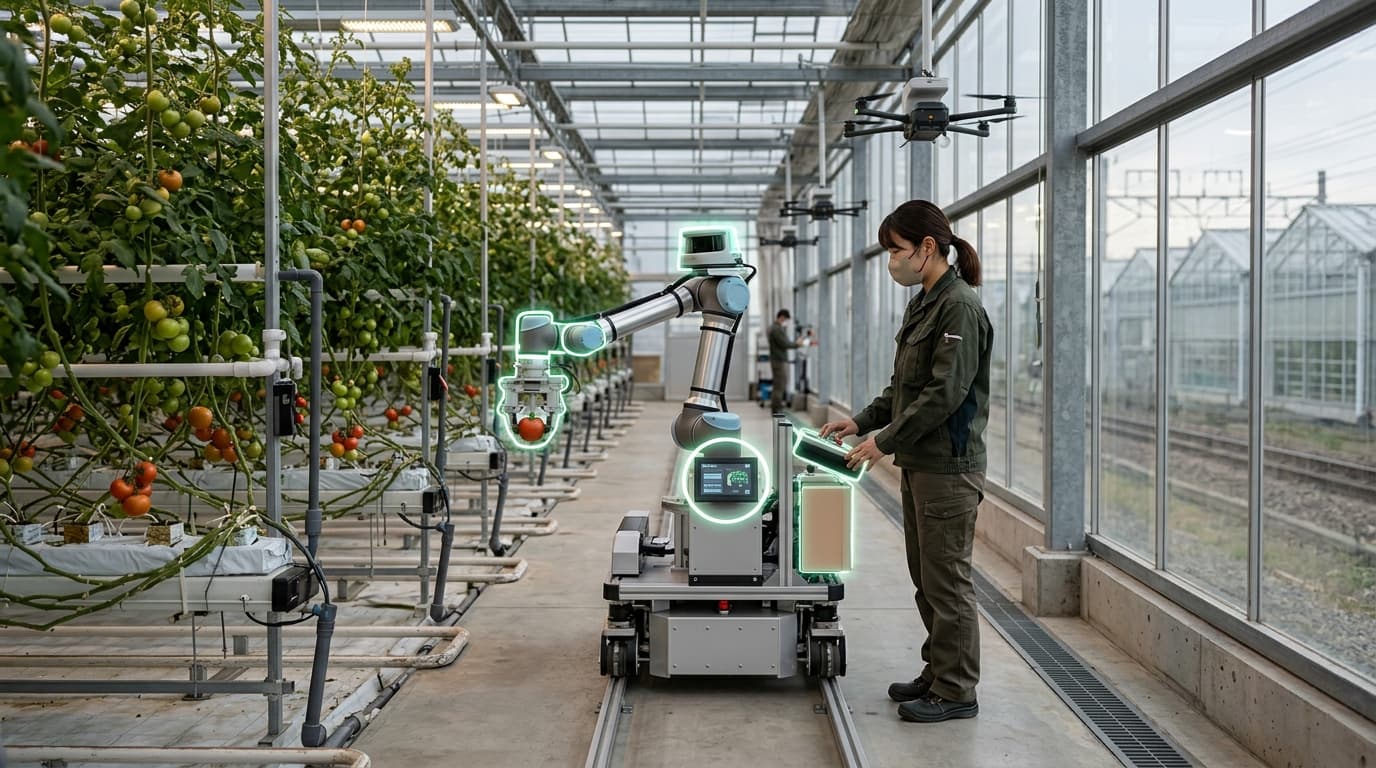
Japan's agricultural sector faces extreme demographic pressure — the average farmer is over 68 years old, and agricultural workforce has declined from 12 million in 1960 to under 2 million. In response, companies including Kubota, Yanmar, and ISEKI have developed autonomous tractors, rice-planting robots, and precision farming systems. Kubota's autonomous tractor fleet operates without human operators, using GPS-RTK positioning for centimeter-level accuracy.
Drone-based crop monitoring, AI-powered disease detection, and yield prediction systems are being deployed across Japan's rice paddies and fruit orchards. The Ministry of Agriculture's Smart Agriculture promotion program provides subsidies and demonstration fields. NTT's agricultural AI platform analyzes satellite imagery, soil sensors, and weather data to optimize irrigation and fertilization.
While Japan's agricultural plots are typically small (average 2.5 hectares) compared to US or Australian farms, the precision farming technologies developed for these conditions are applicable to similar small-plot agriculture across Asia. The market for agricultural robots in Asia-Pacific is growing rapidly as other nations (South Korea, Taiwan, Southeast Asia) face analogous aging farmer demographics.
Research this in Signals
Signals turns a topic into a sourced research record you can inspect and rerun. Your first scan is free, and this one starts with Smart Agriculture and Farming Robotics already loaded, so edit it or scan as is.