Service and Logistics Robots
Geography: Asia Pacific · East Asia · Japan
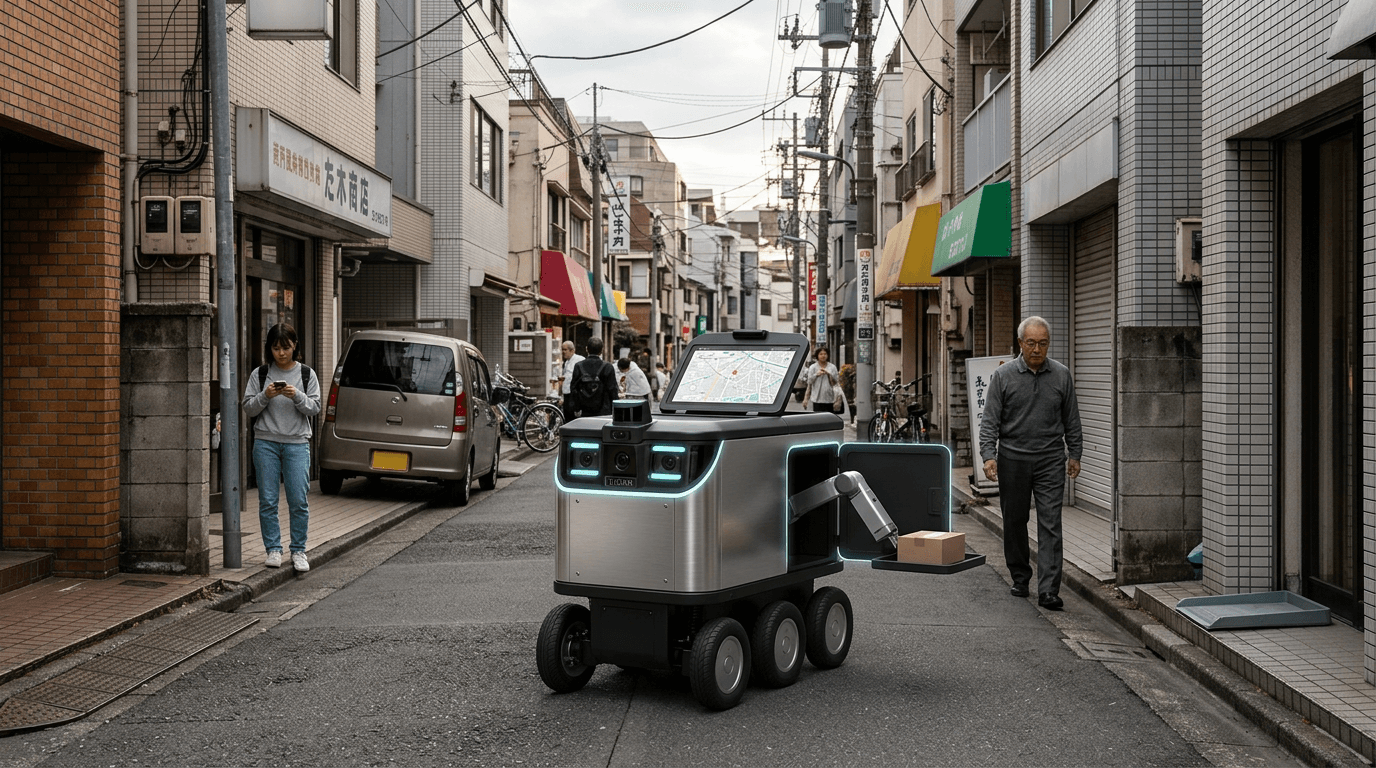
Japan's service robotics deployment spans convenience stores (FamilyMart's autonomous shelf-stocking), restaurants (SoftBank Robotics' Servi), hospitals (Panasonic's HOSPI delivery robots), and last-mile delivery (ZMP's DeliRo autonomous delivery). The revised Road Traffic Act of 2023 legalized autonomous delivery robots on sidewalks, creating a regulatory framework ahead of most countries.
The labor crisis driving adoption is severe: Japan faces a projected shortage of 6.4 million workers by 2030. This is not a future prediction but a present reality — convenience stores cannot staff night shifts, hospitals lack orderlies, and logistics companies cannot find enough drivers. Service robots are filling these gaps incrementally, with each successful deployment expanding social acceptance.
Japan's service robotics market is expected to exceed $4 billion by 2028, with applications expanding into construction site inspection, agricultural harvesting, and public space cleaning. The country's dense urban environment and high standards for reliability create a demanding testing ground that produces robust, commercially viable systems.
Research this in Signals
Signals turns a topic into a sourced research record you can inspect and rerun. Your first scan is free, and this one starts with Service and Logistics Robots already loaded, so edit it or scan as is.