Nuclear Decommissioning Robotics
Geography: Asia Pacific · East Asia · Japan
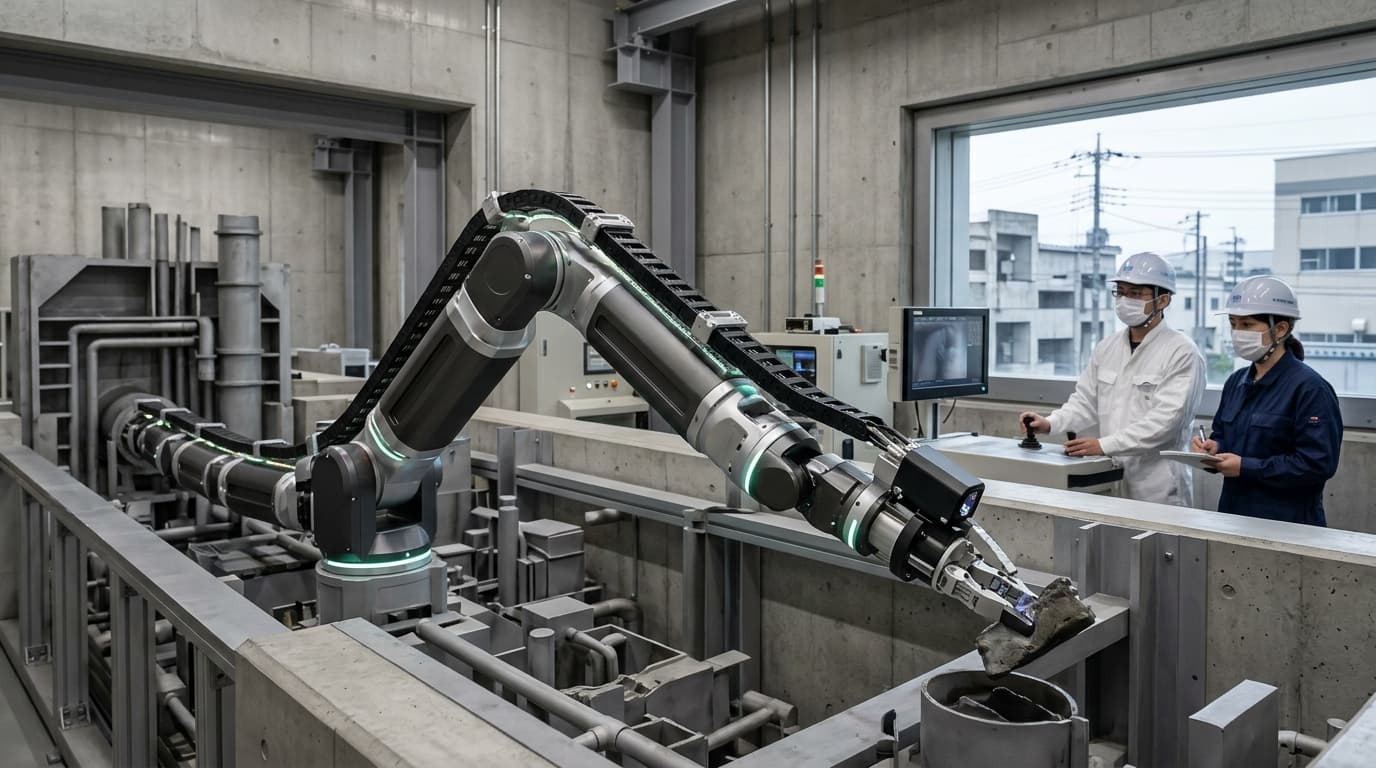
The Fukushima Daiichi decommissioning project has created the world's most demanding robotics challenge: retrieving approximately 880 tonnes of melted nuclear fuel debris from three damaged reactor cores in radiation environments exceeding 500 sieverts per hour — lethal to humans in seconds and destructive to conventional electronics within minutes. In September 2024, a telescoping robot successfully retrieved the first tiny sample of melted fuel from Unit 2. In February 2026, TEPCO unveiled a new snake-like robotic arm for the third trial debris removal operation, capable of reaching deeper into the reactor pedestal with greater dexterity.
The robotics technology being developed spans radiation-hardened electronics (using analog circuits and specialized shielding), remote manipulation systems with haptic feedback over fiber optics, underwater inspection vehicles for flooded containment structures, and AI-based mapping of interior reactor geometry using cosmic ray muon imaging. Each failed attempt — including a 2015 robot that stalled inside Unit 1 — generates data that informs the next generation. The decommissioning timeline stretches 30-40 years, creating sustained demand for increasingly capable radiation-environment robotics.
The forced innovation at Fukushima has global implications: the world has 440+ operating nuclear reactors, many approaching end of life, plus legacy sites like Chernobyl and Sellafield that require remote decommissioning. The robotics systems, radiation-hardened sensors, and remote manipulation techniques developed for Fukushima represent exportable technology for the global nuclear decommissioning market, estimated at $8+ billion annually. Japan's painful experience is creating a unique capability that no other country has been compelled to develop at this intensity.
Research this in Signals
Signals turns a topic into a sourced research record you can inspect and rerun. Your first scan is free, and this one starts with Nuclear Decommissioning Robotics already loaded, so edit it or scan as is.