Elderly Care Robotics
Geography: Asia Pacific · East Asia · Japan
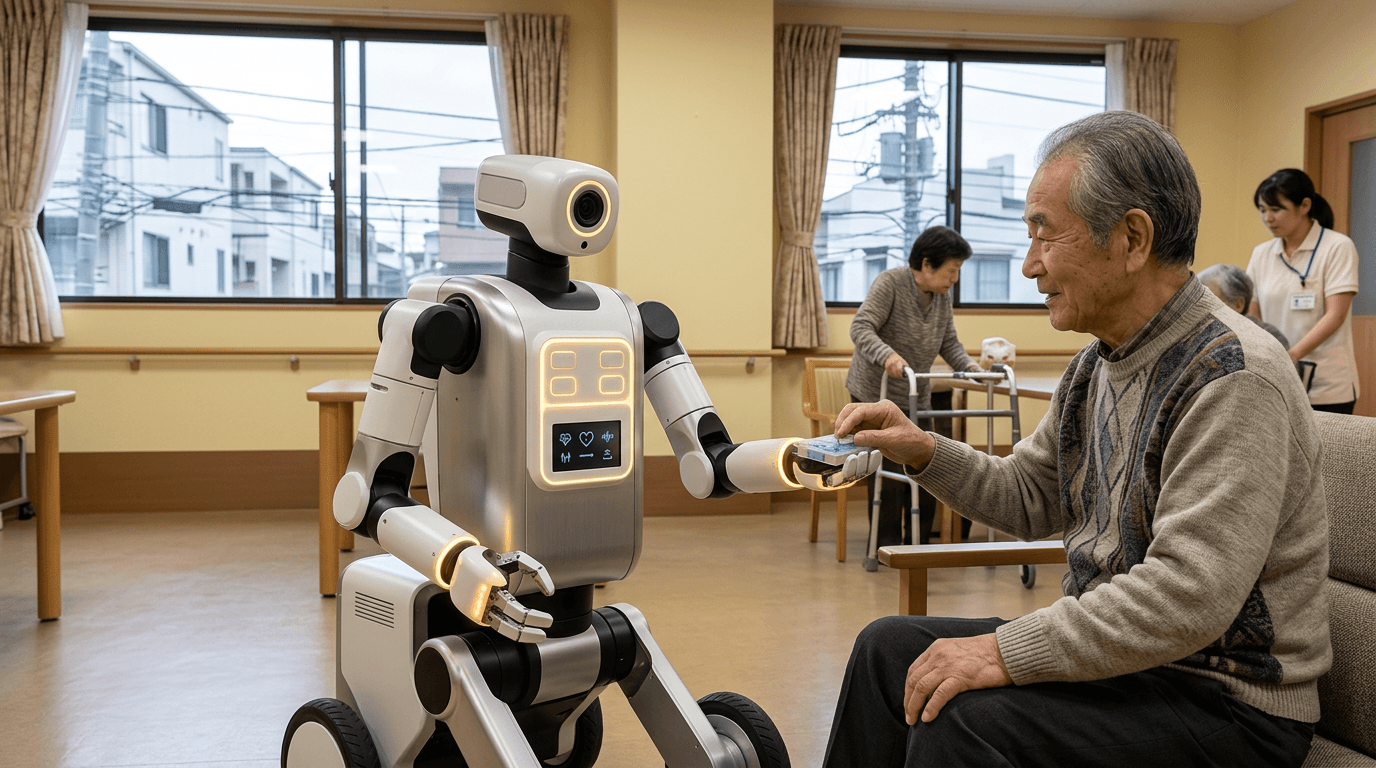
Japan's eldercare robotics ecosystem is the world's most advanced, driven by demographic necessity. Waseda University's AIREC humanoid robot demonstrates AI-driven diaper changing and bedsore prevention. Commercial systems from companies like Cyberdyne (HAL exoskeletons for patient lifting), PARO (therapeutic seal robots), and Panasonic (autonomous bed-wheelchair hybrid) are already deployed in hundreds of care facilities across Japan.
With 29% of Japan's population over 65 and a projected shortage of 700,000 caregivers by 2025, the government has allocated substantial METI and MHLW budgets to nursing-care robotics. The 2023 Robot Strategy update specifically targets care robots as a national priority, with subsidies covering up to 50% of purchase costs for certified devices.
Japan's eldercare robotics serve as a proving ground for technologies that the entire developed world will need within a decade as populations age globally. The combination of social acceptance (Japan's cultural comfort with robots), regulatory frameworks, and real-world deployment data gives Japanese companies a significant head start in what will become a massive global market.
Research this in Signals
Signals turns a topic into a sourced research record you can inspect and rerun. Your first scan is free, and this one starts with Elderly Care Robotics already loaded, so edit it or scan as is.