Automated Construction Technology
Geography: Asia Pacific · East Asia · Japan
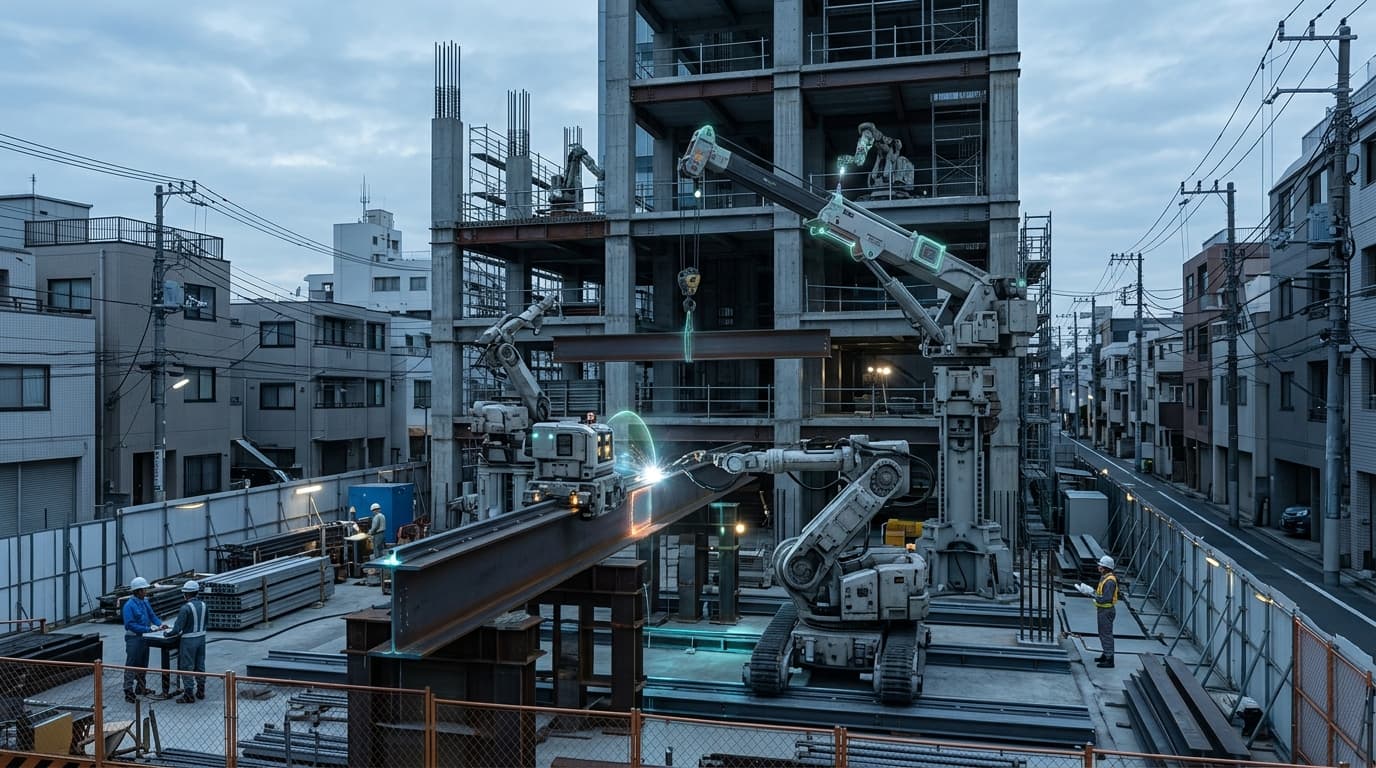
Japan's 'Big Five' general contractors — Shimizu, Obayashi, Kajima, Takenaka, and Taisei — are the global leaders in automated construction technology, driven by a construction workforce that has shrunk by 30% since the 1990s peak and an average worker age exceeding 50. Obayashi's automated dam construction system uses fleets of autonomous dump trucks, AI-coordinated concrete placement, and drone-based progress monitoring to build dams with minimal human operators. Shimizu's 'Shimz Smart Site' deploys robotic welders, autonomous material carriers, and ceiling panel installers for high-rise construction.
Kajima's A4CSEL (Automated/Autonomous/Advanced/Accelerated Construction System for Safety, Efficiency, and Liability) coordinates multiple autonomous construction machines via centralized AI, demonstrating automated earthmoving that operates 24/7 including in darkness. The system has been deployed on actual construction projects, not just demonstrations. The Japan construction robotics market, valued at $64 million in 2025, is growing at 11.7% annually as labor shortages intensify.
Japan's construction automation is strategically significant because it addresses a problem that every developed nation will face: aging construction workforces and declining recruitment. Unlike factory robotics where Japan already dominates, construction robotics must handle unstructured outdoor environments, variable materials, and complex sequencing — making it a fundamentally harder automation problem. The solutions being developed by Japanese contractors — combining autonomous vehicles, robotic manipulators, AI coordination, and drone monitoring — represent a systems integration capability that is directly exportable to construction markets worldwide.
Research this in Signals
Signals turns a topic into a sourced research record you can inspect and rerun. Your first scan is free, and this one starts with Automated Construction Technology already loaded, so edit it or scan as is.