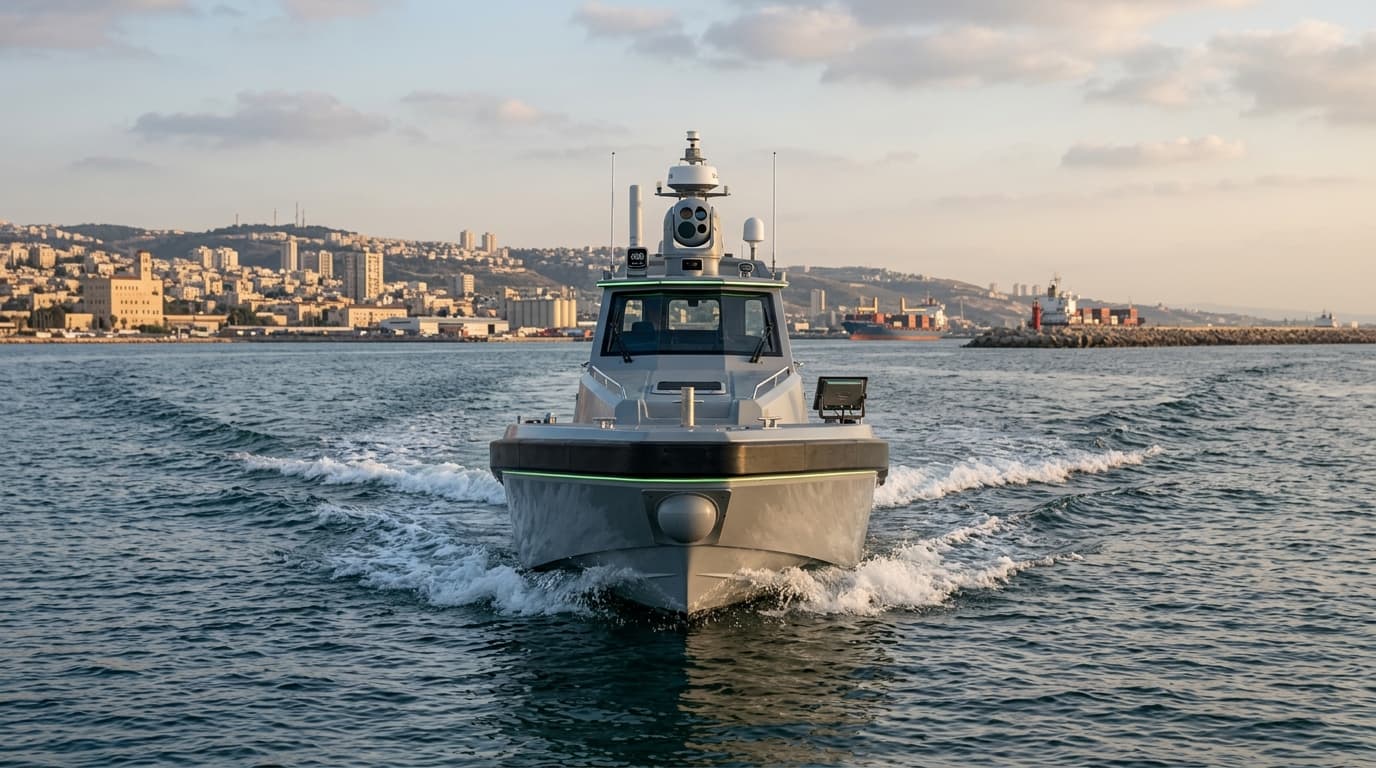
Unmanned Surface Vessel Systems
Geography: Emea · Middle East · Israel
Israel has developed autonomous and remotely operated surface vessels for naval warfare and maritime security applications. Elbit Systems' Seagull multi-mission unmanned surface vessel can perform anti-submarine warfare, mine hunting, electronic warfare, and force protection missions. Rafael's Protector USV provides port and offshore infrastructure security. These systems operate in the Mediterranean defending gas platforms, ports, and naval approaches.
The operational drivers are clear: Israel's offshore gas infrastructure (Leviathan, Tamar) requires continuous maritime security, and unmanned vessels can maintain persistent presence without the crew fatigue and cost of manned patrols. Anti-submarine warfare — historically requiring expensive surface combatants or helicopters — can be partially automated with USVs towing sonar arrays.
Strategically, unmanned maritime systems are an emerging domain where Israel's experience in autonomous vehicles, naval operations, and sensor integration converges. The global naval market is moving toward larger fleets of smaller, unmanned vessels that can operate in contested waters where manned ships face unacceptable risk. Israel's early operational deployment of USVs positions its defense industry to capture export orders from navies making this transition.
Research this in Signals
Signals turns a topic into a sourced research record you can inspect and rerun. Your first scan is free, and this one starts with Unmanned Surface Vessel Systems already loaded, so edit it or scan as is.