Agricultural Robotics and Autonomous Farming Equipment
Geography: Emea · Middle East · Israel
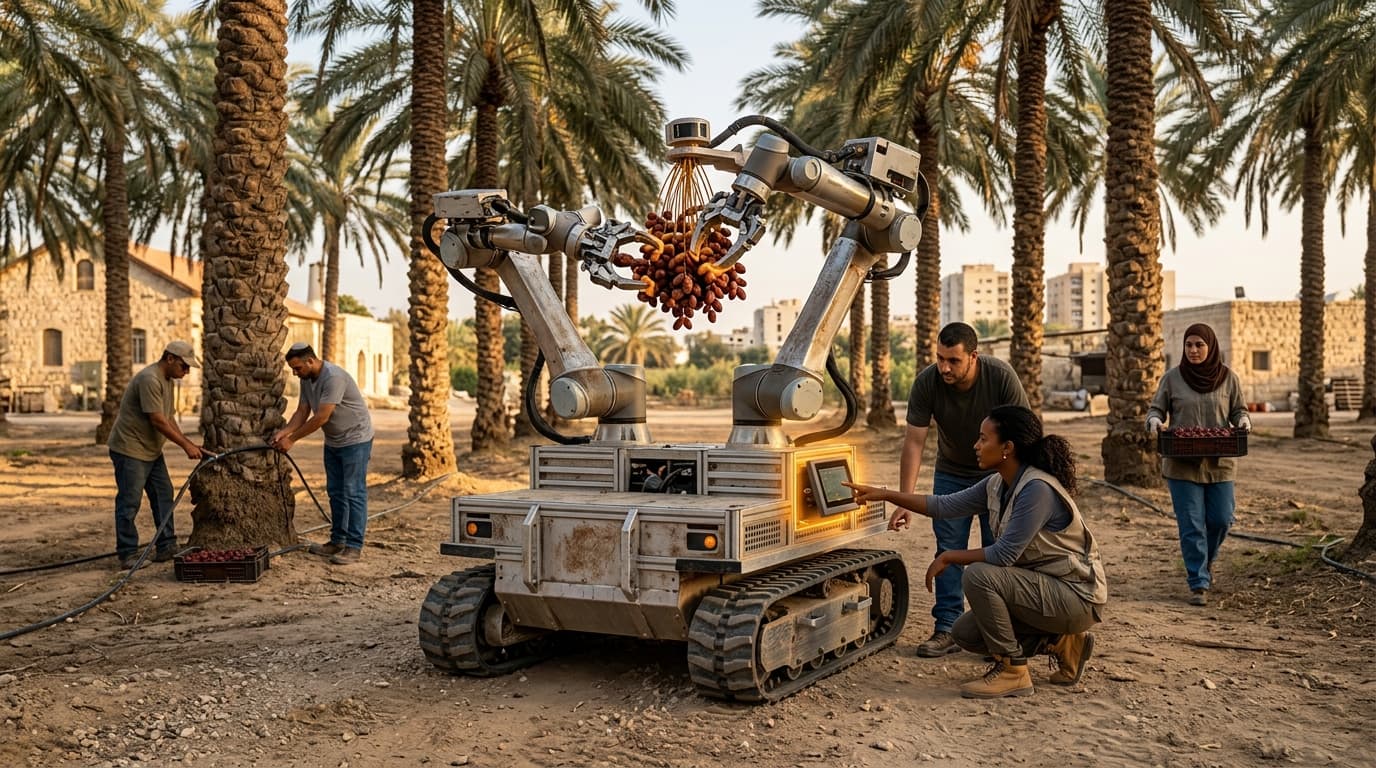
Israel's agricultural robotics ecosystem addresses the unique challenges of farming in a labor-scarce, resource-constrained environment. Companies develop autonomous harvesting robots, AI-controlled greenhouse management systems, and drone-based crop monitoring platforms. Tevel Aerobotics has developed flying autonomous robots (FAR) for fruit picking, while other companies automate greenhouse operations including planting, spraying, and climate control.
The labor constraint in Israeli agriculture — driven by security concerns around employing foreign workers in border areas and the high cost of domestic labor — has accelerated automation adoption beyond what market forces alone would produce. This creates a forcing function that generates technologies applicable to agricultural labor shortages globally, particularly in developed countries facing aging farming populations.
Israel's agri-robotics benefit from cross-pollination with military robotics (navigation, computer vision, autonomy algorithms) and the country's strong agricultural research institutions. As global agriculture faces simultaneous pressures — labor shortages, climate change, water scarcity, and demand growth — Israeli agricultural automation technology addresses multiple constraints simultaneously.
Research this in Signals
Signals turns a topic into a sourced research record you can inspect and rerun. Your first scan is free, and this one starts with Agricultural Robotics and Autonomous Farming Equipment already loaded, so edit it or scan as is.