Space-Derived Surgical Robotics
Geography: Americas · North America · Canada
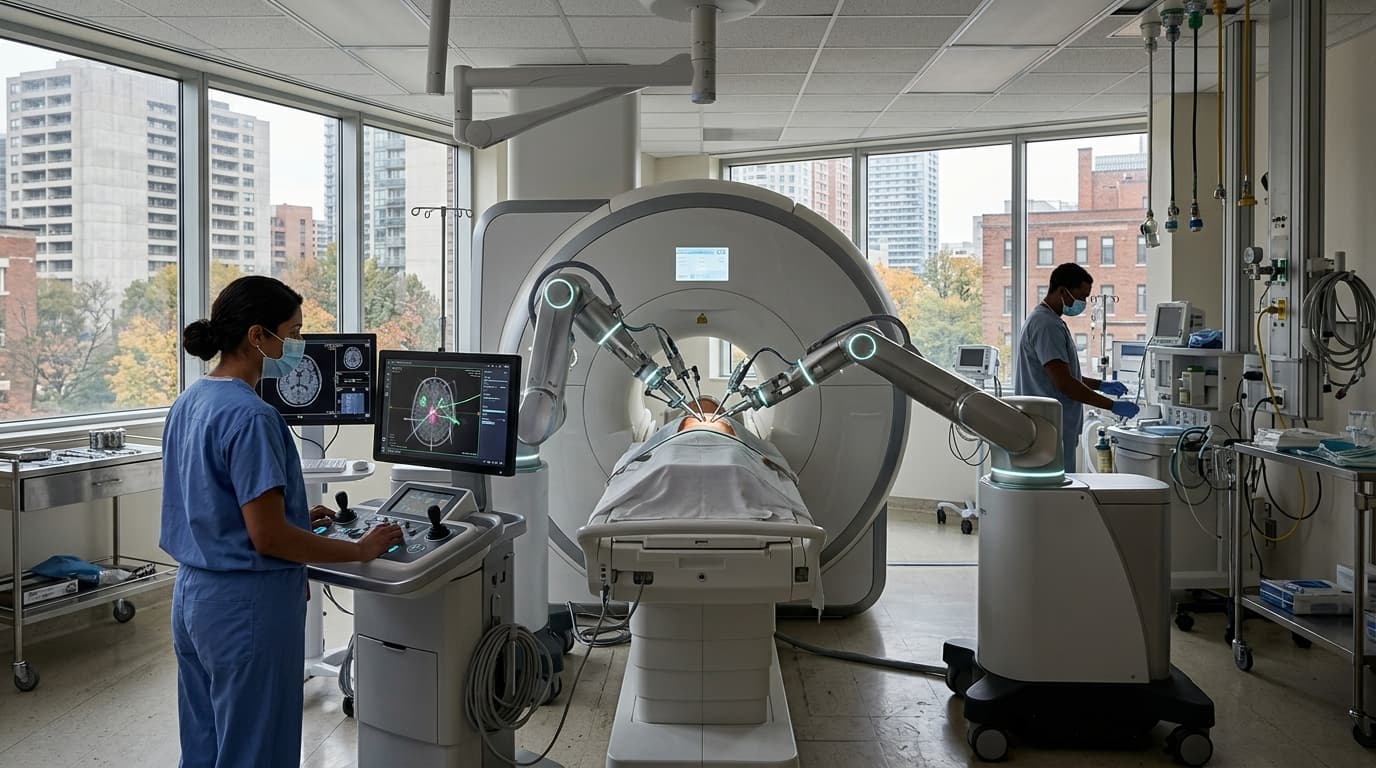
Canada's decades of space robotics expertise, originating from the Canadarm program, has been transferred to medical applications through surgical robotic systems. neuroArm, developed at the University of Calgary, is capable of performing neurosurgery inside an MRI machine — allowing surgeons to see real-time brain imaging while operating with sub-millimeter precision. This technology directly derives from the force-feedback and precision control systems developed for space station robotics.
Surgical robotics derived from space technology matters because it demonstrates one of the clearest technology transfer pathways from government-funded space programs to direct human benefit. The ability to operate inside an MRI scanner is genuinely novel — conventional surgical robots cannot function in the powerful magnetic field. This capability enables tumor resection with real-time imaging, potentially improving outcomes for some of the most challenging neurosurgical procedures.
The strategic lesson is that Canada's Canadarm legacy continues to generate derivative technologies decades after the original investment. This validates the long-term ROI argument for space programs and provides a model for how government investment in extreme-environment robotics can create commercial spinoffs. Canada's surgical robotics expertise complements its broader strengths in AI and medical imaging to create an integrated surgical technology ecosystem.
Research this in Signals
Signals turns a topic into a sourced research record you can inspect and rerun. Your first scan is free, and this one starts with Space-Derived Surgical Robotics already loaded, so edit it or scan as is.