Autonomous Heavy-Haul Rail
Geography: Asia Pacific · Oceania · Australia New Zealand
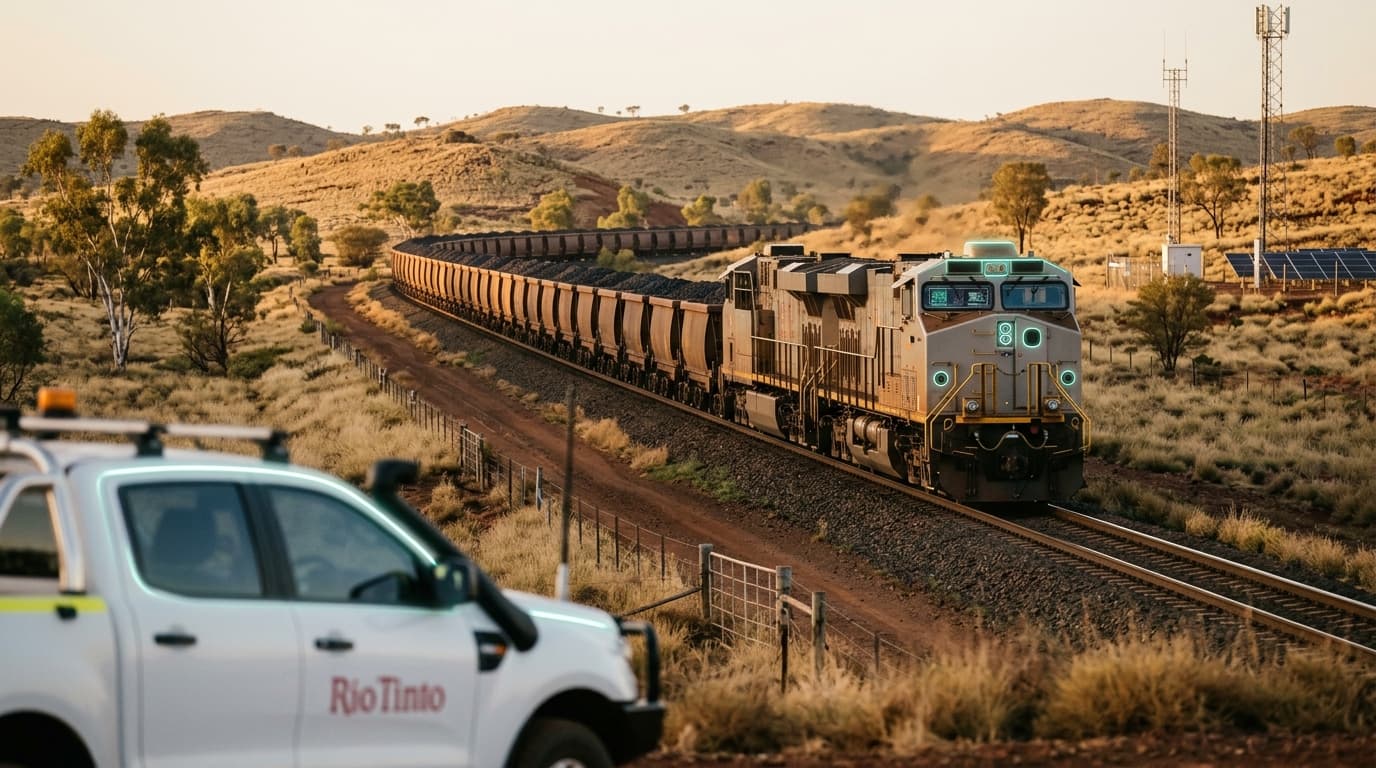
Rio Tinto's AutoHaul system in Western Australia's Pilbara region operates the world's first fully autonomous heavy-haul railway. Trains up to 2.4km long, carrying approximately 28,000 tonnes of iron ore, traverse 1,700km of track between 16 mines and four port terminals entirely without drivers. The system, operational since 2018 and continuously refined, uses a combination of GPS, radar, sensors, and AI to navigate, control speed, manage passing loops, and interface with autonomous haul trucks and port machinery.
Autonomous heavy-haul rail represents one of the most commercially proven applications of AI-driven autonomous transport. Each train carries enough iron ore to fill an Olympic swimming pool approximately 10 times, and the system operates 24/7 without fatigue, shift changes, or the safety risks of human operators in extreme heat. The technology has delivered measurable productivity and safety improvements, with Rio Tinto reporting reduced transit times and improved scheduling precision.
The technology is directly transferable to heavy-haul rail operations worldwide — coal, grain, and mineral railways in Brazil, Africa, Central Asia, and North America face similar challenges of long distances, harsh conditions, and labor constraints. Australia's autonomous rail capability, developed in-house by Rio Tinto, represents indigenous transport technology with significant export potential. The operational data and lessons learned from tens of thousands of autonomous train journeys constitute a knowledge base that competitors would need years to replicate.
Research this in Signals
Signals turns a topic into a sourced research record you can inspect and rerun. Your first scan is free, and this one starts with Autonomous Heavy-Haul Rail already loaded, so edit it or scan as is.