Quantum Gravity Sensors
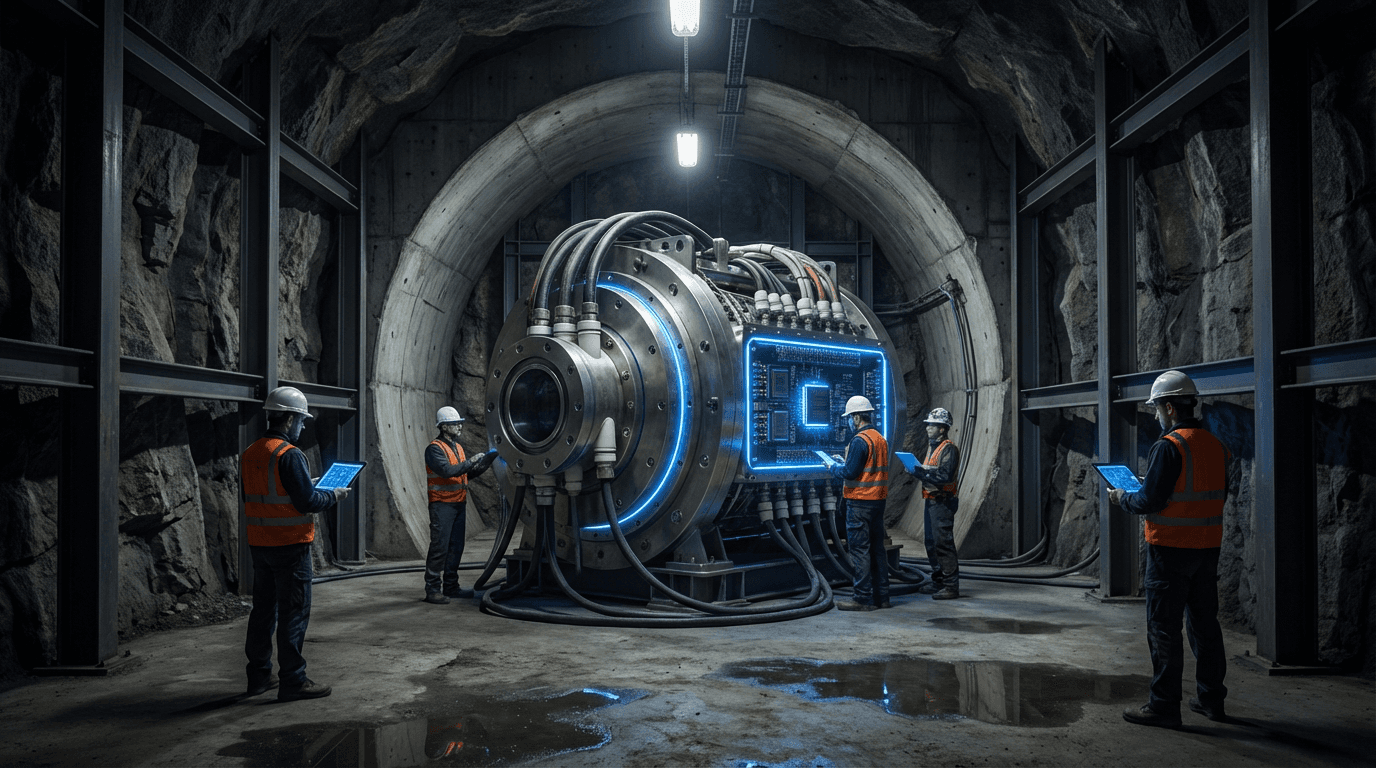
Quantum gravity sensors represent a revolutionary advancement in gravimetry, leveraging the principles of atom interferometry to detect gravitational variations with unprecedented precision. Unlike classical gravimeters that rely on mechanical springs or falling masses, these quantum devices exploit the wave-like properties of ultra-cold atoms, typically rubidium or cesium, cooled to near absolute zero. When subjected to laser pulses in a carefully controlled vacuum chamber, these atoms are split into quantum superposition states that follow different paths before recombining. The interference pattern that emerges is exquisitely sensitive to gravitational acceleration, enabling the detection of changes as small as one part in a billion of Earth's gravitational field. This quantum approach eliminates many sources of drift and noise inherent in conventional instruments, providing stable, long-term measurements that can track subtle shifts in subsurface mass distribution over time. The technology builds on decades of atomic physics research, translating laboratory-scale quantum phenomena into robust field-deployable instruments capable of continuous operation in challenging environments.
The geophysical challenges addressed by quantum gravity sensors are profound and diverse. Traditional seismic monitoring and ground-based surveys often provide limited advance warning for catastrophic events such as volcanic eruptions, earthquakes, and subsidence-related infrastructure failures. Conventional gravimeters, while useful, lack the sensitivity and temporal resolution needed to detect the gradual accumulation of subsurface stress or the movement of fluids and magma that precede such disasters. Quantum gravity sensors overcome these limitations by continuously monitoring minute changes in gravitational fields caused by shifting underground water tables, magma chamber inflation, tectonic strain accumulation, and void formation beneath critical infrastructure. When deployed in networked arrays, these instruments create a dynamic gravitational map of the subsurface, revealing processes invisible to other monitoring technologies. This capability is particularly valuable for water resource management in arid regions, where understanding aquifer dynamics is essential for long-term sustainability, and for monitoring carbon sequestration sites where detecting potential leakage pathways is critical for climate mitigation efforts.
Early field trials and pilot deployments have demonstrated the transformative potential of quantum gravity sensor networks. Research institutions and geological surveys in volcanically active regions have begun testing these systems to complement existing seismic and GPS monitoring infrastructure, with initial results suggesting detection of precursory signals weeks before eruptive activity. Similarly, experimental installations above active fault zones have revealed previously undetected patterns of mass redistribution that may correlate with stress accumulation cycles. The technology is also finding applications in civil engineering, where monitoring subsurface voids and groundwater changes beneath aging urban infrastructure can prevent catastrophic collapses of tunnels, bridges, and buildings. As manufacturing techniques mature and costs decline, the vision of continent-spanning quantum gravity networks is becoming increasingly feasible, promising a future where geological hazards can be anticipated with sufficient lead time to evacuate populations, adjust water management strategies, and reinforce vulnerable infrastructure. This convergence of quantum physics and Earth science represents a critical tool for civilizational resilience, offering societies the foresight needed to adapt to both natural hazards and human-induced subsurface changes in an era of increasing environmental uncertainty.
Related Organizations

Building 'Gravio', a cold atom interferometry sensor for resource exploration and underground mapping.

Formed by the merger of iXblue and ECA Group; includes Muquans, a pioneer in quantum gravimetry.

Develops compact quantum sensors for gravimetry and accelerometry in field environments.

Silicon Microgravity
United Kingdom · Startup
Spun out from Cambridge University, developing MEMS-based gravity sensors with near-quantum sensitivity.

Specializes in atom optic sensors, including high-precision quantum gravimeters and gradiometers.

Formerly ColdQuanta; develops quantum atomics for computing and sensing, including RF and inertial sensors.

Develops advanced laser systems and quantum gravimeters/accelerometers for navigation and sensing.

A Bosch subsidiary developing photonic quantum sensors, including magnetometers and gyroscopes for industrial application.


Develops subsystems and vacuum packages for cold atom quantum sensors, including gravity sensors (CASPA project).
Supporting Evidence
Research this in Signals
Signals turns a topic into a sourced research record you can inspect and rerun. Your first scan is free, and this one starts with Quantum Gravity Sensors already loaded, so edit it or scan as is.