Envisioning is an emerging technology research institute and advisory.

LinkedInInstagramGitHub

2011 — 2026

research
  • Reports
  • Newsletter
  • Methodology
  • Origins
  • Vocab
services
  • Research Sessions
  • Signals Workspace
  • Bespoke Projects
  • Use Cases
  • Signal Scanfree
  • Readinessfree
impact
  • ANBIMAFuture of Brazilian Capital Markets
  • IEEECharting the Energy Transition
  • Horizon 2045Future of Human and Planetary Security
  • WKOTechnology Scanning for Austria
audiences
  • Innovation
  • Strategy
  • Consultants
  • Foresight
  • Associations
  • Governments
resources
  • Pricing
  • Partners
  • How We Work
  • Data Visualization
  • Multi-Model Method
  • FAQ
  • Security & Privacy
about
  • Manifesto
  • Community
  • Events
  • Support
  • Contact
  • Login
ResearchServicesPricingPartnersAbout
  1. Home
  2. Research
  3. Cities
  4. Urban Agriculture

Urban Agriculture

Growing food within cities using rooftop gardens, vertical farms, and hydroponics to improve food security
Back to CitiesView interactive version

Urban agriculture, also known as urban farming or city farming, addresses several critical issues troubling modern cities, such as food insecurity, environmental degradation, and the urban heat island effect. In densely populated areas where access to fresh, affordable produce is limited, urban agriculture offers a viable solution by bringing food production closer to consumers. This reduces the dependency on long supply chains, which are often vulnerable to disruptions, and ensures a more resilient food system.

Urban agriculture encompasses a variety of techniques and systems, including vertical farming, underground farming, rooftop gardens, and hydroponics. Vertical farming involves growing crops in stacked layers, often integrated into buildings, thereby optimising space in crowded urban environments. Underground farming repurposes deactivated subterranean structures, such as a tunnel, abandoned metro stations, bunkers, or deactivated mines, as a controlled, artificial environment for precision farming in urban environments. Rooftop gardens transform underutilised flat surfaces into green spaces that produce food while providing insulation to buildings, thus reducing energy consumption. Hydroponics, on the other hand, is a soil-less cultivation method where plants are grown in nutrient-rich water, significantly reducing water usage compared to traditional farming.

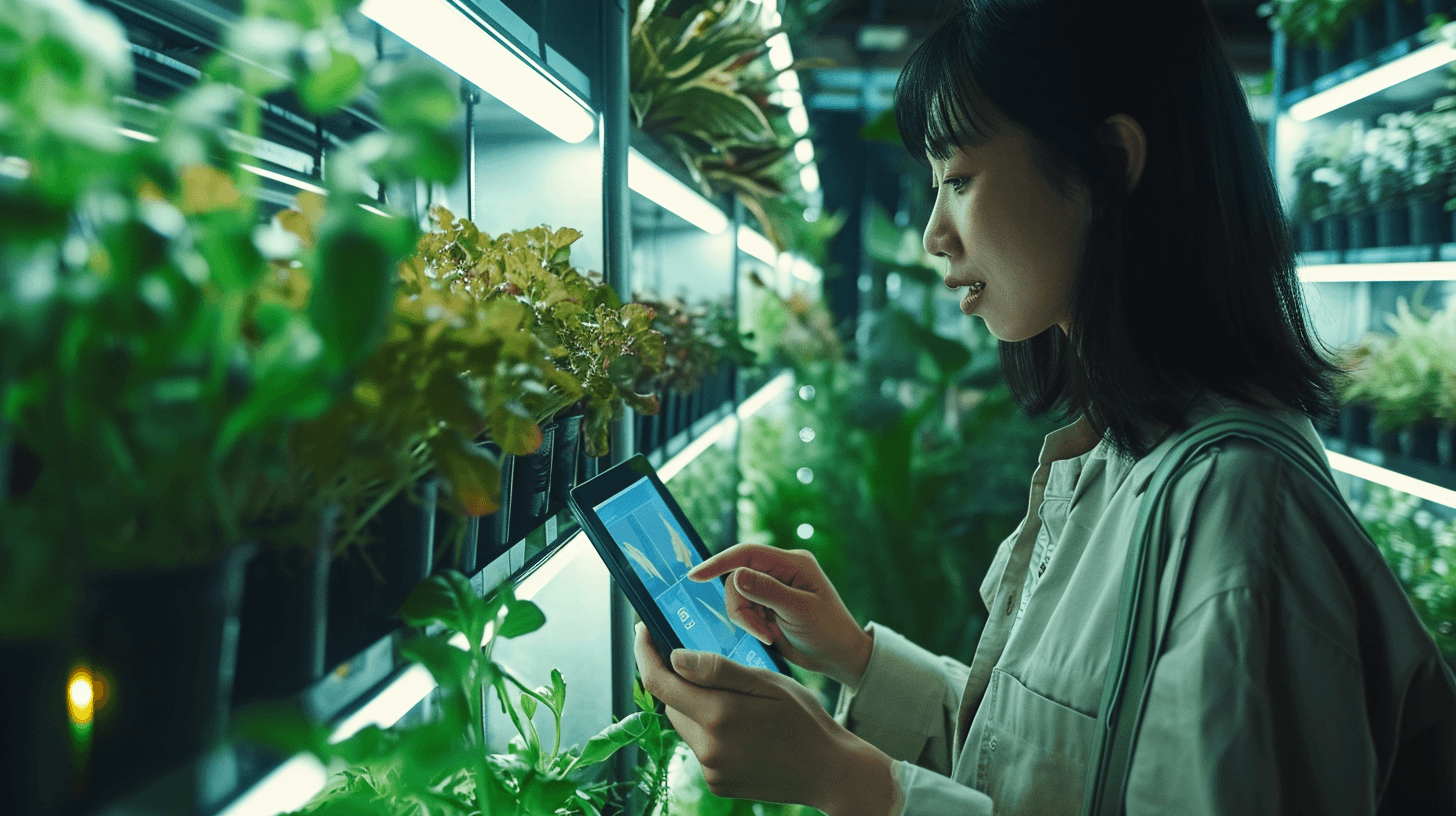
The mechanics behind these systems are both innovative and efficient. Vertical farms use controlled environments with LED lighting and climate control to optimise plant growth year-round, irrespective of external weather conditions. Rooftop gardens employ lightweight soil substitutes and advanced irrigation systems to maintain plant health without overburdening building structures. Hydroponic systems recirculate water, ensuring minimal waste and allowing for precise nutrient management, which results in higher yields and faster growth cycles.

As urban populations grow, the need for sustainable, local food sources becomes more pressing. Urban agriculture not only provides fresh produce but also enhances urban biodiversity, reduces carbon footprints by cutting down on transportation emissions, and mitigates the urban heat island effect through increased greenery. Moreover, it fosters community engagement and education, reconnecting city dwellers with the origins of their food and promoting healthier lifestyles.

Technology Readiness Level
8/9Ready for Implementation
Diffusion of Innovation
2/5Early Adopters
Technology Life Cycle
2/4Growth
Category
Applications

Related Organizations

AeroFarms

United States · Company

95%

A pioneer in indoor vertical farming, using aeroponics to grow greens without soil or sun in urban environments.

Developer
Bowery Farming logo
Bowery Farming

United States · Company

95%

A vertical farming company using proprietary software (BoweryOS) to monitor plants and optimize resources.

Developer
Gotham Greens logo
Gotham Greens

United States · Company

95%

Operates a network of high-tech hydroponic greenhouses located on rooftops in urban centers across America.

Developer
Lufa Farms logo
Lufa Farms

Canada · Company

95%

Built the world's first commercial rooftop greenhouse and operates a direct-to-consumer urban food network in Montreal.

Developer
Wageningen University & Research logo
Wageningen University & Research

Netherlands · University

95%

A top-tier university for agricultural research, specifically in greenhouse and vertical farming innovation.

Researcher
Freight Farms logo
Freight Farms

United States · Company

90%

Manufactures the 'Greenery', a self-contained hydroponic farm inside a shipping container, enabling farming anywhere in a city.

Developer
Plenty logo
Plenty

United States · Company

90%

A vertical farming technology company that uses vertical planes to grow leafy greens with high resource efficiency.

Developer
Sky Greens logo
Sky Greens

Singapore · Company

90%

The world's first low-carbon, hydraulic driven vertical farm, addressing land scarcity in Singapore.

Developer
Association for Vertical Farming logo
Association for Vertical Farming

Germany · Nonprofit

85%

An international non-profit organization promoting the vertical farming industry through advocacy, education, and standardization.

Developer
LettUs Grow logo
LettUs Grow

United Kingdom · Startup

85%

A technology provider developing aeroponic irrigation systems for indoor farming.

Developer

Supporting Evidence

Paper

Sustainable cities: enhancing food systems with urban agriculture

Discover Food · Jun 2, 2025

Urban agriculture promotes urban sustainability through contributions to food production, waste recycling, and biodiversity preservation. The paper argues for integrating urban farming into urban planning policies to mitigate heat islands and improve public health.

Support 92%Confidence 90%

Paper

Urban agriculture supports China’s vegetable supply without raising greenhouse gas emissions

Resources, Environment and Sustainability · Sep 9, 2025

Research indicates that urban agriculture can significantly support vegetable supply in dense regions like China without increasing greenhouse gas emissions, validating its role in low-carbon urban development.

Support 89%Confidence 92%

Paper

Multifunctional Vertical Farming Systems as a Basis for Transforming Urban Food Systems Amid Climate Change

Sustainability · Sep 26, 2025

This study explores multifunctional vertical farming systems as a foundational element for transforming urban food systems to be more resilient against climate change.

Support 87%Confidence 90%

Article

Vertical Farming: A Case Study in Sustainable Urban Development

green.org

Vertical farming has emerged as a critical solution for sustainable urban development, addressing pressing issues of food security and environmental concerns. This innovative approach to agriculture involves cultivating crops in vertically stacked layers, using advanced technologies such as hydroponics and aeroponics. By maximizing land and resource efficiency, vertical farming has the potential to transform urban landscapes and ensure a sustainable future.

Support 50%Confidence 80%

Article

Urban Agriculture under Horizon 2020 and Horizon Europe

agriculture.ec.europa.eu

Urban Agriculture (UA) is the practice of cultivating, processing, and distributing food in and around urban areas. Urban Agriculture is an emerging discipline and a fast-growing trend. It does not compete but help conventional agriculture with the many challenges and crisis the world isfacing: climate-change, water scarcity, soil degradation, seasonality, food supply chain during pandemic, fossil inputs costs etc. It has to become a complementary way to strengthen food systems in a near future. Urban Agriculture comes in many forms and types (controlled and uncontrolled environment) and multifunctional outcomes. Research and innovation in urban agriculture targets supply chain, circularity, assessment of environmental and social aspects.

Support 50%Confidence 80%

Article

Cities Farming for the Future: Urban Agriculture for Green and Productive Cities

idrc-crdi.ca

Urban agriculture is the growing of plants and the raising of animals for food and other uses, and related processing and marketing activities, within and around cities and towns. In the past few years, it has received increasing attention from development organizations and national and local authorities in developing countries. With its multiple functions, urban agriculture plays an important role in urban poverty alleviation and social inclusion, urban food security, urban waste management, and urban greening. Since 1999, partners of the International Network on Urban Agriculture and Food Security (RUAF Foundation) have been playing a crucial role in improving access to information on urban agriculture and in enhancing the capacities of local authorities, NGOs, farmer organizations, and other stakeholders regarding local participatory diagnosis and strategic action planning on urban agriculture. This book presents the state of the art in the development of sustainable urban agriculture, and will be primarily of interest to municipal authorities, NGOs, community-based organizations, governmental organizations, and other stakeholders and development practitioners in urban agriculture.

Support 50%Confidence 80%

Article

Growing Greener Cities: Urban Agriculture and the Impact on SDG 11

sdg.iisd.org

To achieve SDG target 11.3, governments should integrate urban agriculture into their established and growing cities. A modest increase in urban agriculture could reduce the urgency of increasing rural agricultural yields. Best practices must take into account possible adverse impacts and help mitigate climate change.

Support 50%Confidence 80%

Connections

Hardware
Hardware
Urban Irrigation

Smart sprinkler networks for streets, roofs, and parks that cool surfaces, reduce dust, and manage stormwater

Technology Readiness Level
8/9
Diffusion of Innovation
2/5
Technology Life Cycle
2/4
Hardware
Hardware
Urban Mining

Recovering valuable materials from urban waste streams like e-waste and construction debris

Technology Readiness Level
8/9
Diffusion of Innovation
3/5
Technology Life Cycle
2/4
Software
Software
Autonomous Sustainability Monitoring

Real-time sensor networks and AI tracking air quality, energy use, and waste across cities

Technology Readiness Level
6/9
Diffusion of Innovation
2/5
Technology Life Cycle
1/4
Hardware
Hardware
Green Roof

Vegetated rooftop systems that cool buildings, manage stormwater, and create urban habitats

Technology Readiness Level
9/9
Diffusion of Innovation
3/5
Technology Life Cycle
3/4

Book a research session

Bring this signal into a focused decision sprint with analyst-led framing and synthesis.
Research Sessions