Envisioning is an emerging technology research institute and advisory.

LinkedInInstagramGitHub

2011 — 2026

research
  • Reports
  • Newsletter
  • Methodology
  • Origins
  • Vocab
services
  • Research Sessions
  • Signals Workspace
  • Bespoke Projects
  • Use Cases
  • Signal Scanfree
  • Readinessfree
impact
  • ANBIMAFuture of Brazilian Capital Markets
  • IEEECharting the Energy Transition
  • Horizon 2045Future of Human and Planetary Security
  • WKOTechnology Scanning for Austria
audiences
  • Innovation
  • Strategy
  • Consultants
  • Foresight
  • Associations
  • Governments
resources
  • Pricing
  • Partners
  • How We Work
  • Data Visualization
  • Multi-Model Method
  • FAQ
  • Security & Privacy
about
  • Manifesto
  • Community
  • Events
  • Support
  • Contact
  • Login
ResearchServicesPricingPartnersAbout
  1. Home
  2. Research
  3. Cities
  4. Mobile Learning

Mobile Learning

Educational content and assessments delivered via smartphones and tablets for flexible, on-demand learning
Back to CitiesView interactive version

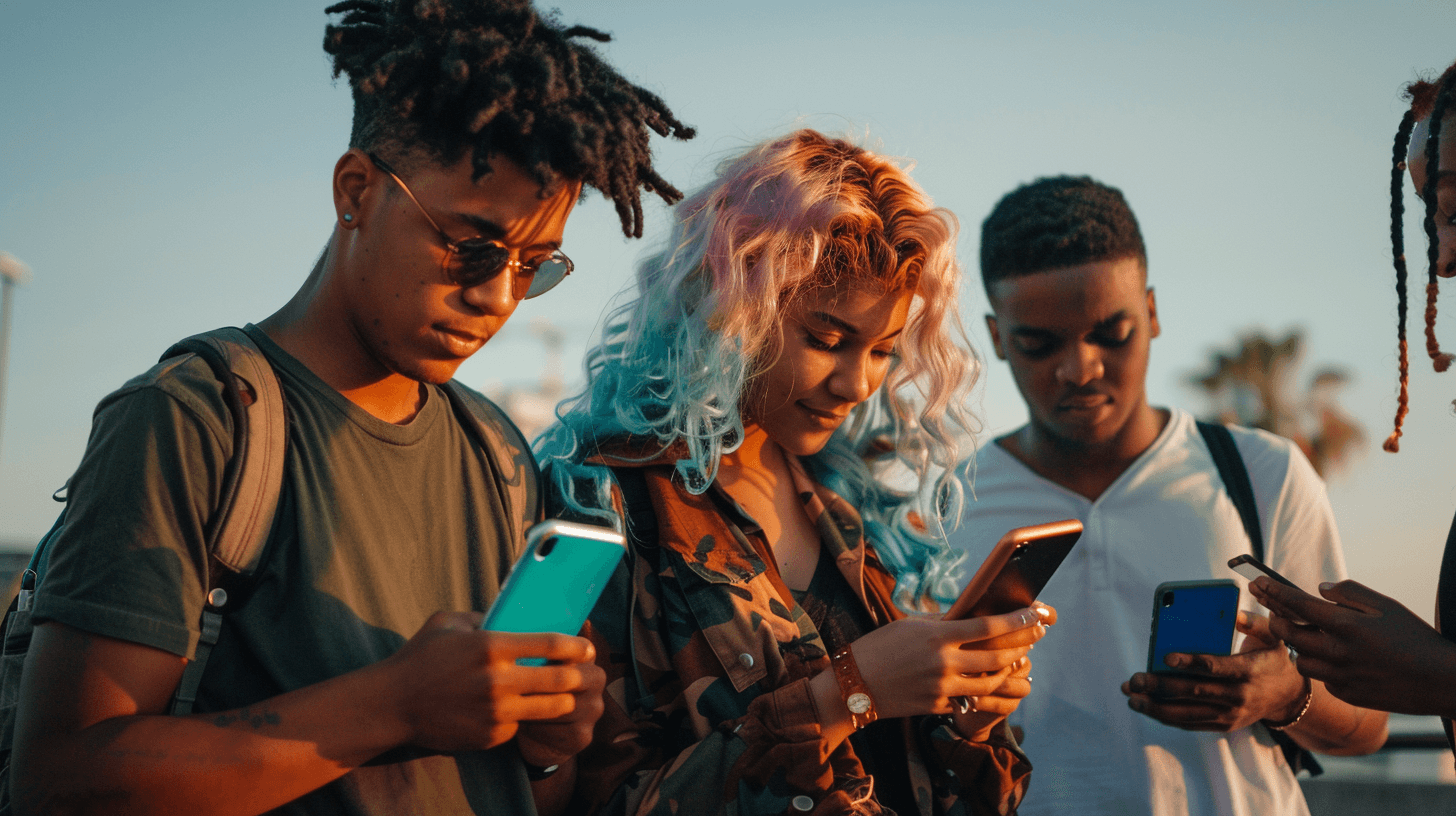
Mobile learning, also known as m-learning, addresses a significant challenge in urban education: the accessibility and flexibility of learning opportunities. As cities grow and evolve, traditional classroom-based education struggles to keep pace with the diverse and dynamic needs of urban populations. M-learning provides a solution by offering educational content and resources via mobile devices, ensuring that learning can occur anytime and anywhere, transcending the limitations of physical classrooms and rigid schedules.

M-learning leverages the widespread use of smartphones and tablets, utilising these devices to deliver educational materials, interactive lessons, and real-time assessments. Through dedicated apps and web-based platforms, learners can access a vast array of subjects, participate in virtual classrooms, and engage with multimedia content that enhances understanding and retention. This technology integrates features such as push notifications to remind students of deadlines, gamified dynamics to increase engagement, interactive quizzes to reinforce learning, and social integrations to foster collaboration and peer support.

The mechanism behind mobile learning involves cloud-based storage and delivery systems, ensuring that educational content is always up-to-date and easily accessible. Educators can upload materials, create interactive assignments, and track student progress through comprehensive analytics tools. Meanwhile, learners can download content for offline access, making it possible to continue their education even without a constant internet connection. This adaptability makes m-learning particularly beneficial for urban dwellers who might face inconsistent access to traditional educational resources.

As urban environments become more congested and lifestyles more hectic, the demand for flexible learning solutions will only increase. M-learning supports lifelong and micro-learning, enabling individuals to upskill and reskill in response to the rapidly changing job market. It also promotes educational equity by providing access to quality education for underserved populations, including those in remote areas of the city or individuals with mobility constraints.

Technology Readiness Level
9/9Fully Operative
Diffusion of Innovation
4/5Late Majority
Technology Life Cycle
3/4Maturity
Category
Applications

Related Organizations

Eneza Education

Kenya · Startup

95%

Provides educational content via SMS and mobile web to students in rural and urban Africa, functioning on basic feature phones.

Developer
Funzi

Finland · Startup

92%

A mobile learning service that delivers vocational and life skills training to users in emerging markets via low-bandwidth mobile web.

Developer
Cell-Ed

United States · Startup

90%

Offers mobile-first skills training and essential education (literacy, language) over messaging and audio, requiring no internet.

Developer
Duolingo logo
Duolingo

United States · Company

90%

Introduced 'Duolingo Max' featuring Roleplay and Explain My Answer, powered by GPT-4, where characters have distinct personalities.

Developer
Khan Academy logo
Khan Academy

United States · Nonprofit

90%

Developed 'Khanmigo', an AI-powered tutor that uses Socratic methods to guide students rather than just giving answers.

Developer
Rumie Initiative

Canada · Nonprofit

90%

Delivers micro-learning courses via mobile devices to underserved communities, focusing on employability and life skills.

Developer
Ubongo

Tanzania · Nonprofit

88%

Creates edutainment content for African families, accessible via mobile phones, TV, and radio.

Developer
UNESCO logo
UNESCO

France · Government Agency

85%

The UN agency responsible for the 'Recommendation on the Ethics of Artificial Intelligence'.

Standards Body
Worldreader logo
Worldreader

United States · Nonprofit

85%

Provides free access to a vast library of digital books via mobile phones and e-readers to support literacy in the Global South.

Developer
GSMA logo

GSMA

United Kingdom · Consortium

80%

The industry organization for mobile operators, which runs the 'Connected Women' and 'Mobile for Development' programs supporting m-learning.

Standards Body
KaiOS Technologies

HK · Company

80%

Develops a mobile operating system for smart feature phones, enabling internet access and educational apps on affordable devices.

Developer

Supporting Evidence

Article

Recovering learning: from emergency response to rebuilding back better education for the future

blogs.worldbank.org

The COVID-19 crisis and the ensuing economic crisis shook education systems to their core and forced urgent national and international responses to ensure continuity of learning. At its height, over 1.6 billion students all over the world had their learning disrupted, exacerbating the pre-existing global learning crisis and thus creating a crisis within a crisis. And with more than a complete year of schooling lost in many parts of the world, learning poverty —the share of 10-year-olds who cannot read a basic text— could rise up to 70 percent. As schools re-open, some countries are still using hybrid or blended learning strategies, and the challenge to recover lost learning must be top priority. The need to ensure that education systems implement coherent national learning recovery programs and reforms to emerge from the pandemic resilient, more equitable, and effective so that we can accelerate learning is more important now than ever.

Support 50%Confidence 80%

Article

Learning Recovery to Acceleration: A Global Update on Country Efforts to Improve Learning and Reduce Inequalities

worldbank.org

The report, "Learning Recovery to Acceleration: A Global Update on Country Efforts to Improve Learning and Reduce Inequalities," examines what countries are doing to recover and accelerate learning, and how they are doing it, studying over 60 education systems. While many countries largely returned to ‘business as usual’ after the COVID-19 pandemic, others jumped into action—implementing comprehensive, multi-year strategies for improving learning and reducing inequalities.

Support 50%Confidence 80%

Article

eduME: Punchy, bite-sized microlearning for your frontline workforce

edume.com

eduMe is for the before, after & everything in between. Not only more efficient and engaging, it makes training measurable and knowledge accessible 24/7.

Support 50%Confidence 80%

Article

What is Mobile Learning?: Definition, Benefits & Top Tips

edume.com

Mobile learning is the next generation of workforce training. Providing access to bitesize microlearning content through workers' personal devices drives higher engagement, improved retention and better business results.

Support 50%Confidence 80%

Article

Why Mobile Learning Is Now More Than Just A Nice-To-Have

elearningindustry.com

Mobile learning is becoming prevalent in today’s world. It is the result of the ever-changing era of the digital world. In this article, we will discuss how mLearning has changed the education and training sector.

Support 50%Confidence 80%

Article

7 Types of Mobile Learning and How to Use Them

thinkific.com

A study by Statista shows that 57% of Gen Zs and millennials spend over five hours on their smartphones every day. Smartphones have revolutionized the way people shop, bank, communicate, and even learn.

Support 50%Confidence 80%

Article

UNESCO: Best practices in mobile learning

unesco.org

Despite the huge potential of mobile learning, evidence shows that schools and education systems are rarely ready to harness the full potential of information and communication technology (ICT).

Support 50%Confidence 80%

Connections

Applications
Applications
Mobility as a Service

Unified platform integrating transit, ride-sharing, and bike rentals into one app for seamless urban travel

Technology Readiness Level
8/9
Diffusion of Innovation
3/5
Technology Life Cycle
2/4

Book a research session

Bring this signal into a focused decision sprint with analyst-led framing and synthesis.
Research Sessions