

Envisioning is an emerging technology research institute and advisory.

LinkedInInstagramGitHub

2011 — 2026

research
  • Reports
  • Newsletter
  • Methodology
  • Origins
  • Vocab
services
  • Research Sessions
  • Signals Workspace
  • Bespoke Projects
  • Use Cases
  • Signal Scanfree
  • Readinessfree
impact
  • ANBIMAFuture of Brazilian Capital Markets
  • IEEECharting the Energy Transition
  • Horizon 2045Future of Human and Planetary Security
  • WKOTechnology Scanning for Austria
audiences
  • Innovation
  • Strategy
  • Consultants
  • Foresight
  • Associations
  • Governments
resources
  • Pricing
  • Partners
  • How We Work
  • Data Visualization
  • Multi-Model Method
  • FAQ
  • Security & Privacy
about
  • Manifesto
  • Community
  • Events
  • Support
  • Contact
  • Login
ResearchServicesPricingPartnersAbout
  1. Home
  2. Research
  3. Cities
  4. Advanced Metering Infrastructure

Advanced Metering Infrastructure

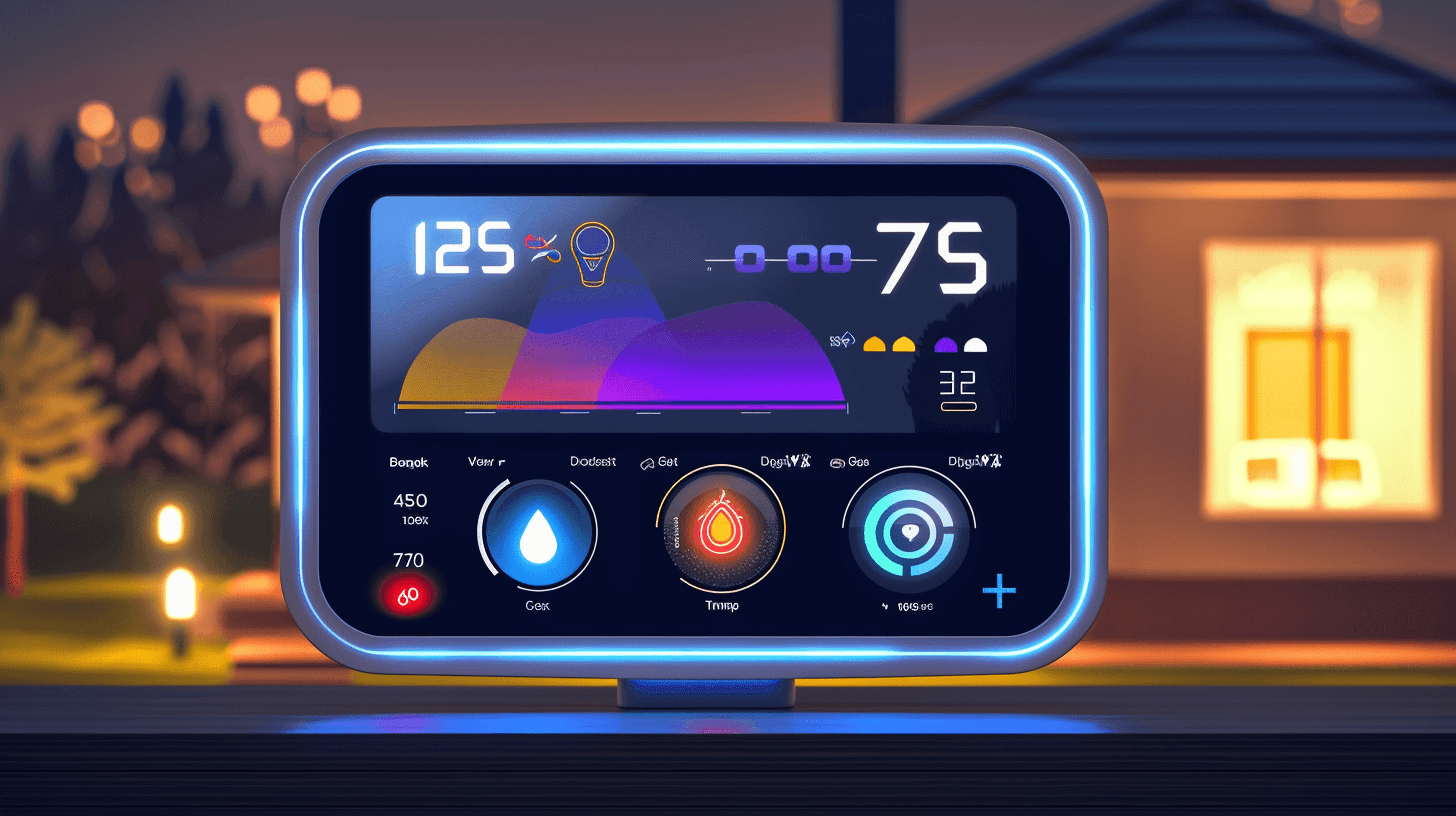
Real-time utility monitoring networks that track electricity, water, and gas consumption across cities
Back to CitiesView interactive version

Cities worldwide grapple with the challenges of managing resources efficiently, reducing carbon footprints, and enhancing residents' quality of life. One technological solution addressing these issues is the Advanced Metering Infrastructure (AMI). Also known as a Metering Network, this system is pivotal in transforming how urban areas monitor and manage utilities, providing real-time data and facilitating more intelligent decision-making.

AMI is a sophisticated grid of smart meters, communication networks, and data management systems. It works by installing smart meters in residential, commercial, and industrial buildings, which measure consumption of utilities such as electricity, water, and gas. These smart meters are interconnected via a secure communication network, allowing data to be transmitted continuously to central management systems. By integrating this data into advanced analytics platforms, cities can gain detailed insights into usage patterns, detect anomalies, and predict future demand with high accuracy.

The impact of metering networks on urban living is profound. Firstly, they empower consumers by providing detailed, real-time information about their utility usage, enabling them to make more informed decisions and reduce wastage. Secondly, utility companies can optimise resource distribution, promptly address issues like leaks or outages, and enhance overall efficiency. This leads to significant cost savings and a reduction in environmental impact. Furthermore, the data collected can be utilised for urban planning, ensuring that infrastructure development is aligned with actual needs and future growth projections.

As urban populations continue to grow, the demand for resources will escalate, making efficient management more crucial than ever. By embracing metering networks, cities can transition towards more sustainable, resilient, and smart urban environments. These systems not only contribute to the immediate benefits of cost savings and resource optimisation but also play a critical role in long-term strategic planning and sustainability goals.

Technology Readiness Level
9/9Fully Operative
Diffusion of Innovation
4/5Late Majority
Technology Life Cycle
2/4Growth
Category
Hardware

Related Organizations

DLMS User Association

Switzerland · Consortium

95%

The body responsible for the DLMS/COSEM standard, the global language for smart meter data exchange.

Standards Body
Itron logo
Itron

United States · Company

95%

A global leader in IoT and smart metering solutions, providing the hardware and software backbone for AMI deployments worldwide.

Developer
Landis+Gyr logo
Landis+Gyr

Switzerland · Company

95%

A Swiss multinational corporation that provides integrated energy management solutions, focusing heavily on smart metering and grid edge intelligence.

Developer
Wi-SUN Alliance

United States · Consortium

95%

A global non-profit member-based association driving the proliferation of interoperable wireless solutions for use in smart cities and smart grids.

Standards Body
Aclara

United States · Company

90%

A supplier of smart infrastructure solutions (SIS) to electric, gas, and water utilities.

Developer
Badger Meter logo
Badger Meter

United States · Company

90%

A manufacturer of flow measurement and control technology, with a strong focus on smart water metering.

Developer
Enel Group

Italy · Company

90%

An Italian multinational manufacturer and distributor of electricity and gas.

Deployer
Kamstrup logo
Kamstrup

Denmark · Company

90%

A Danish manufacturer of system solutions for smart energy and water metering.

Developer
CyanConnode

United Kingdom · Company

85%

A world leader in Narrowband Radio Frequency (RF) Smart Mesh Networks for AMI.

Developer
Networked Energy Services (NES)

United States · Company

85%

Provides smart grid solutions including the Patagonia Energy Applications Platform.

Developer
SparkMeter

United States · Company

85%

Provides smart metering and grid management software specifically for microgrids in emerging markets.

Developer
Trilliant

United States · Company

85%

Provides a communications platform for the smart grid, connecting AMI devices to utility operations centers.

Developer

Supporting Evidence

Article

Intelligent Metering for Urban Water: A Review

mdpi.com

This paper reviews the drivers, development and global deployment of intelligent water metering in the urban context. Recognising that intelligent metering (or smart metering) has the potential to revolutionise customer engagement and management of urban water by utilities, this paper provides a summary of the knowledge-base for researchers and industry practitioners to ensure that the technology fosters sustainable urban water management. To date, roll-outs of intelligent metering have been driven by the desire for increased data regarding time of use and end-use (such as use by shower, toilet, garden, etc.) as well as by the ability of the technology to reduce labour costs for meter reading. Technology development in the water sector generally lags that seen in the electricity sector. In the coming decade, the deployment of intelligent water metering will transition from being predominantly “pilot or demonstration scale” with the occasional city-wide roll-out, to broader mainstream implementation. This means that issues which have hitherto received little focus must now be addressed, namely: the role of real-time data in customer engagement and demand management; data ownership, sharing and privacy; technical data management and infrastructure security, utility workforce skills; and costs and benefits of implementation.

Support 50%Confidence 80%

Article

IoT Opens Door To Energy Efficiency -- Not Just In Large Buildings

forbes.com

Large building owners have been investing in intelligent building technologies and leveraging these data-driven solutions to reduce costs, improve operational and energy efficiencies, and achieve broader corporate objectives like sustainability. Small and medium building (SMB) owners, on the other hand, often struggle to maintain profits and sustain slim margins with more traditional approaches. Most of these smaller buildings lack the technology to generate the kind of data that ties energy consumption to operational and bottom-line performance. As a result, there is a lost opportunity for these business owners. The Internet of Things (IoT) concept, however, is changing the conversation around building management and delivering impressive results. There are three ways that IoT is opening new doors for SMB energy efficiency and business improvement.

Support 50%Confidence 80%

Article

Japan and Taiwan partner for next gen metering demo

smart-energy.com

Image credit: Stock TEPCO Power Grid, Tokyo Gas and the Industrial Technology Research Institute (ITRI) have agreed to jointly conduct a demonstration project to develop a next generation metering platform in the area D of the Shalun Green Energy Science City in R.O.C.

Support 50%Confidence 80%

Article

Zimbabwe launches smart-meter-led net metering and 500 MW solar tender

pv-magazine.com

Utility the Zimbabwe Electricity Distribution Company has offered solar power system-owning customers the chance to operate under new net metering rules. The state-owned utility has also started tendering for a total 500 MW of solar generation capacity, according to Reuters.

Support 50%Confidence 80%

Article

What role will smart metering systems play in the future?

smart-energy.com

Comarch Smart Metering is an Internet of Things (IoT) solution that responds to the need for remote and automatic measurement of media consumption.

Support 50%Confidence 80%

Article

What does the internet of things mean for the energy sector?

weforum.org

When renowned American psychologist Abraham Maslow came up with his famous Maslow’s Hierarchy of Needs in 1943, he had studied what he called “exemplary” people, such as Albert Einstein, Eleanor Roosevelt and Frederick Douglass, to describe the pattern that human motivations generally move through. The highest level of need – self-actualization – referred to a person’s full potential and the realization of that potential. Maslow’s description of self-actualization can be summarized by the famous US Army slogan, “Be All You Can Be.” Maslow believed that for a person to realize their full potential, they must not only achieve the previous needs, but master them.

Support 50%Confidence 80%

Article

Advanced Metering Infrastructure (AMI)

german-metering.com

Advanced Metering Infrastructure (AMI) refers to systems that measure, collect and analyze energy consumption and with measuring equipment such as electricity meters, gas meters and water meters, according to they communicate on request or on a scheduled basis. These systems include hardware, software, communications, common energy consumption displays and controllers, customer communication systems, meter data management software, and supplier business systems.

Support 50%Confidence 80%

Article

Enabling the clean energy transition with next-gen advanced metering infrastructure

www2.deloitte.com

Advanced metering infrastructure (AMI) is no longer a collection of digital meters that handles a limited amount of data and a few routine tasks. AMI 2.0 is a powerful edge-computing network. Offering real-time data and more control over energy usage, next-gen AMI empower consumers, and helps utilities build a resilient grid with a reduced carbon footprint.

Support 50%Confidence 80%

Article

What is advanced metering infrastructure (AMI)?

ibm.com

Advanced metering infrastructure (AMI) is an integrated, fixed-network system that enables two-way communication between utilities and customers. The system collects, stores, analyzes and presents energy usage data, providing utility companies the ability to monitor electricity, gas and water usage in real time.

Support 50%Confidence 80%

Connections

Hardware
Hardware
Integrated Autonomous Energy Grid

AI-managed grid combining renewable sources with existing infrastructure for real-time urban energy optimization

Technology Readiness Level
7/9
Diffusion of Innovation
3/5
Technology Life Cycle
2/4
Software
Software
Autonomous Maintenance Software

AI-driven software that monitors, diagnoses, and repairs urban infrastructure autonomously

Technology Readiness Level
7/9
Diffusion of Innovation
2/5
Technology Life Cycle
2/4
Software
Software
Autonomous Sustainability Monitoring

Real-time sensor networks and AI tracking air quality, energy use, and waste across cities

Technology Readiness Level
6/9
Diffusion of Innovation
2/5
Technology Life Cycle
1/4
Software
Software
Wastewater Analytics Platform

Real-time monitoring and optimization of urban wastewater systems using sensors and data analytics

Technology Readiness Level
8/9
Diffusion of Innovation
3/5
Technology Life Cycle
2/4
Hardware
Hardware
Urban Irrigation

Smart sprinkler networks for streets, roofs, and parks that cool surfaces, reduce dust, and manage stormwater

Technology Readiness Level
8/9
Diffusion of Innovation
2/5
Technology Life Cycle
2/4
Software
Software
Automated Compliance

AI-powered systems that monitor and enforce urban regulations in real-time

Technology Readiness Level
7/9
Diffusion of Innovation
3/5
Technology Life Cycle
2/4

Book a research session

Bring this signal into a focused decision sprint with analyst-led framing and synthesis.
Research Sessions