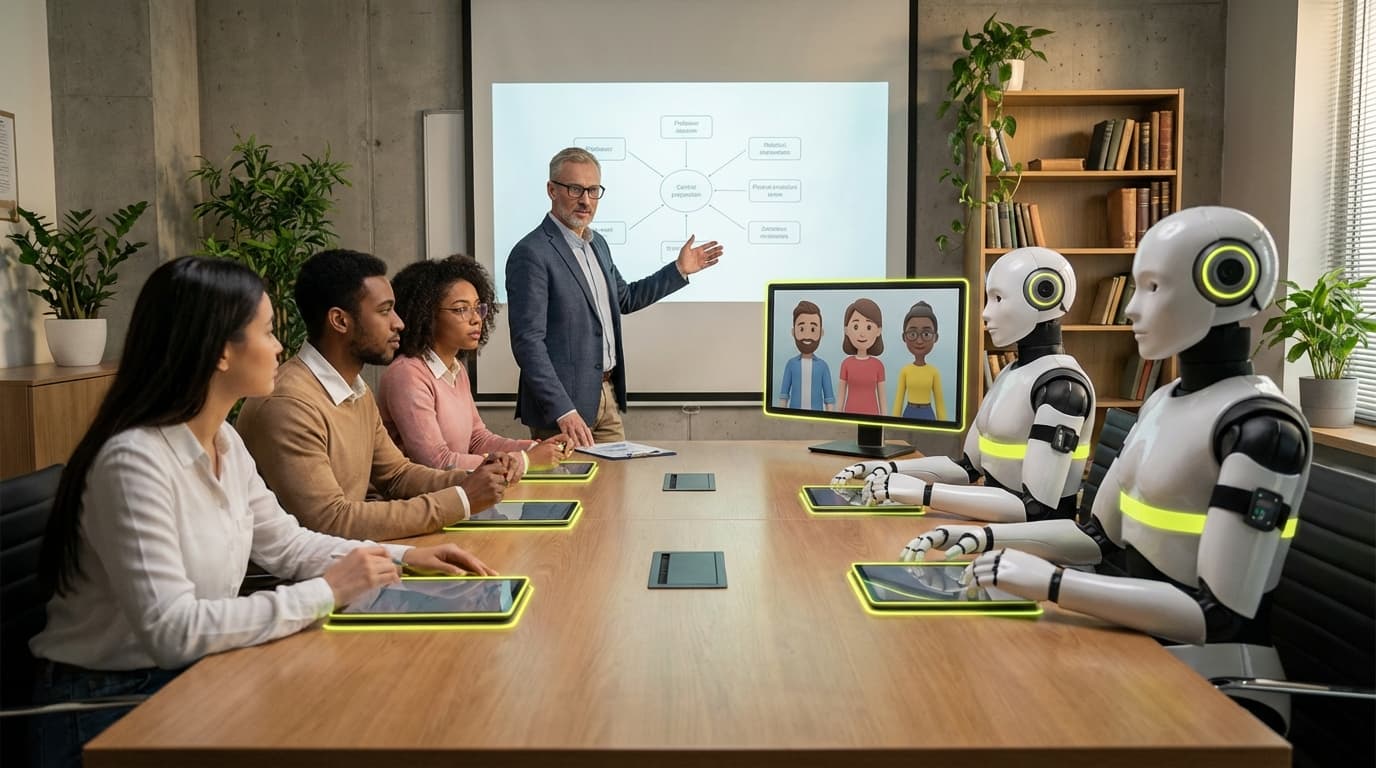
Governance of Synthetic Classmates
Governance frameworks for synthetic classmates establish norms, rules, and guidelines for how AI-powered virtual peers, classmates, and collaborators should participate in educational settings, defining disclosure requirements (when and how students should know they're interacting with AI), behavioral constraints (what AI classmates can and cannot do), moderation mechanisms (how to prevent harmful or inappropriate AI behavior), and acceptable roles (what functions AI classmates should serve). These frameworks address how synthetic classmates should participate in discussions, assessments, group work, and social learning activities while protecting the psychological safety, agency, and learning experiences of human students, ensuring that AI peers enhance rather than undermine authentic learning and social development.
This framework addresses the need for clear guidelines as AI classmates become more sophisticated and potentially more prevalent in educational settings, where understanding appropriate roles and boundaries could prevent negative impacts on learning and social development. By establishing governance frameworks, these models can ensure that AI classmates are used appropriately and ethically. Researchers, educators, ethicists, and educational technology companies are exploring these issues, with growing recognition of the need for governance as AI classmates become more capable.
The framework is particularly significant as AI classmates become more sophisticated and potentially more common, where establishing clear governance could ensure that these technologies support rather than undermine learning. As these technologies advance, creating effective governance frameworks could become essential. However, defining appropriate roles, ensuring disclosure, managing behavioral constraints, and creating enforceable guidelines remain challenges. The framework represents an important area of governance development, but requires ongoing refinement as AI capabilities evolve.
Related Organizations

The UN agency responsible for the 'Recommendation on the Ethics of Artificial Intelligence'.

Reviews and rates edtech applications specifically for their privacy policies and data handling.

A research institute dedicated to guiding the future of AI, including social impact and educational norms.

A research center at Harvard University exploring the ethics, governance, and social impact of digital technologies including crypto.

Developed 'Khanmigo', an AI-powered tutor that uses Socratic methods to guide students rather than just giving answers.

Character.ai
United States · Startup
A platform for chatting with AI personas, facing significant pressure to govern user-AI relationship dynamics.

A platform for creating AI characters with distinct personalities, memories, and contextual awareness for games and virtual worlds.

Creator of ABCmouse and My Math Academy, utilizing a Personalized Mastery Learning System.

Creates autonomously animated 'Digital People' with simulated nervous systems.

An AI companion app that has faced scrutiny regarding the emotional dependence of its users.
Supporting Evidence
Research this in Signals
Signals turns a topic into a sourced research record you can inspect and rerun. Your first scan is free, and this one starts with Governance of Synthetic Classmates already loaded, so edit it or scan as is.