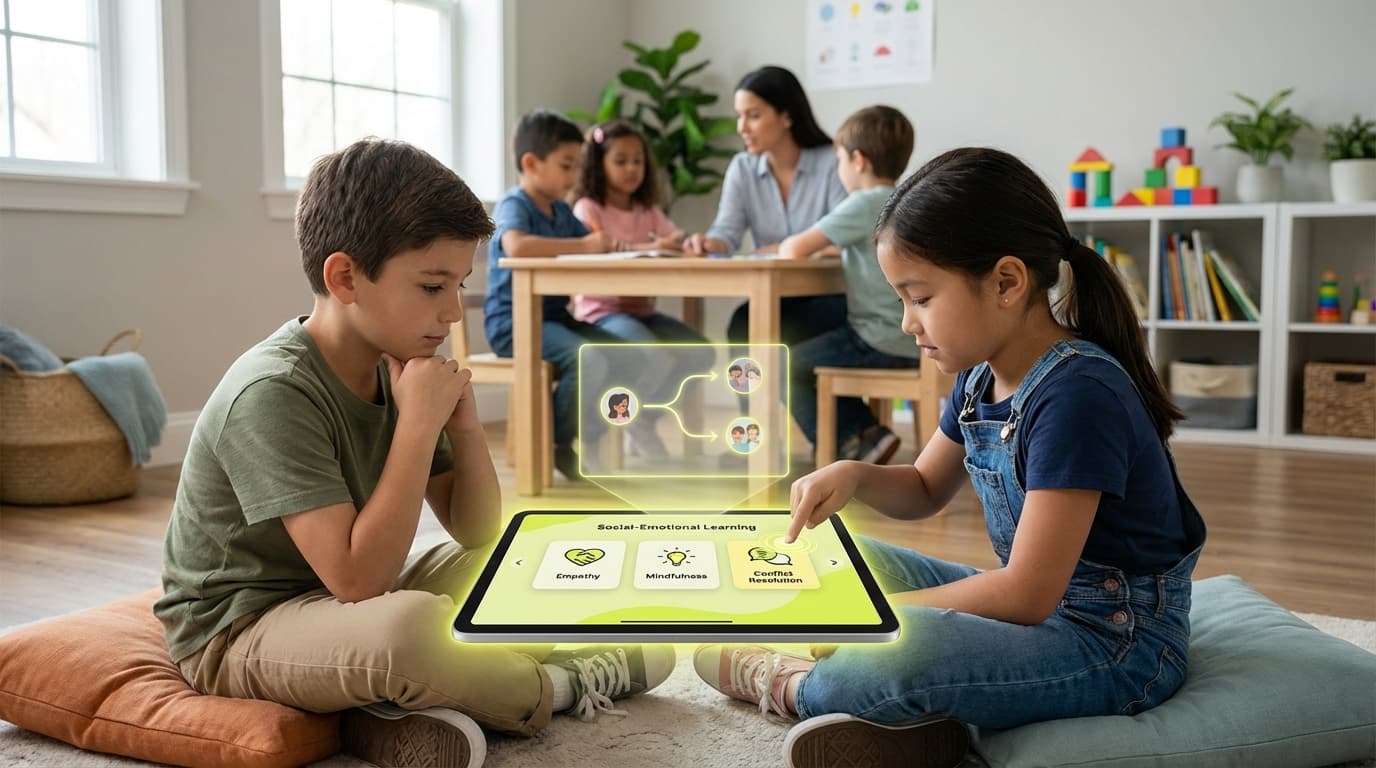
Social-Emotional Learning Apps
Social-emotional learning (SEL) apps are mobile and web-based platforms that deliver structured programs teaching essential social and emotional skills—self-awareness, self-management, social awareness, relationship skills, and responsible decision-making—through micro-lessons, interactive activities, journaling prompts, mindfulness exercises, and guided practices. These apps often include facilitator dashboards for teachers or counselors to track student progress, customize content, and integrate SEL into classroom activities. Many systems integrate with Multi-Tiered System of Supports (MTSS) frameworks, providing tiered interventions that can support students at different levels of need, from universal prevention to targeted support for students requiring more intensive social-emotional interventions. By making SEL accessible, engaging, and trackable, these apps help schools systematically develop students' social and emotional competencies.
This innovation addresses the growing recognition that social-emotional skills are essential for academic success, mental health, and life outcomes, where traditional academic-focused education may not adequately develop these competencies. By providing structured, accessible SEL programs, these apps enable schools to systematically support social-emotional development. Educational technology companies, mental health organizations, and SEL-focused platforms are developing these apps, with SEL becoming increasingly integrated into school curricula and support systems.
The technology is particularly significant for supporting student well-being and creating positive learning environments, where strong social-emotional skills can improve academic outcomes, reduce behavioral issues, and support mental health. As SEL becomes more recognized as essential, these apps could become standard tools in educational settings. However, ensuring program quality, measuring effectiveness, providing adequate support, and integrating effectively into school systems remain challenges. The technology represents an important tool for supporting student development, but requires careful selection and implementation to maximize benefits.
Related Organizations

The nonprofit behind 'Second Step', the most widely used SEL curriculum, which has expanded into digital programs.

Providers of the DESSA (Devereux Student Strengths Assessment), a standardized tool for measuring SEL competence.

A communication app for schools that includes 'Big Ideas', a series of SEL videos and activities.

Develops a library of biofeedback games that help children build emotional regulation skills.

A data analytics company that helps schools track students' social-emotional learning through surveys and dashboards.
Australia's leading digital mindfulness nonprofit, offering a free app with specific programs for classrooms.

A platform used in classrooms for movement and mindfulness videos.

A leading mindfulness and meditation app that offers 'Headspace for Educators', providing free access to K-12 teachers.

A video-based SEL curriculum that uses interactive exercises to teach emotional intelligence.

A comprehensive EdTech platform offering SEL, mental health, and special education solutions.
Supporting Evidence
Research this in Signals
Signals turns a topic into a sourced research record you can inspect and rerun. Your first scan is free, and this one starts with Social-Emotional Learning Apps already loaded, so edit it or scan as is.