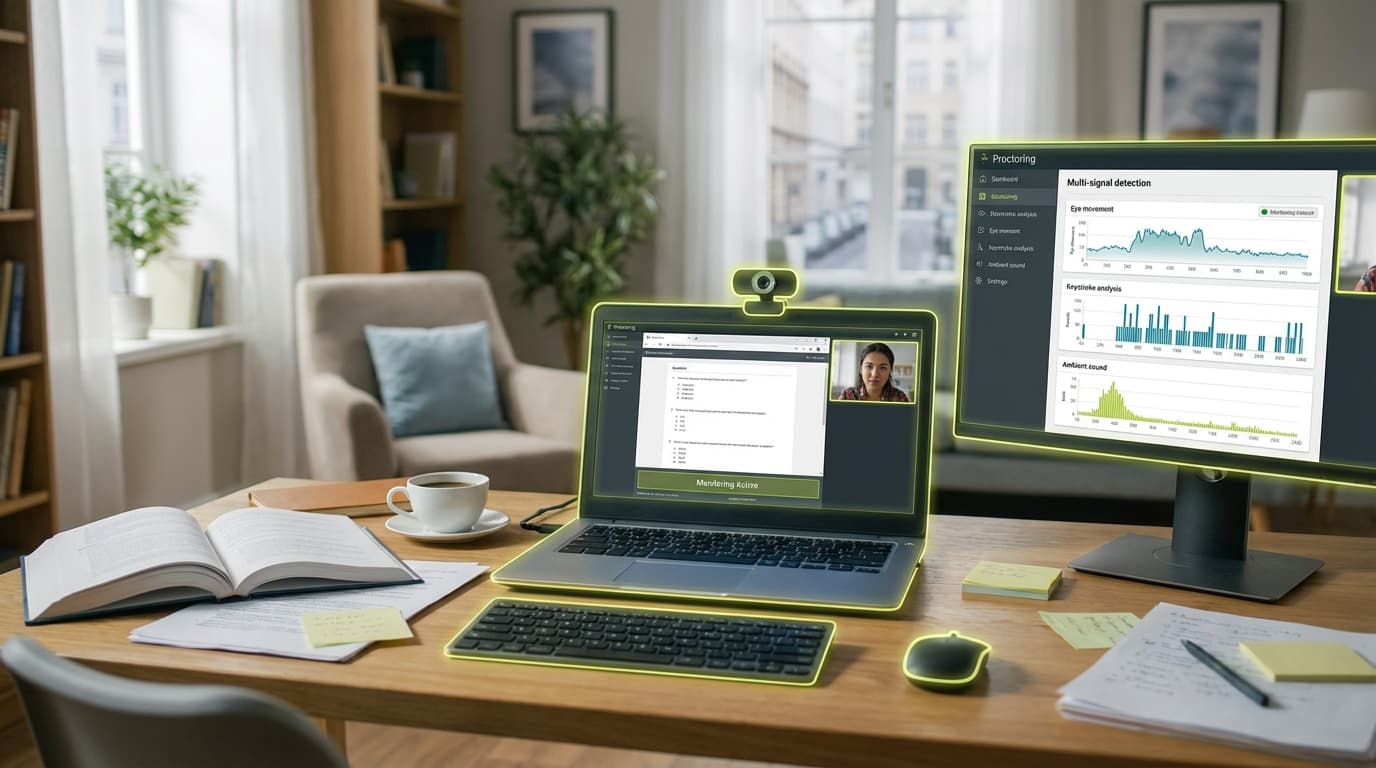
Proctoring Software
AI proctoring software uses computer vision, audio analysis, and screen monitoring to detect potential cheating behaviors during remote exams, capturing data from webcams (eye movements, head position, presence of other people), microphones (background noise, conversations), and screen activity (browser switching, unauthorized applications) to flag suspicious behaviors for human review. These systems use machine learning algorithms to analyze behavioral patterns and identify anomalies that might indicate cheating, such as looking away from the screen frequently, unusual eye movements, background voices, or accessing unauthorized materials. By providing automated monitoring and flagging, these systems enable remote, high-stakes assessments while maintaining academic integrity, supplementing human proctors with AI that can monitor multiple signals simultaneously and flag potential issues for review.
This innovation addresses the challenge of maintaining exam integrity in remote learning environments, where traditional in-person proctoring isn't possible and where ensuring academic honesty is essential for credential validity. By providing automated monitoring, these systems enable remote assessments while attempting to maintain security. Companies like ProctorU, Examity, and various educational technology providers have developed these systems, with AI proctoring becoming widely used in online education and remote testing.
The technology is particularly significant for enabling remote, high-stakes assessments, where maintaining integrity is essential for credential validity. As remote learning and testing become more common, proctoring systems could become standard tools. However, ensuring accuracy, managing privacy concerns, avoiding false positives, addressing accessibility issues, and managing the stress and invasiveness of monitoring remain significant challenges. The technology represents an important tool for remote assessment, but requires careful implementation to balance security with privacy, accessibility, and user experience.
Related Organizations
Parent company of ProctorU, providing remote proctoring and assessment solutions.
Learning integrity platform offering automated proctoring via browser extensions.
Examity
United States · Company
Comprehensive online proctoring solution offering auto, live, and record-and-review options.
Hybrid proctoring solution combining AI monitoring with live human pop-ins.

Assessment tools for learning systems, including LockDown Browser and Monitor.


Identity verification and remote monitoring solutions (Proctortrack).

Web browser environment to carry out e-assessments safely.

Digital rights group advocating for privacy in emerging technologies, including BCI and mental privacy.
Supporting Evidence
Research this in Signals
Signals turns a topic into a sourced research record you can inspect and rerun. Your first scan is free, and this one starts with Proctoring Software already loaded, so edit it or scan as is.