






Floating Cities
This page is a narrower case of it.
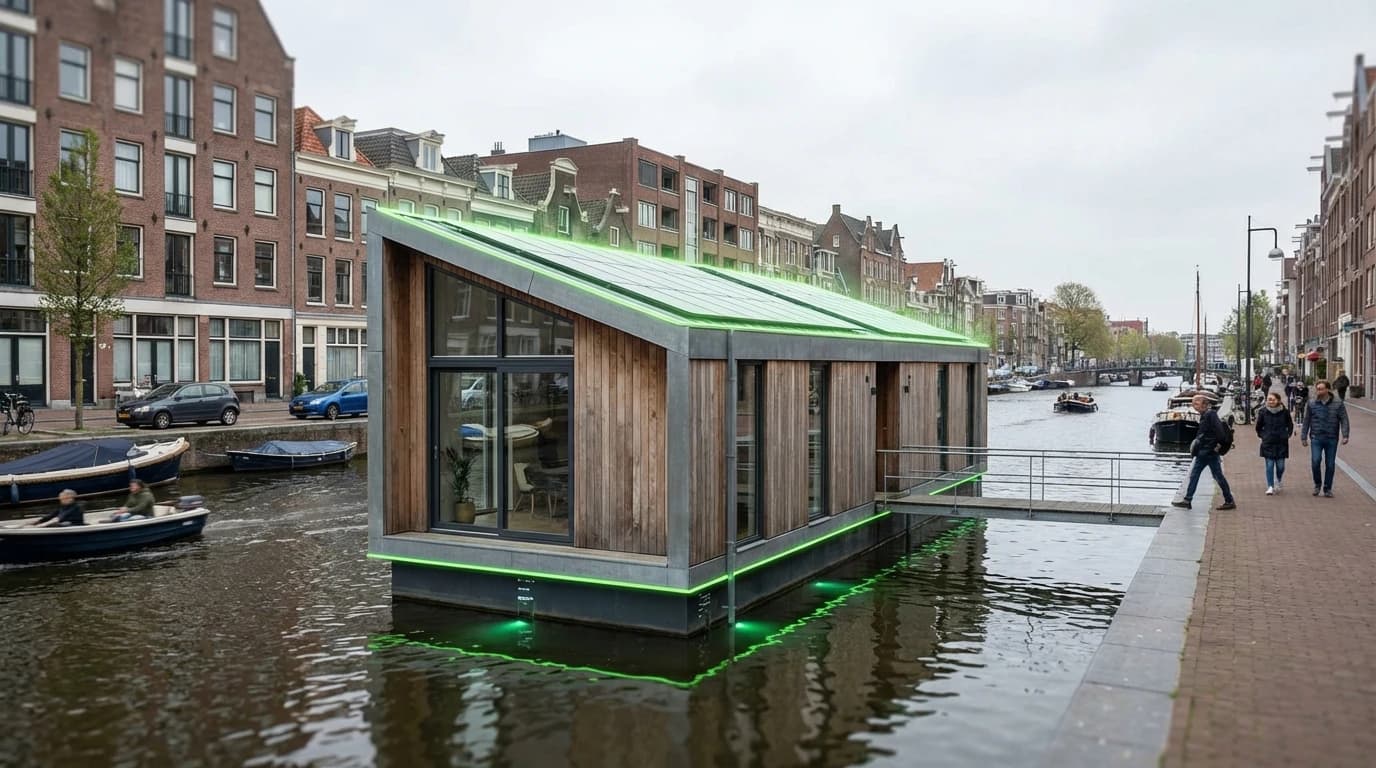
Floating homes represent a groundbreaking approach to urban housing, designed to adapt to rising sea levels and increased flooding due to climate change. These structures are anchored to the shore but float on water, allowing them to rise and fall with changing water levels. This innovative housing type not only provides shelter but also contributes to urban resilience against climate impacts.
The Netherlands has emerged as a leader in developing floating communities, with projects such as Schoonschip in Amsterdam showcasing their potential. Residents report feeling safer during storms, as the homes are designed to withstand severe weather. The buildings are often constructed using conventional materials like timber and steel, and they incorporate modern energy-efficient technologies, including solar panels and heat pumps, to minimize their environmental footprint.
As the demand for housing increases and land scarcity becomes more pronounced, floating homes present a viable solution in urban planning. They allow for multifunctional use of space while providing a new model for sustainable living. Dutch firms like Waterstudio are at the forefront of this movement, designing a range of floating structures that can include residential homes, offices, and even schools.
Despite facing challenges such as infrastructure integration and the effects of severe weather, the benefits of floating homes are significant. They not only address housing shortages but also align with broader climate adaptation strategies, transforming how communities interact with water. As global interest in such developments grows, floating homes could redefine urban landscapes in flood-prone regions worldwide.
An architectural firm exclusively dedicated to floating urbanization, designing floating foundations and modular structures for housing and public services.
A social enterprise and design firm focused on floating urban development and maritime technology to address climate change.
A blue tech company building floating cities, including a prototype in Busan, South Korea, designed to withstand floods and sea-level rise.
United States · Company
Designs and builds 'livable yachts'—floating homes capable of lifting themselves above the water on hydraulic spuds to withstand storms.
A research initiative at the University of Waterloo designing amphibious foundations that allow existing structures to float during floods.
Specializes in designing and constructing large floating foundations using EPS (Expanded Polystyrene) and concrete.
A nonprofit think tank promoting the creation of floating ocean communities with significant political and legal autonomy.
Independent institute for applied research in the field of water and subsurface.
Netherlands · Nonprofit
An international organization hosted in the largest floating office in Rotterdam, promoting adaptation solutions including floating infrastructure.
Published forecasts about this technology, graded against what happened in Hindsight.
Floating Cities
This page is a narrower case of it.
Signals turns a topic into a sourced research record you can inspect and rerun. Your first scan is free, and this one starts with Floating Homes for Climate Adaptation already loaded, so edit it or scan as is.