Undersea Habitat Systems
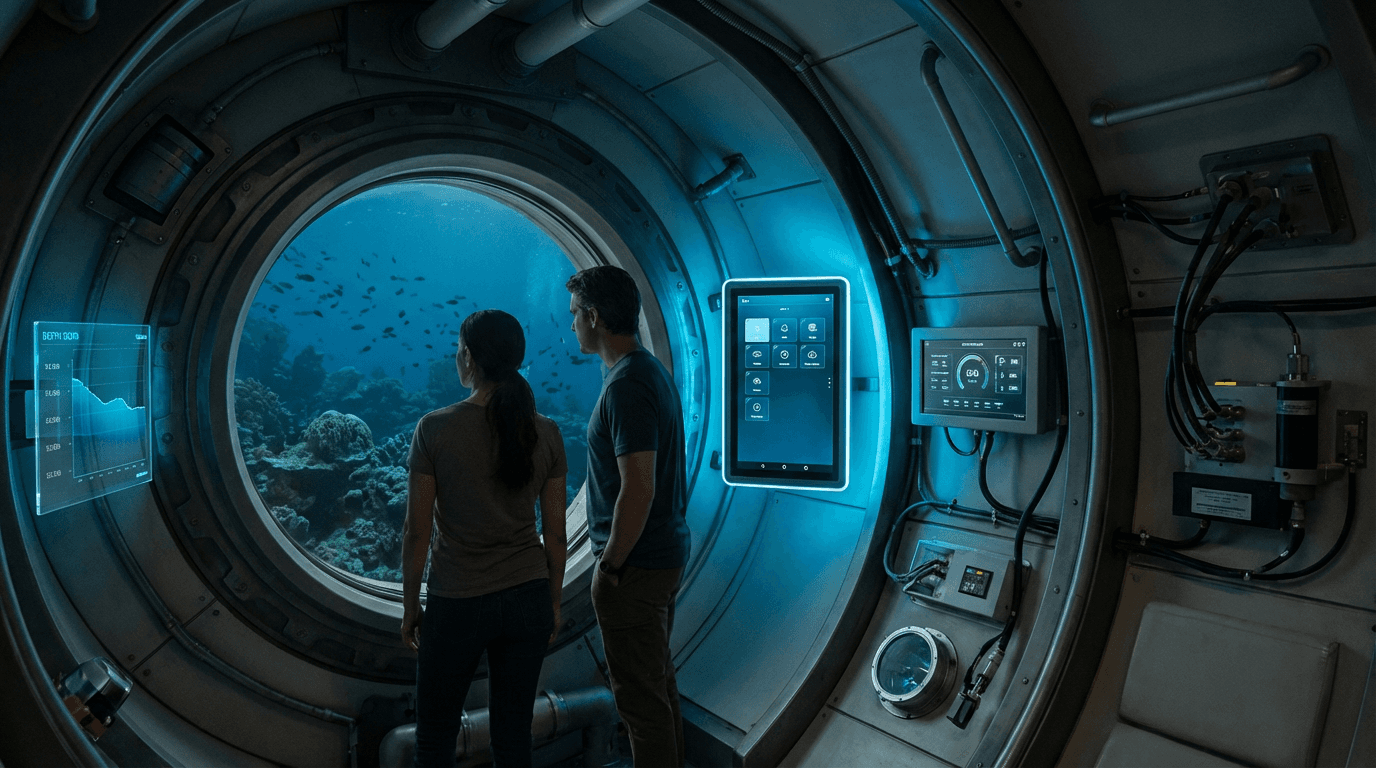
Undersea habitat systems represent a convergence of marine engineering, life support technology, and hospitality infrastructure designed to enable extended human habitation beneath the ocean's surface. These structures maintain atmospheric pressure within their interior spaces, eliminating the need for specialized diving equipment or decompression protocols that typically limit underwater exposure. The technical foundation relies on robust pressure vessels constructed from materials such as reinforced steel, acrylic composites, or advanced polymers capable of withstanding the immense hydrostatic forces at depth. Life support systems continuously regulate air quality through carbon dioxide scrubbers, oxygen generators, and humidity control mechanisms similar to those employed in submarines and space stations. Large-format transparent viewports, often fabricated from thick acrylic panels, provide unobstructed views of the surrounding marine environment while maintaining structural integrity. Access typically occurs through wet porches or moon pools—openings in the habitat floor that allow divers to enter and exit while the internal atmosphere remains stable due to air pressure exceeding water pressure at depth.
The tourism and hospitality industries have long sought ways to differentiate underwater experiences beyond traditional diving excursions, which remain inaccessible to the majority of travelers due to certification requirements, physical limitations, or safety concerns. Undersea habitat systems address this barrier by creating environments where guests can experience prolonged immersion in marine ecosystems without specialized training or equipment. This democratization of ocean access opens entirely new market segments, from luxury travelers seeking novel accommodations to educational institutions conducting multi-day marine biology programs. Beyond tourism, these facilities enable extended oceanographic research missions, allowing scientists to conduct continuous observations and experiments that would be impractical with conventional diving schedules. Some installations integrate coral restoration nurseries or artificial reef structures into their design, positioning the habitats as active participants in marine conservation rather than passive observers. The economic model shifts from brief, equipment-intensive dive trips to destination stays that can command premium pricing while reducing the per-guest environmental impact of repeated boat trips and dive operations.
Several pilot installations have demonstrated the commercial viability of this concept, with facilities operating in tropical waters offering overnight and multi-day stays to paying guests. These early deployments typically accommodate small groups in configurations ranging from single-room capsules anchored to the seafloor to larger multi-chamber complexes with dedicated sleeping quarters, observation lounges, and research laboratories. The experience appeals particularly to travelers seeking transformative encounters with marine environments—waking to schools of fish passing overhead, observing nocturnal reef behaviors invisible during daylight dives, or participating in citizen science initiatives from the comfort of a climate-controlled environment. As climate change and ocean acidification accelerate threats to marine ecosystems, undersea habitats may evolve beyond tourism amenities into critical infrastructure for coral restoration, species monitoring, and climate research. The technology aligns with broader trends toward experiential travel, conservation tourism, and the expansion of human presence into previously inaccessible environments, suggesting a future where temporary ocean residency becomes as routine as mountain lodges or desert camps in the adventure travel portfolio.
Related Organizations
Luxury resort featuring The Muraka, a two-level residence with a master bedroom submerged 16 feet below sea level.

Ocean technology company developing the Sentinel underwater habitat system.

Luxury hotel resort located on the Palm Jumeirah in Dubai.
Non-profit dedicated to ocean conservation and the development of Project Proteus.

Luxury hotel built into an abandoned quarry with two floors submerged underwater.


The only underwater hotel in the United States.

Develops underwater products and experiences like Sea TREK and Aquaticar.
Manufacturer of civil submersibles for yachting and tourism.
Supporting Evidence
Research this in Signals
Signals turns a topic into a sourced research record you can inspect and rerun. Your first scan is free, and this one starts with Undersea Habitat Systems already loaded, so edit it or scan as is.