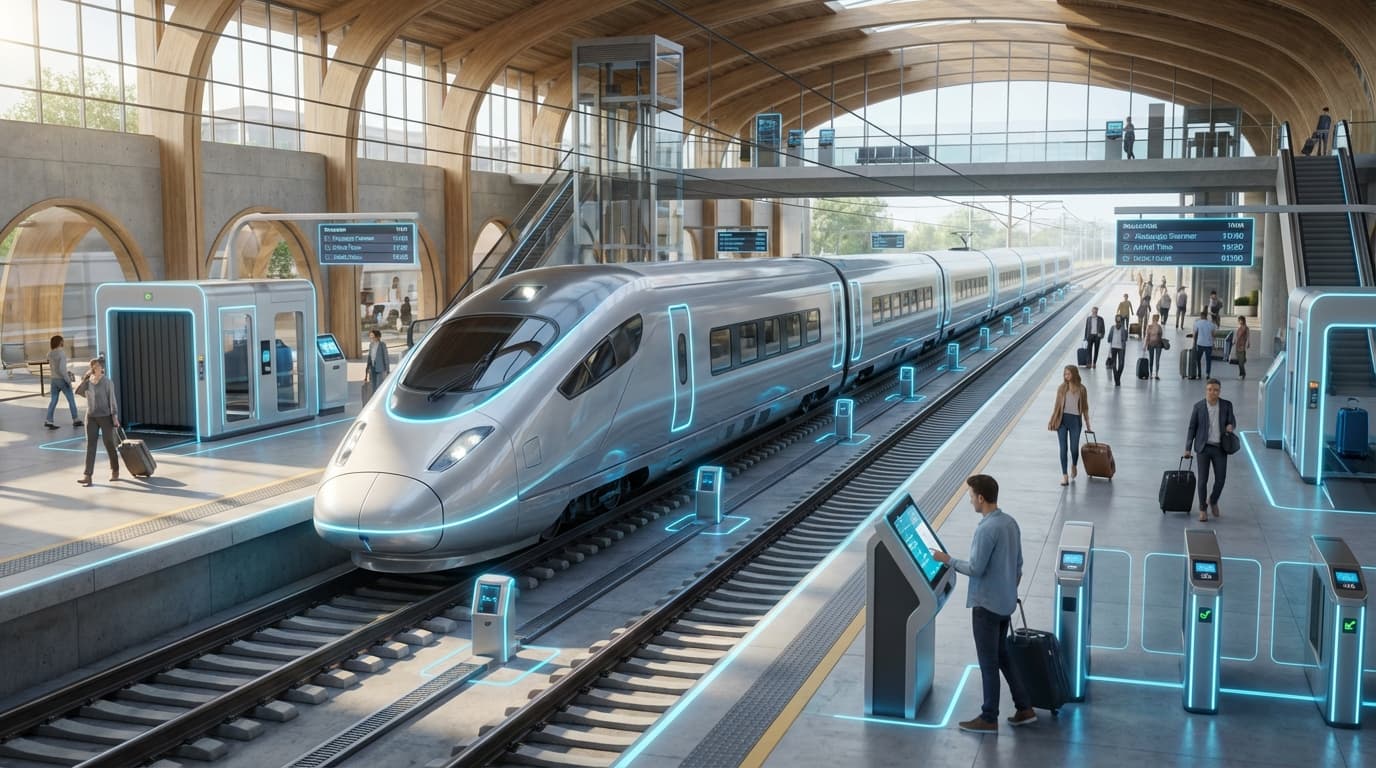
High-Speed Rail Modernization
High-speed rail modernization represents a fundamental transformation in intercontinental mobility infrastructure, particularly in regions where aviation has historically dominated medium-distance travel. These systems employ advanced rail technologies capable of sustained speeds exceeding 300 kilometers per hour, utilizing dedicated tracks with minimal grade variations, sophisticated signaling systems, and aerodynamically optimized rolling stock. The technical foundation includes innovations such as continuous welded rails to eliminate track joints, advanced bogies with active suspension systems, and regenerative braking that captures energy during deceleration. In emerging markets, these networks often incorporate lessons learned from established systems in Japan, France, and China, while adapting designs to local geological conditions, climate challenges, and economic constraints. The infrastructure extends beyond the trains themselves to encompass entirely new station ecosystems, electrification systems capable of delivering megawatts of power continuously, and sophisticated traffic management systems that coordinate multiple trains operating at high speeds on shared corridors.
The deployment of high-speed rail in regions previously underserved by efficient ground transportation addresses several critical challenges facing the global tourism and mobility sectors. Traditional rail networks in Africa, South America, and Southeast Asia have often suffered from underinvestment, limiting speeds to levels that make rail uncompetitive with air travel for journeys beyond short distances. High-speed rail transforms this equation by making rail journeys of 500 to 1,200 kilometers viable alternatives to flying, particularly when accounting for airport transit times and security procedures. Transnational corridors, such as those developed under infrastructure initiatives connecting multiple countries, create entirely new patterns of regional tourism and business travel by reducing journey times between major cities from full-day excursions to manageable trips of just a few hours. This shift enables the emergence of new tourism models, where travelers can efficiently visit multiple destinations within a single trip, while also reducing the carbon footprint associated with short-haul aviation. The economic multiplier effects extend to communities along the routes, where new stations become catalysts for hotel development, cultural attractions, and service industries catering to the increased flow of visitors.
Current deployments indicate growing momentum in several key corridors, with projects in various stages of planning, construction, and early operation across multiple continents. Southeast Asian nations are developing networks that connect major metropolitan areas, while African initiatives focus on linking economic centers that have historically been poorly connected by efficient ground transportation. South American projects aim to traverse challenging terrain, including mountainous regions and vast distances between population centers, requiring significant engineering adaptations. These systems are increasingly integrated with digital booking platforms, multimodal transportation hubs, and tourism promotion strategies that position high-speed rail as a premium travel experience rather than merely functional transport. The broader trajectory suggests that high-speed rail modernization will continue reshaping global tourism patterns, particularly as environmental considerations make lower-emission travel options more attractive to both travelers and policymakers. As these networks mature and expand, they promise to create more sustainable, accessible, and economically vibrant tourism corridors that connect previously isolated regions to global travel markets.
Related Organizations

French multinational rolling stock manufacturer, maker of the TGV.

Central Japan Railway Company (JR Central)
Japan · Company
Operator of the Tokaido Shinkansen and developer of the Chuo Shinkansen Maglev line.
Industrial giant offering intermodal transport solutions and MaaS platforms for transit agencies.

The only privately owned and operated intercity passenger railroad in the United States.

Global rail solutions provider delivering ATO systems, recently acquiring Thales' Ground Transportation Systems to bolster autonomy capabilities.

The company responsible for developing and promoting the UK's new high-speed rail network.

Spanish manufacturer of railway vehicles and equipment.

Swiss train manufacturer developing rolling stock equipped with ATO capabilities, including successful GoA4 tests.
Supporting Evidence
Research this in Signals
Signals turns a topic into a sourced research record you can inspect and rerun. Your first scan is free, and this one starts with High-Speed Rail Modernization already loaded, so edit it or scan as is.