










Community Dashboards
This page is a narrower case of it.
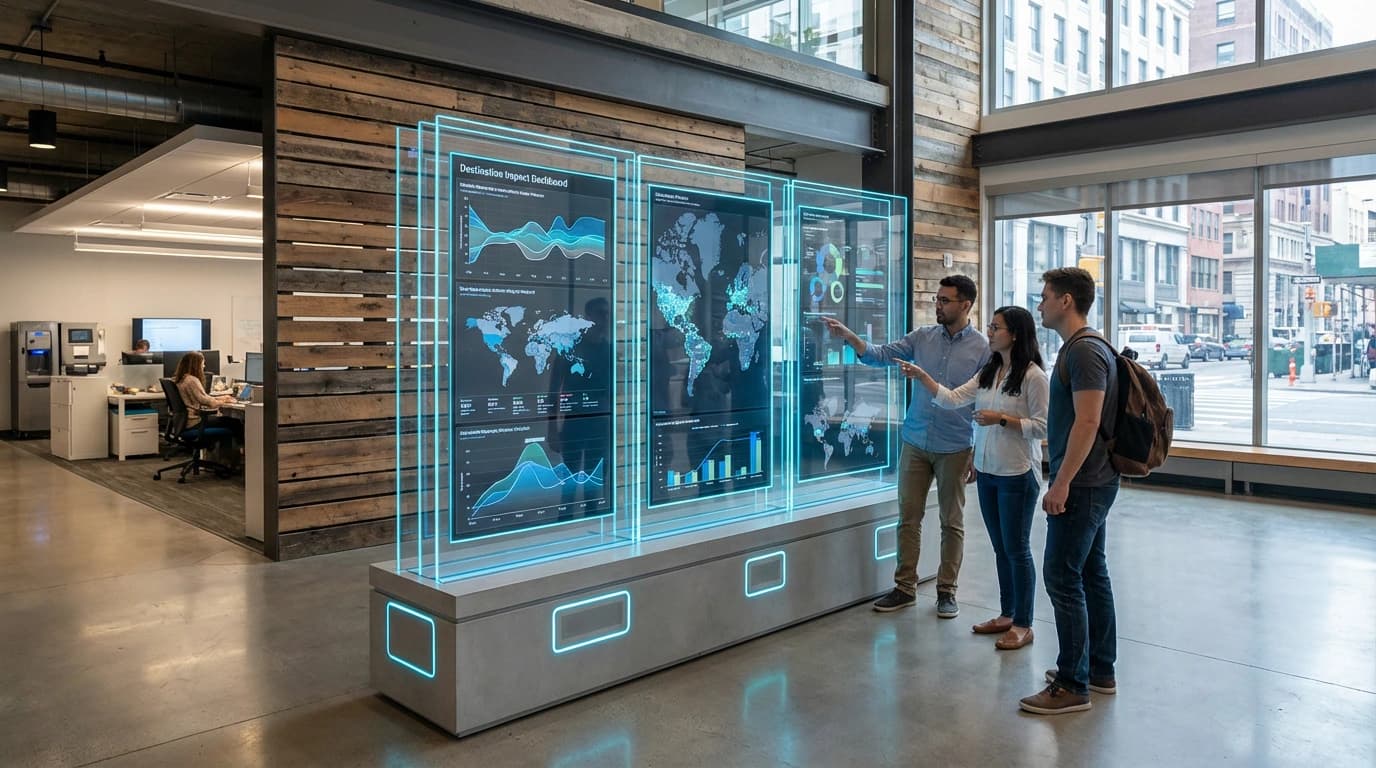
Tourism has long been a double-edged sword for destinations worldwide, bringing economic prosperity while simultaneously straining local infrastructure, ecosystems, and community cohesion. Traditional approaches to managing these impacts have often relied on fragmented data sources, delayed reporting cycles, and opaque decision-making processes that exclude local voices. Destination Impact Dashboards emerge as a response to this challenge, offering a unified, transparent platform that synthesizes diverse data streams into accessible visualizations of tourism's multifaceted effects. These systems integrate real-time and historical data from sources such as mobile network analytics, environmental sensors, accommodation booking platforms, public transit systems, and community surveys. By aggregating indicators spanning visitor density, carbon emissions from transportation and accommodation, biodiversity health metrics, housing affordability indices, and resident sentiment scores, these dashboards transform abstract statistics into comprehensible visual narratives that reveal the true cost and benefit of tourism activity.
The fundamental value proposition of these platforms lies in their ability to democratize access to information that was previously siloed within government agencies, academic institutions, or private consultancies. When a coastal town grapples with whether to approve a new resort development or a historic city considers implementing visitor caps during peak seasons, Destination Impact Dashboards provide stakeholders with evidence-based insights rather than relying solely on anecdotal observations or economic projections. This transparency enables more inclusive governance models where residents, business owners, environmental advocates, and tourism operators can engage in informed dialogue about acceptable trade-offs. The dashboards also support adaptive management strategies by revealing patterns and thresholds—such as when visitor numbers begin to correlate with declining resident satisfaction or when specific sites show signs of ecological degradation—allowing authorities to intervene proactively rather than reactively.
Early implementations of these systems have appeared in destinations ranging from European heritage cities to island nations seeking to balance tourism revenue with environmental preservation. Some platforms incorporate scenario modeling tools that allow users to explore how different policy interventions—such as seasonal pricing, transportation restrictions, or infrastructure investments—might alter future impact trajectories. As concerns about overtourism and climate change intensify, these dashboards are evolving from niche planning tools into essential infrastructure for sustainable destination management. The broader trend toward data transparency in governance, combined with growing public demand for accountability in tourism development, suggests that impact visualization will become standard practice. Future iterations may integrate artificial intelligence to predict impact cascades, blockchain verification for data integrity, or participatory sensing mechanisms that empower residents to contribute their own observations, further strengthening the connection between tourism metrics and community-centered decision-making.
Analyzes geospatial data, sentiment, and trends to help destinations manage visitor flows and sustainability.
A travel intelligence platform that analyzes big data to help destinations manage tourism sustainability and demand.
The United Nations agency responsible for the promotion of responsible, sustainable and universally accessible tourism.
A destination operating system that combines data science and technology to help DMOs make data-led decisions.
Establishes and manages global standards for sustainable travel and tourism.
Uses satellite data to monitor the environmental impact of tourism.
Analyzes global flight booking data to predict traveler trends and flows.
Global payments technology company offering the 'Tourism Insights' platform.
A travel data intelligence agency focusing on destination reputation and resident sentiment.
Specializes in Nation Branding and City Branding, using data to analyze digital demand.
A leader in global economic forecasting and econometric analysis.
Published forecasts about this technology, graded against what happened in Hindsight.
Community Dashboards
This page is a narrower case of it.
Signals turns a topic into a sourced research record you can inspect and rerun. Your first scan is free, and this one starts with Destination Impact Dashboards already loaded, so edit it or scan as is.